The Veteran's Roadmap to Career Rehabilitation
Transitioning from military to civilian life can be challenging, particularly when it comes to finding the right career path. Vocational rehabilitation serves as a vital link for veterans, connecting their military skills and experience to civilian career opportunities. This is especially important for veterans with service-connected disabilities, where traditional career guidance may not be sufficient.
This specialized rehabilitation recognizes that military experience requires a unique approach compared to typical civilian career transitions. These programs go beyond simple resume updates; they help veterans translate their military skills into language civilian employers understand. This helps veterans recognize their value and confidently pursue their career goals.
One of the key benefits of vocational rehabilitation is the personalized support from rehabilitation counselors. These professionals understand the unique psychological and practical challenges veterans often face. They assist with the practical aspects of job searching and the emotional and mental aspects of adjusting to civilian life. This support is crucial for veterans dealing with the identity shift that often accompanies leaving the military.
For example, counselors can help veterans manage anxieties about a new work environment and develop coping mechanisms for potential challenges. This comprehensive approach ensures veterans receive the support necessary for long-term career success.
Historically, vocational rehabilitation has played a crucial role in helping veterans with service-connected disabilities. The Veteran Readiness and Employment (VR&E) program, formerly known as Vocational Rehabilitation and Employment, offers a wide array of services. These include career counseling, job training, and educational assistance to help veterans explore various employment options and develop essential skills.
To be eligible, veterans generally need a service-connected disability rating of at least 10% and a discharge other than dishonorable. More detailed information on the VR&E program can be found here: 2025 VA Vocational Rehabilitation Pay Chart. The program acknowledges veterans' significant contributions and aims to empower them for fulfilling civilian careers. It also emphasizes the importance of ongoing support to ensure veterans can excel in their chosen fields.
Key Components of Vocational Rehabilitation
-
Assessment and Goal Setting: The process begins with a thorough evaluation of the veteran's skills, interests, and career goals. This assessment helps develop personalized career plans tailored to the veteran's individual needs and abilities.
-
Skills Development: VR&E programs provide access to training and educational resources, such as vocational courses, college degree programs, and on-the-job training, to equip veterans with in-demand civilian career skills.
-
Job Placement Assistance: Rehabilitation counselors collaborate with veterans to create effective job search strategies. These strategies may include resume writing, interview skills development, and networking opportunities to improve their chances of finding employment.
-
Ongoing Support: Vocational rehabilitation continues beyond job placement. Ongoing support is available to ensure veterans successfully integrate into their new roles and remain employed, offering guidance and resources as needed. This continued support is vital for long-term job satisfaction and career advancement.
Qualifying for VR&E: Beyond the Basics

While a 10% disability rating and a discharge other than dishonorable are generally required for the Veteran Readiness and Employment (VR&E) program, truly understanding eligibility involves a deeper dive. It's important to look beyond the surface and consider the often-overlooked details. For instance, the specific impact of your disability on your ability to maintain employment is a crucial factor.
Disability Ratings and Their Impact
A 10% disability rating might meet the minimum requirement, but the VR&E program considers more than just the percentage. The severity of your disability and how it affects your ability to work are also key. A VR&E counselor can help you understand how your particular disability is assessed within the program. This personalized guidance is invaluable in navigating the VR&E landscape.
Discharge Characterization and Eligibility
The nature of your discharge from service also plays a significant role. A dishonorable discharge will usually disqualify you. However, other less-than-honorable discharges might not be absolute barriers to participation. The application timeframe is also critical. Veterans typically have 12 years from their separation date or the date of their first disability rating to apply. Extensions are possible, particularly for those with serious employment handicaps.
Critical Application Components
A well-crafted application is vital for VR&E approval. Comprehensive documentation of your disability, its effects on your work life, and your career aspirations will strengthen your case. It's helpful to prioritize your mental health during your return to the workforce. For valuable insights and practical strategies, check out this resource on mental health in the workplace. Clearly outlining your needs and how the VR&E program can assist you in achieving your goals significantly improves your prospects.
To help you understand the eligibility criteria for the VR&E program, the following table summarizes the key requirements.
VR&E Eligibility Requirements
This table outlines the key eligibility criteria veterans must meet to qualify for Veteran Readiness and Employment program benefits.
| Requirement Category | Specific Criteria | Documentation Needed |
|---|---|---|
| Service-Connected Disability | Minimum 10% disability rating | Official documentation from the VA confirming the disability rating |
| Discharge Status | Other than dishonorable | DD-214 or other official documentation showing discharge status |
| Employment Handicap | Disability impedes ability to secure or maintain suitable employment | Medical records, employment history, and other supporting evidence demonstrating the impact of the disability on employment |
| Timeframe | Within 12 years of separation or date of first disability rating (extensions possible) | Documentation of separation date and/or date of first disability rating |
The table above clarifies the main requirements, highlighting the importance of appropriate documentation and demonstrating how your disability affects your employment.
Addressing Application Denials and Appeals
Application denials can happen for various reasons, including insufficient documentation or a misunderstanding of the eligibility criteria. A denial isn't necessarily the end of the process. Understanding the reasons for the denial and developing a robust appeal strategy can lead to a successful reconsideration. Working with experienced veteran advocates can greatly enhance your chances during an appeal. These advocates can help you navigate the system and ensure your application gets the attention it deserves.
The Five Pathways: Finding Your Perfect VR&E Track
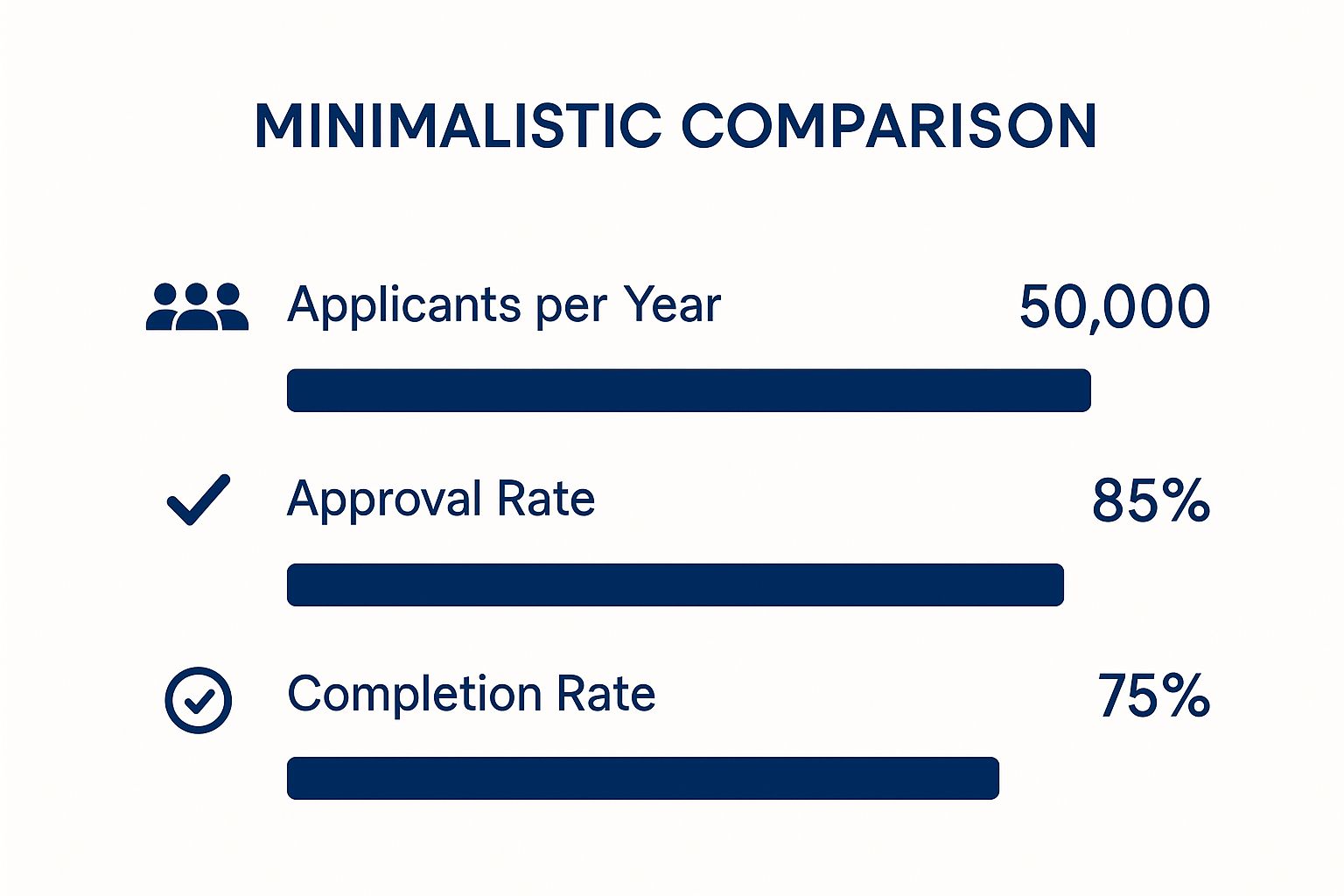
The infographic above provides a visual overview of key VR&E program data. It highlights the program's success, with an 85% approval rate and a 75% completion rate for the nearly 50,000 veteran applicants each year. This underscores the program's effectiveness in supporting veterans transitioning into civilian careers. The broader vocational rehabilitation market is also growing, projected to reach $5.2 billion in 2025, a 6.2% increase from 2024. This growth is driven in part by government initiatives like the Pathways to Partnerships project, which received almost $199 million to bolster career opportunities for people with disabilities. Learn more: Vocational Rehabilitation Services Global Market Report.
The Veteran Readiness and Employment (VR&E) program offers five distinct tracks to meet the diverse needs of veterans. Selecting the right track is essential for a successful career transition after service.
To help you better understand the differences between the five tracks, we've compiled the following comparison table:
VR&E Program Tracks Comparison
A detailed comparison of the five vocational rehabilitation tracks available to veterans, their purposes, and key services offered.
| Track Name | Best For | Key Services | Timeline | Success Indicators |
|---|---|---|---|---|
| Reemployment Track | Veterans returning to their pre-service employer | Job accommodations, securing employment with previous employer | Short-term | Successful return to previous employment |
| Rapid Access to Employment Track | Veterans ready for immediate employment | Job search assistance, connecting with job openings | Short-term | Quick job placement |
| Self-Employment Track | Veterans interested in starting their own business | Business planning, financial management, mentorship | Varies, often long-term | Sustainable business ownership |
| Long-Term Services Track | Veterans needing additional education or training | Funding for education and training | Long-term | Attainment of new credentials, successful career transition |
| Independent Living Track | Veterans whose disabilities prevent immediate employment | Assistance with daily living, adaptive technology, community resources | Long-term | Increased independence, improved quality of life |
This table summarizes the key features of each VR&E track, enabling veterans to quickly compare and contrast the options available. Choosing the right track depends on individual circumstances and career goals.
Reemployment Track: Back to Familiar Ground
This track assists veterans who want to return to their pre-service jobs. For instance, a former Army mechanic could utilize this track to rejoin their previous auto shop. The VR&E program can help secure necessary accommodations for service-connected disabilities, including modified schedules or assistive technologies.
Rapid Access to Employment Track: Leveraging Existing Skills
This track helps veterans quickly re-enter the workforce. It's ideal for those with readily transferable skills. For example, an Air Force veteran with administrative experience could use this track to find immediate job openings. The focus is on using existing skills and providing effective job search support.
Self-Employment Track: Forging Your Own Path
This track is designed for veterans who want to start their own businesses. It’s a great choice for those seeking autonomy and flexibility. For a veteran with PTSD, the independence of self-employment may be more manageable. The VR&E provides resources for business planning, financial management, and mentorship.
Long-Term Services Track: Gaining New Credentials
This track is for veterans who want to pursue new careers requiring more education or training. A Navy veteran transitioning to a civilian medical career, for instance, could use this track to fund a nursing degree, building on their existing medical experience.
Independent Living Track: Focusing on Quality of Life
This track serves veterans whose disabilities prevent them from working immediately. It aims to improve quality of life and maximize independence. Services include assistance with daily living activities, adaptive technology, and connections to valuable community resources.
Choosing the right track is vital. However, needs and circumstances can change. Open communication with your VR&E counselor is crucial. Don't hesitate to discuss track adjustments if your current track isn't the right fit. Advocating for yourself ensures you're on the best path toward achieving your career goals.
Maximizing Your Financial Support During Rehabilitation
The financial side of vocational rehabilitation for veterans is often a top concern. The VR&E program provides several types of financial assistance to help veterans focus on their career transition. Understanding these benefits is key to getting the most out of the program.
Understanding Subsistence Allowance
The main financial support within VR&E is the subsistence allowance. This monthly payment helps veterans cover basic living expenses while participating in the program. The amount received depends on several factors. These include dependent status, training type (full-time, part-time, on-the-job), and location due to cost-of-living differences. For instance, a veteran with dependents in full-time training will receive a higher allowance than a veteran without dependents in a part-time program.
Supplementing Your VR&E Payments
While the subsistence allowance is helpful, it might not cover every expense. It's important to look into ways to supplement this income. This could involve part-time work, using savings, or accessing other VA benefits. Many veterans successfully combine multiple benefits, like disability compensation, without affecting their VR&E support. Careful planning and communication with your VR&E counselor will help you maximize your resources.
Hidden Financial Benefits of VR&E
Beyond the subsistence allowance, VR&E offers other financial assistance that many veterans may not be aware of. These benefits can significantly ease the transition process. Equipment allowances help pay for tools and materials needed for your chosen career. If specialized technology is needed due to a disability, VR&E might offer adaptive technology support. If relocating for training or a job, relocation assistance can help cover moving costs. Knowing about and utilizing these less-obvious benefits can greatly reduce financial strain.
As of 2025, the VR&E program includes a 3.2% Cost-of-Living Adjustment (COLA) increase. This helps veterans manage living expenses during the program. This adjustment reflects the program's commitment to supporting veterans' career and independence goals. You can find further details here: 2025 VA Vocational Rehabilitation Pay Chart. This COLA, combined with personalized career counseling, job training, educational support, and financial aid, gives veterans and service members resources to succeed in civilian careers.
Budgeting and Financial Setbacks
Creating a realistic budget is essential during vocational rehabilitation. Include all income sources, like VR&E payments and any additional income. Be sure to also account for expected expenses. A well-planned budget will help you manage your money effectively. However, unexpected financial challenges can arise. Having a strategy for dealing with these, such as an emergency fund or exploring temporary financial assistance programs, is important. This can prevent setbacks from disrupting your career transition. Your VR&E counselor can offer advice on budgeting and handling financial difficulties.
Building a Powerful Alliance With Your VR&E Counselor
Your relationship with your VR&E counselor is the cornerstone of your rehabilitation journey. A strong partnership can significantly impact your success. A strained one, however, can create unnecessary obstacles. Building a productive alliance requires open communication, mutual respect, and a shared understanding of your goals.
Preparing For Initial Meetings
The first meeting with your counselor sets the tone for your entire VR&E experience. Prepare by gathering relevant documents. These include your DD-214, medical records related to your service-connected disability, and any relevant employment or educational history. Clearly outlining your career aspirations, both short-term and long-term, helps your counselor understand your vision. This initial preparation demonstrates your commitment and lays the groundwork for a collaborative relationship.
Effective Communication and Goal Setting
Open and honest communication is crucial throughout the rehabilitation process. Clearly articulate your needs, concerns, and any challenges you encounter. Actively listen to your counselor’s advice and ask clarifying questions when needed. Regularly review and adjust your Individualized Rehabilitation Plan (IRP) as your circumstances evolve. Think of your IRP as a dynamic roadmap, subject to revisions as you navigate your rehabilitation journey.
Addressing Conflicts Constructively
Disagreements may arise during the rehabilitation process. Address these conflicts respectfully and professionally. Clearly explain your perspective and actively listen to your counselor’s viewpoint. Focus on finding solutions that align with your goals while respecting your counselor's expertise. If necessary, involve a supervisor or advocate to mediate and facilitate a resolution. This ensures challenges are addressed promptly and effectively.
Documenting Your Progress and Needs
Maintaining clear and organized records of your progress, appointments, and communications with your VR&E counselor is crucial. This documentation helps track your journey and provides evidence should any disputes or appeals arise. Effectively documenting your needs strengthens your advocacy efforts and ensures your voice is heard.
Advocating For Yourself Respectfully
While your VR&E counselor is there to support you, remember that you are your own best advocate. Respectfully assert your needs and preferences throughout the rehabilitation process. Don't hesitate to request additional services or a counselor change if necessary. Just as in the military, advocating for yourself respectfully is key to ensuring your needs are met.
Balancing Guidance and Agency
Successfully navigating vocational rehabilitation involves finding the right balance between accepting expert guidance and maintaining agency over your choices. Your counselor provides valuable expertise and resources. However, your personal goals and preferences should remain central to the process. A collaborative relationship respects both professional expertise and personal aspirations, empowering you to take ownership of your career transition. This collaborative approach ultimately leads to a more fulfilling and successful outcome.
Real Veterans, Real Transformations
Vocational rehabilitation for veterans isn't simply about finding any job; it's about empowering them to rebuild their lives and discover fulfilling careers. The success stories of veterans who have completed this process offer valuable insights and inspiration for others beginning their own journeys.
From Battlefield to Boardroom: A Software Developer's Story
One former infantry soldier, after navigating the intense pressures of combat, struggled to adjust to civilian life. Through the vocational rehabilitation for veterans program, he uncovered a talent for software development. With focused training and support, he successfully transitioned his military experience into a thriving tech career, his analytical skills honed in the military proving invaluable in this new profession.
Medical Expertise Transformed: A Navy Corpsman's Journey
A Navy corpsman leveraged her existing medical expertise to become a nursing leader. The vocational rehabilitation program bridged the gap between her military skills and the civilian medical field. She credits the program with not only offering technical training, but also providing the emotional support needed to manage the inherent challenges of a career change. This highlights the holistic nature of vocational rehabilitation, which addresses both professional and personal needs. Strong communication is crucial for a successful VR&E experience. Learning motivational interviewing techniques can significantly improve communication with your VR&E counselor.
Overcoming Obstacles: Stories of Resilience and Success
An Air Force veteran with severe PTSD found comfort and success in a remote career, demonstrating the flexibility offered by vocational rehabilitation. An Army mechanic with physical disabilities transitioned into engineering management, proving the program's adaptability to individual circumstances. A Marine with TBI found entrepreneurial success, showcasing the potential of self-employment through VR&E. Western Europe and the Asia-Pacific region represent significant markets for vocational rehabilitation services, underscoring the global need and demand for these programs.
These stories represent just a fraction of the countless lives changed by vocational rehabilitation for veterans. They prove that transformation is possible, regardless of the obstacles. They offer inspiration and practical lessons applicable to any rehabilitation journey, emphasizing the importance of perseverance, adaptability, and the support network provided by the VR&E program. The challenges these veterans faced and overcame provide tactical approaches for others in similar situations, emphasizing the real-world impact of these programs.
Strategic Moves: Getting Everything You Deserve
The journey through vocational rehabilitation for veterans can be challenging. With the right knowledge and strategies, however, the process can be much smoother. Understanding the system is key to maximizing your benefits and achieving your full potential. This section explores practical approaches, gleaned from veteran advocates and program insiders, to help you get everything you deserve.
Identifying and Requesting Additional Services
The standard offerings from the VR&E (Vocational Rehabilitation and Employment) program may not always address every individual need. Knowing how to identify and request additional services is crucial. For instance, if you require specialized equipment not initially included in your plan, understanding the request process can significantly impact your rehabilitation success. This may involve collaborating with your counselor to document the need and connecting it to your career goals. Be proactive. Research available resources and present them to your counselor to demonstrate your initiative.
Navigating Bureaucratic Obstacles
Bureaucracy is often an unavoidable aspect of government programs like VR&E. You can navigate these obstacles effectively, however, while maintaining positive relationships. Open communication and respectful dialogue with your counselor are essential. Meticulous documentation is key: record all interactions and retain copies of important paperwork. If you encounter roadblocks, seek guidance from veteran service organizations like the Disabled American Veterans (DAV) or legal professionals specializing in veterans’ affairs. These resources offer expert advice and support during challenging situations.
Documenting Your Needs Effectively
Clear and concise documentation is paramount for communicating your needs to VR&E decision-makers. Use straightforward language, avoiding technical jargon that could be misinterpreted. Focus on how your service-connected disability affects your ability to work. Explain precisely how the requested services will address those challenges. Present your documentation as a persuasive case, clearly articulating your needs and justifying the support you request.
Complementary Resources: Expanding Your Support Network
While the VR&E program is a cornerstone of veteran rehabilitation, it isn't the only resource. Numerous complementary programs can enhance your journey. State vocational rehabilitation programs offer specialized training and employment services tailored to local job markets. Veteran-focused non-profits, like the Wounded Warrior Project, provide valuable support services, including mentorship and financial aid. Many employer initiatives specifically target veterans with disabilities, creating targeted career advancement opportunities. Cultivating a strong support network that incorporates these resources can significantly improve your prospects for long-term career success.
Are you ready to take control of your future and get everything you deserve from your vocational rehabilitation? Homefront Group is dedicated to helping veterans like you. We specialize in navigating the complexities of veteran benefits, ensuring you receive the justice and financial support you've earned. Take our free 3-minute quiz to identify your qualifying benefits and begin building your personalized strategy today.