
Navigating the Unique Terrain of Veterans Estate Planning
Military service presents unique opportunities and challenges regarding estate planning. Benefits earned through service, such as military pensions and VA disability benefits, often form the cornerstone of a veteran's financial security. These benefits require specialized planning that differs from standard civilian approaches to ensure smooth transfer to loved ones. This means understanding how your service history interacts with traditional estate planning tools.
Why Standard Estate Planning Often Falls Short for Veterans
Standard estate plans often overlook the nuances of military benefits. For instance, VA disability benefits are generally not considered assets for estate tax purposes. However, they can affect eligibility for other needs-based government benefits. Military pensions and survivor benefit plans also have specific rules for beneficiary designations. Overlooking these details can lead to unintended consequences, such as reduced benefits for surviving family members or unnecessary tax burdens. This highlights the importance of an estate plan tailored to a veteran’s specific circumstances.
Key Considerations in Veterans Estate Planning
Veterans estate planning must consider federal and state laws and the specific regulations governing military benefits. This includes understanding the complexities of the VA healthcare system and eligibility criteria for various programs. The Aid and Attendance benefit, for example, provides crucial financial assistance for long-term care. However, accessing it requires careful planning to meet specific asset and income limitations. This specialized knowledge underscores the need for guidance from professionals experienced in veterans estate planning.
As of 2022, various organizations offered free wills and trusts to veterans, demonstrating the growing recognition of this service's importance. The VA News highlighted 12 places veterans could access these free resources. Despite these resources, many veterans still lack comprehensive estate plans, highlighting the need for increased awareness and access to estate planning services. This support is crucial as veterans often have unique financial and legal needs compared to the general population.

Building a Secure Legacy for Your Loved Ones
Proper veterans estate planning creates a roadmap for your family's financial future, ensuring your hard-earned benefits continue supporting them. It's about more than just distributing assets; it's about preserving your legacy and honoring your service by providing for your loved ones. This requires a proactive approach, integrating your military benefits with your overall financial goals and estate plan. Seeking professional advice from experts familiar with military benefits and estate law is therefore essential.
Critical Documents That Safeguard Your Military Legacy
Veterans, because of their service and the benefits they receive, need specific estate planning documents that go beyond a standard will and trust. These documents protect your military legacy and ensure your family receives the benefits you earned. Understanding what these documents are and how they work is the first step in protecting your family's future. For a broader look at family estate planning, review this helpful overview: estate planning for families.
Military-Specific Powers of Attorney
A power of attorney (POA) gives someone the legal right to act for you. Standard POAs may not address the specifics of military benefits. Military-specific POAs, however, are designed to handle benefits like disability compensation and survivor benefit plans. This ensures your designated agent can effectively work with the VA. This is especially important if you're incapacitated and can't manage these things yourself.
Healthcare Directives With Military Considerations
Healthcare directives, like living wills, explain your medical treatment wishes. While these are important for everyone, veterans may have specific healthcare needs related to their service. A military-specific directive lets you address possible issues from service-connected disabilities or ongoing VA healthcare. For instance, you can state preferences for VA or civilian hospitals.
Beneficiary Designations and Benefit Disruptions
Correctly naming beneficiaries for your military benefits is essential. Incorrect or outdated beneficiaries can cause major problems with benefit payments to your spouse and dependents. Make sure your designations match your estate plan and each military benefit program's rules. Reviewing and updating these designations regularly is important, particularly after big life changes.
Often Overlooked Documents for Service-Connected Benefits
Some documents are often forgotten in veterans' estate planning. These include forms for service-connected disability compensation, education benefits (like the GI Bill), and survivor benefit plans. These documents are essential for smoothly transferring benefits to your dependents, preventing delays and financial hardship.
To understand some common estate planning issues veterans face, take a look at the table below:
Essential Estate Planning Documents for Veterans
| Document Type | General Purpose | Veteran-Specific Considerations | Update Frequency |
|---|---|---|---|
| Will | Distributes assets after death | Addresses specific military benefits, like SGLI proceeds | As needed, especially after major life events (marriage, birth, divorce) |
| Trust | Manages assets during life and after death | Can protect benefits from creditors or mismanagement | As needed, especially after major life changes |
| Power of Attorney | Grants authority to act on your behalf | Military-specific POA addresses VA benefits | As needed, but review annually |
| Healthcare Directive (Living Will) | Outlines medical treatment wishes | Allows for preferences regarding VA healthcare | As needed, but review annually |
| Beneficiary Designations | Specifies who receives benefits | Crucial for military benefits like SGLI and SBP | Annually or after major life events |
This table highlights the key estate planning documents and their unique implications for veterans. Ensuring these documents are up-to-date and tailored to your circumstances is vital for protecting your legacy and your family's future.
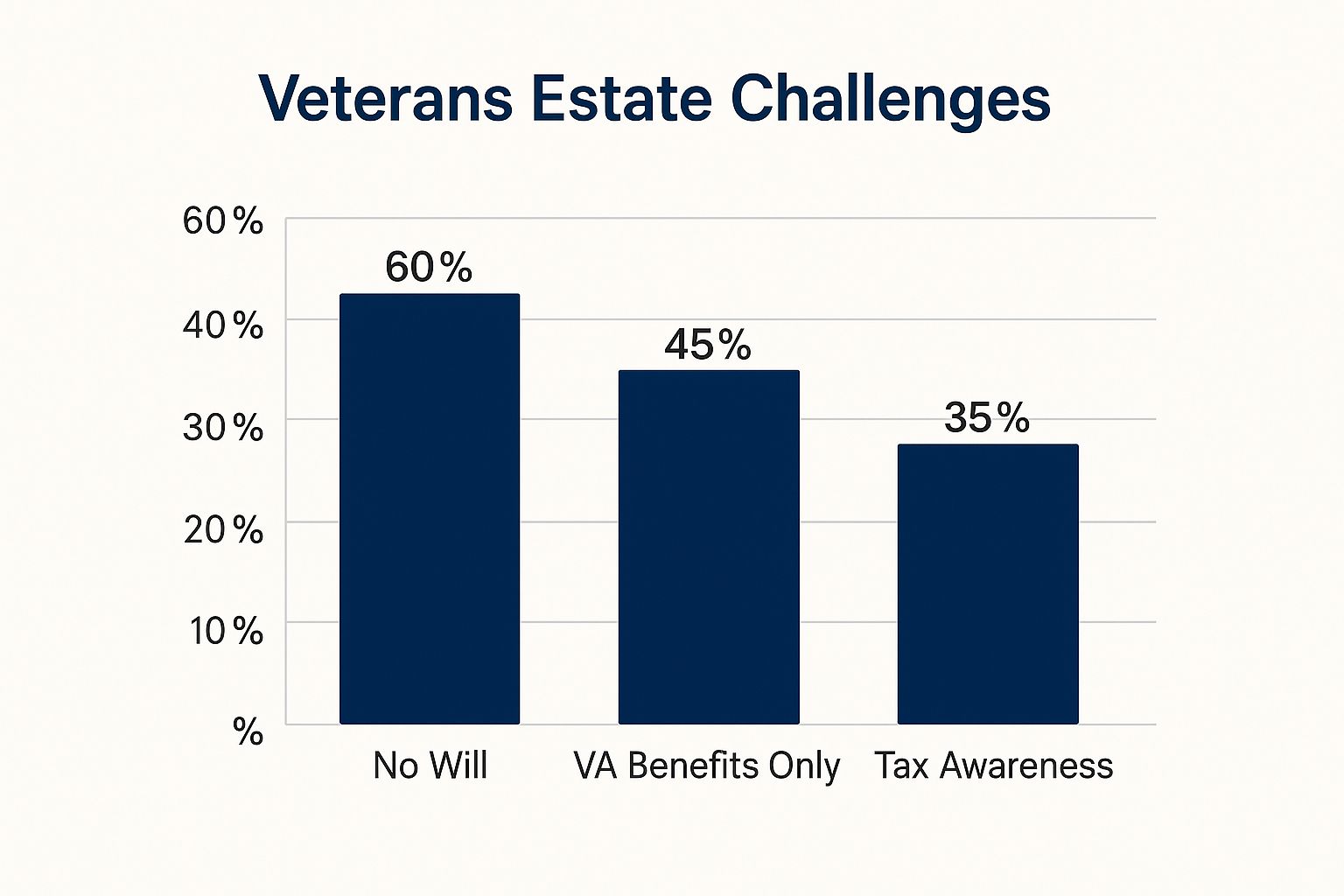
The infographic illustrates some common estate planning challenges for veterans. 60% of veterans don't have a will, 45% rely only on VA benefits, and 35% aren't aware of tax implications. These numbers show why comprehensive estate planning for veterans is so important. It should include wills, benefits coordination, and tax planning. Veterans need to be proactive in planning their estates and getting professional help in these often overlooked areas. Planning well can reduce the burden on families and ensure the transfer of your military legacy.
Protecting Your Hard-Earned Military Benefits Long-Term
Your military service has provided you with valuable benefits. Protecting these entitlements for your loved ones should be a top priority. Veterans estate planning requires a strategic approach to safeguard these hard-earned advantages. This involves understanding the different types of benefits available and how to best protect them. When planning for the long term, life insurance is an important consideration. You can learn more about its value by reading, Is Life Insurance Worth It.
Transferable Vs. Non-Transferable Benefits
A crucial aspect of veterans estate planning is understanding the difference between transferable and non-transferable benefits. Some, like the Survivor Benefit Plan (SBP), are designed to transfer to a surviving spouse or dependents. Others, such as VA disability compensation, are generally not transferable. Understanding the specific rules of each benefit is crucial for maximizing protection and ensuring your family receives the support you intend.
Utilizing Trusts to Protect Disability Compensation
Certain trust structures can play a vital role in protecting VA disability compensation. A special needs trust, for example, can hold assets for a disabled beneficiary without impacting their eligibility for government assistance programs. This allows veterans to provide additional financial security for loved ones while preserving crucial benefits. This approach requires careful planning and consultation with an experienced attorney specializing in veterans estate planning.
Maximizing Benefits for Surviving Spouses and Dependents
Protecting your family’s future is paramount. Veterans estate planning provides a framework to ensure your surviving spouse and dependents receive the maximum benefits possible. This might involve designating appropriate beneficiaries for life insurance policies, retirement accounts, and transferable military benefits. Understanding eligibility requirements for benefits like Dependency and Indemnity Compensation (DIC) is also essential. Careful planning can ease the burden on your loved ones during difficult times.
The broader context of estate planning offers insight into veteran-specific needs. According to a 2021 survey, only 45% of people over 55 have a will. This number increases to 81% for those over 72. Find more detailed statistics here. While veteran-specific data may vary, this highlights the importance of estate planning across all age groups within the veteran community. By taking proactive steps, you can create a lasting legacy of support for your family, ensuring their financial well-being for years to come.
Securing VA Aid & Attendance Without Compromising Your Legacy
Long-term care expenses present a significant financial challenge for many aging veterans. The VA Aid & Attendance benefit can offer crucial support, but many veterans unknowingly disqualify themselves due to improper estate planning. Careful veterans estate planning is essential for securing this benefit while protecting assets for your family. This section explores how to achieve both goals through proactive planning.
Understanding the Challenges of VA Aid & Attendance Eligibility
The VA Aid & Attendance benefit helps veterans afford assisted living, nursing homes, and in-home care. Eligibility, however, is determined by specific asset and income limits. Exceeding these limits can disqualify a veteran. Many veterans accumulate assets like homes, savings, and investments, which can inadvertently push them over these limits. Strategic estate planning helps veterans structure their assets to maintain eligibility for Aid & Attendance.
Specialized Trusts for Protecting Assets
One of the most effective estate planning tools for preserving Aid & Attendance eligibility is the irrevocable trust. This type of trust removes assets from the veteran's countable estate, effectively reducing their net worth for VA benefit purposes. However, establishing an irrevocable trust means relinquishing control over those assets. Careful consideration and expert advice are essential. Another option is a Medicaid Asset Protection Trust (MAPT) designed to protect assets from Medicaid spend-down requirements often relevant in long-term care scenarios.
Strategic Asset Transfers and the Look-Back Period
Transferring assets to loved ones can also reduce a veteran's countable assets. However, the VA employs a look-back period, typically five years, for such transfers. Transfers within this period may be penalized, delaying Aid & Attendance eligibility. Veterans must plan these transfers well in advance of needing the benefit. Working with a qualified estate planning attorney familiar with VA regulations is crucial for ensuring these transfers are executed correctly and legally.
To help illustrate the different estate planning strategies available, let's examine the following comparison table:
VA Aid & Attendance Eligibility Preservation Strategies: Comparison of estate planning approaches and their impact on VA Aid & Attendance eligibility
| Planning Strategy | Impact on Eligibility | Pros | Cons | Best For |
|---|---|---|---|---|
| Irrevocable Trust | Removes assets from countable estate | Protects assets from VA limits; can provide income for beneficiary | Irrevocable; loss of control over assets | Veterans with significant assets who can afford to relinquish control |
| Medicaid Asset Protection Trust (MAPT) | Shields assets from Medicaid spend-down | Protects assets for Medicaid eligibility; can provide income | Requires careful planning; may not protect against all VA limits | Veterans concerned about both VA and Medicaid eligibility |
| Strategic Asset Transfers | Reduces countable assets if outside the look-back period | Can preserve eligibility if done correctly | Subject to VA look-back period; potential penalties | Veterans who plan well in advance of needing benefits |
This table summarizes key estate planning strategies and their respective impacts on VA Aid & Attendance eligibility. Each approach presents its own set of advantages and disadvantages, highlighting the need for personalized planning.
Coordinating Estate Planning and VA Benefit Planning
Successful veterans estate planning demands a coordinated approach integrating VA benefit planning. This requires expertise in both areas. An attorney specializing in veterans estate planning can navigate the complexities of VA benefits while developing a plan aligned with your financial goals. This integrated strategy ensures access to needed care without jeopardizing family financial security.
Preserving Your Legacy While Receiving Benefits
Effective planning enables veterans to access Aid & Attendance without depleting their life savings. This preserves wealth for surviving spouses and future generations. A well-structured trust, for instance, can protect assets while providing income for the veteran and their spouse. This coordinated approach safeguards your legacy while ensuring access to essential care. This proactive planning brings peace of mind to both the veteran and their family.
Accessing Expert Estate Planning Support Without Breaking the Bank
Quality estate planning is a cornerstone of financial security, especially for veterans. The perceived cost, however, often prevents people from seeking professional guidance. Fortunately, a network of resources offers free and reduced-cost estate planning services specifically designed for veterans and their families. This support enables veterans to protect their benefits without jeopardizing their financial well-being.
Free and Reduced-Cost Resources for Veterans
Several organizations understand the unique estate planning needs of veterans and offer accessible services:
-
Veteran Service Organizations (VSOs): Groups such as the American Legion, VFW, and DAV frequently offer free or low-cost estate planning assistance to their members. These organizations can connect veterans with attorneys specializing in military benefits and estate law.
-
Legal Aid Societies: Many Legal Aid organizations provide free legal services to low-income individuals, including veterans. They can help with drafting wills, powers of attorney, and other important documents.
-
Pro Bono Programs: Bar associations and law schools often offer pro bono estate planning services to veterans, providing professional legal help at no cost.
-
VA Accredited Attorneys: The Department of Veterans Affairs accredits attorneys to assist veterans with claims and other legal matters. While not all accredited attorneys offer free services, their specialized knowledge of veterans' benefits ensures competent guidance.
Evaluating Estate Planning Service Providers
When seeking assistance, carefully evaluate the provider's expertise in military matters:
-
Military Experience: Ask about the attorney's or advisor's experience working with veterans. This helps ensure they understand the nuances of military benefits and their implications for estate planning.
-
Understanding of VA Benefits: Confirm they are familiar with the complexities of VA benefits, including pensions, disability compensation, and healthcare. This is essential for maximizing benefit protection.
-
Client Testimonials: Look for reviews or testimonials from other veterans to gain insights into their experiences and the quality of service provided.
Preparing for Consultations
Proper preparation maximizes the effectiveness of consultations:
-
Gather Documents: Organize relevant documents such as military discharge papers (DD-214), benefit statements, and financial records. This streamlines the process and allows the advisor to thoroughly assess your needs.
-
List Questions: Prepare a list of questions about your specific concerns, such as protecting benefits, providing for dependents, and managing assets. This ensures all your important questions are addressed.
The Rise of Technology in Estate Planning
Technology is playing an increasing role in estate planning. The 2025 Trust & Will Estate Planning Report shows that 20% of Americans trust AI-generated legal advice more than human attorneys. Explore this topic further. This trend indicates that veterans, too, might be more receptive to using digital tools for managing their estates. While technology can be a valuable tool, it shouldn't replace personalized advice from a qualified professional, especially for veterans with unique benefit considerations.
By utilizing available resources and preparing thoroughly, veterans can access quality estate planning support without undue financial burden, securing their legacy and protecting their families’ future.
Adapting Your Estate Plan Through Your Military Life Journey
Your estate planning needs evolve throughout your military career and after. Just as your military service is unique, your estate plan should be too. This section explores how different life stages call for adjustments to your veterans estate planning. Consider your estate plan a living document, requiring updates as your life changes.
From Active Duty to Civilian Life: Planning for Transition
Transitioning from active duty creates immediate estate planning needs. Recently separated veterans should prioritize documenting and securing their benefits. This includes verifying beneficiary designations for life insurance and Survivor Benefit Plan (SBP) elections. Consolidating financial records and understanding VA healthcare and disability benefits are also critical first steps.
For example, a newly separated veteran might update their power of attorney to reflect their civilian address and healthcare preferences. These early steps create a strong base for long-term financial well-being.
Retirement and Beyond: Protecting Your Legacy
Retirement is another significant transition. Retired service members often have more complex finances, including more assets and different benefit considerations. This is when a comprehensive review of your existing estate plan becomes essential.
Reviewing beneficiary designations, updating powers of attorney, and considering long-term care options through tools like trusts become vital. For instance, a retired veteran might establish a trust to protect assets while maintaining eligibility for VA benefits like Aid & Attendance. These proactive measures protect your family's future.
Life Events That Trigger Estate Plan Updates
Beyond these major transitions, certain life events necessitate changes to your veterans estate planning documents:
-
Marriage or Divorce: These events significantly affect asset distribution and beneficiary designations, requiring updates to reflect your new family structure.
-
Birth or Adoption of a Child: Expanding your family means adjusting your will, including naming guardians and providing for your child's inheritance.
-
Significant Changes in Health: A serious diagnosis requires reviewing healthcare directives to ensure your medical care wishes are documented.
-
Substantial Increase or Decrease in Assets: Significant net worth changes mean revisiting your estate plan to align with your current financial status.
-
Relocation to a New State: Different states have different estate laws. Review and update your documents to comply with local regulations after a move.
These life events are key moments to reassess and adjust your estate plan, keeping it relevant to your changing circumstances.
Practical Tips for Periodic Review
Regularly reviewing your estate plan is essential, but needn't be difficult. A simple annual review of key documents, like beneficiary designations and powers of attorney, can be sufficient. Also, using major life events as triggers for a deeper review helps maintain your plan's effectiveness.
This proactive approach prevents your estate plan from becoming outdated and ensures it continues to serve your needs and protect your family.
Planning for the future can be challenging, especially with the complexities of military benefits and veterans estate planning. Homefront Group helps veterans protect their benefits and build a secure future. Learn more about how Homefront Group can support your estate planning journey.