
Understanding the VA PTSD Rating System That Shapes Your Future

The Department of Veterans Affairs (VA) PTSD rating system is essential for determining disability compensation. This structured evaluation framework assesses how PTSD affects your daily functioning and converts those impacts into a percentage rating that guides benefit amounts. Getting familiar with how this system works helps ensure you receive appropriate support for your condition.
How the VA Evaluates PTSD
The VA takes a detailed look at how PTSD affects both your work life and personal relationships. They examine specific areas like your ability to maintain steady employment, handle social situations, and carry out daily tasks. Rather than just noting your diagnosis, evaluators assess real-world impacts using a scale from 0% to 100%, with key markers at 10%, 30%, 50%, and 70%. Each level matches distinct symptoms and limitations that affect your functioning.
Key Symptoms and Their Weight in the Rating
Not all PTSD symptoms carry equal weight in determining your rating. For example, severe weekly panic attacks that stop you from working typically lead to a higher rating compared to occasional anxiety. The VA carefully notes how your symptoms impact your job performance, education, family life, and daily activities. Think of it as building a complete picture – the more your symptoms affect different areas of life, the higher your rating is likely to be.
Examples of Successful Claims
Real cases help show how the VA applies these ratings. A veteran experiencing frequent flashbacks and nightmares that make it hard to sleep and focus at work might receive a 50% rating. If they also have ongoing relationship problems due to anger and emotional distance, the rating could go higher. However, someone with milder symptoms like periodic anxiety and sleep issues who can still work and maintain relationships might get a 30% rating or lower. These examples highlight why detailed documentation of your symptoms and their effects is vital.
Common Misconceptions
Many veterans believe a PTSD diagnosis automatically means a high rating – but this isn't true. The VA focuses specifically on how severely symptoms affect your daily life. Another misunderstanding involves assuming the typical VA PTSD rating (usually 50-70%) applies to everyone. Your rating depends entirely on your individual situation and symptoms. Understanding these facts helps set realistic expectations as you go through the evaluation process. With proper preparation and documentation, you can work toward receiving a rating that accurately reflects your condition's impact.
Breaking Down Rating Levels: From 0% to 100%

After covering the VA's PTSD evaluation process, let's examine each rating level in detail. This information will help you better understand what to expect and how to prepare for your claim.
Decoding the Percentages: What Each Level Represents
The VA uses percentages from 0% to 100% to measure how severely PTSD affects your daily life. Each percentage connects directly to specific criteria about how well you can work and maintain relationships. For instance, a 10% rating means your PTSD causes mild problems, while a 100% rating indicates you cannot work or maintain social relationships. The key is that your rating reflects how much PTSD impacts your ability to handle daily tasks, keep a job, and build meaningful connections with others.
The Impact of Different Symptoms on Your Rating
Some PTSD symptoms affect your rating more than others. For example, severe panic attacks that make it impossible to work will lead to a higher rating than occasional anxiety. The VA also looks at how your symptoms affect different parts of your life – from work performance to family relationships to basic daily activities. When symptoms create problems across multiple areas, you'll likely receive a higher rating. Think of throwing a stone in water – the more areas affected by the ripples, the higher your rating may be.
Illustrative Examples: Veterans Affairs PTSD Rating in Action
Take a veteran who has severe nightmares and flashbacks that make it hard to sleep or focus. This person might get a 50% rating. But if that same veteran also has angry outbursts that damage family relationships and make it hard to be around others, the rating could go higher. On the other hand, a veteran with manageable anxiety and occasional trouble sleeping, but who can still work steadily and maintain relationships, might get a 30% rating or less. These examples show why it's so important to clearly document all your symptoms and exactly how they affect your daily life.
Rating Levels and Their Corresponding Criteria:
| Rating | Criteria |
|---|---|
| 0% | Diagnosis of PTSD but no significant functional impairment. |
| 10% | Mild impairment in social or occupational functioning. |
| 30% | Occupational and social impairment with mild or transient symptoms, decreased work efficiency, especially during periods of significant stress. |
| 50% | Occupational and social impairment with reduced reliability and productivity due to symptoms like panic attacks, flattened affect, and impaired memory. |
| 70% | Occupational and social impairment with deficiencies in most areas, including work, school, family relations, judgment, thinking, and mood. |
| 100% | Total occupational and social impairment, preventing any gainful employment. |
While this table provides a basic overview, keep in mind that the actual evaluation process involves a detailed review of your specific situation. That's why proper documentation and understanding the VA's rating system are essential for filing a successful claim.
Navigating Your C&P Exam With Confidence
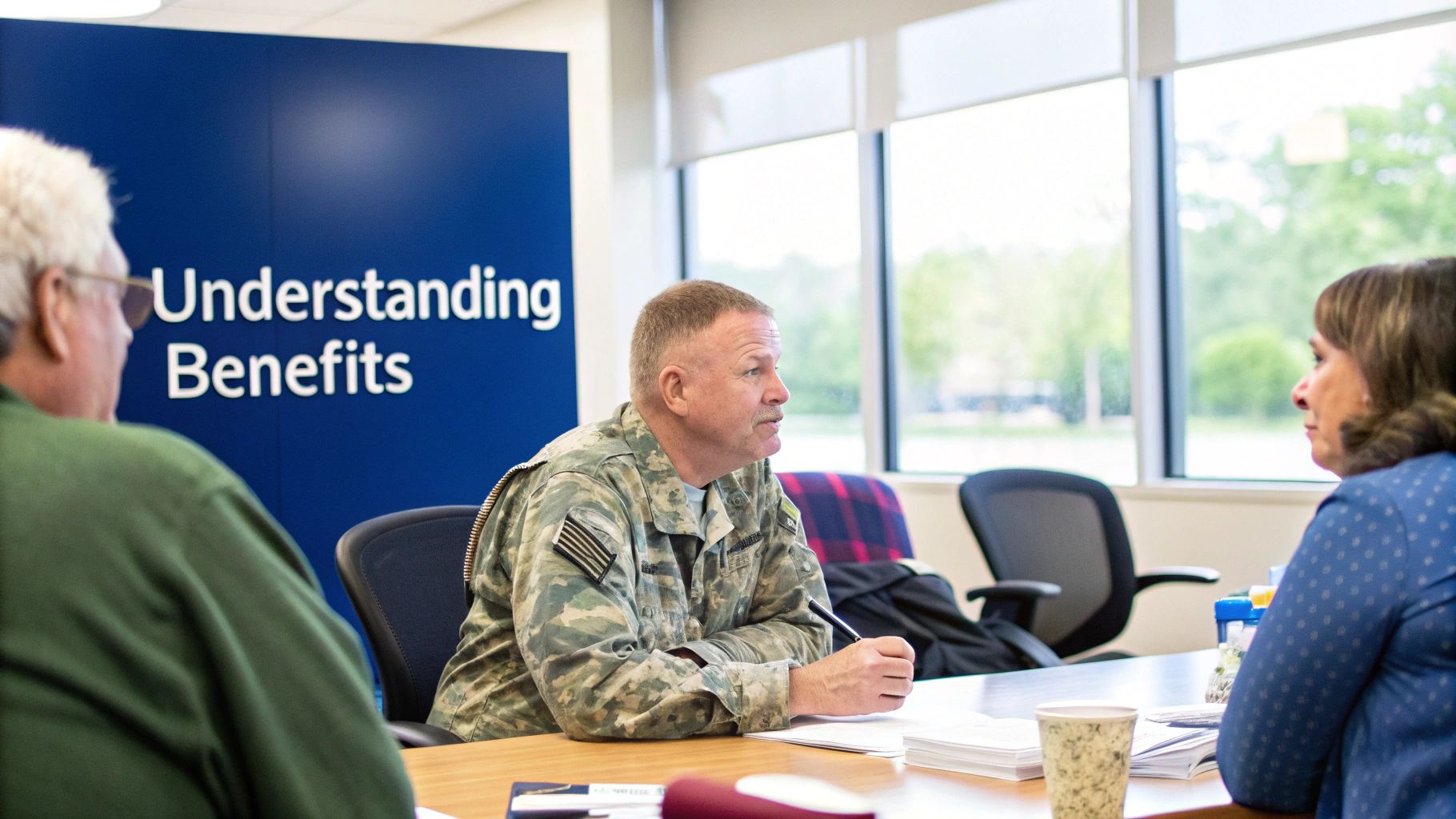
The Compensation and Pension (C&P) exam plays a key role in determining your veterans affairs PTSD rating. During this assessment, the examiner gathers critical information about your condition that directly affects your benefit level. While the process can feel overwhelming, understanding what to expect and how to prepare can help you approach the exam with greater confidence.
Understanding the Purpose of the C&P Exam
Think of the C&P exam as your opportunity to help the VA fully understand how PTSD impacts your daily life. A medical professional will evaluate your symptoms and assess their effects on your work capabilities, relationships, and overall functioning. This evaluation forms the foundation for determining your veterans affairs PTSD rating, making it essential to convey an accurate picture of your experience.
Preparing for Your C&P Exam: Key Strategies
Success in your C&P exam starts with thorough preparation. Begin by gathering all relevant medical records and keeping a detailed symptom journal. Note specific examples of how PTSD affects your sleep patterns, work performance, and social interactions. For instance, record the frequency of nightmares, anxiety attacks, or moments when you needed to step away from social situations. Having these concrete examples ready will help you provide clear, specific information during the exam.
Communicating Effectively During the Exam
When you're in the exam room, focus on being direct and truthful about your experiences. Share specific details about your symptoms – for example, if you experience flashbacks, describe how often they occur and what triggers them. Instead of simply saying you have trouble sleeping, explain how many hours you typically sleep and what disrupts your rest. Remember to include real examples of how these symptoms affect your daily activities, like missing work or avoiding social gatherings.
Managing Exam-Related Stress
It's perfectly normal to feel anxious about your C&P exam. Consider that most veterans receive a VA disability rating for PTSD between 50% and 70%, showing how seriously the VA takes these evaluations. To manage exam anxiety, practice calming techniques like deep breathing or progressive muscle relaxation beforehand. You might also find it helpful to talk with other veterans who have been through the process or consult with a mental health professional for additional support. These steps can help you stay focused and clear-headed during your exam, ensuring you present an accurate picture of your PTSD symptoms.
Building Your PTSD Claim Strategy
Getting your VA disability claim for PTSD approved requires careful planning and documentation. By taking specific steps to document your condition, work closely with your doctors, and present your case clearly, you can improve your chances of receiving a VA PTSD rating that properly reflects how PTSD affects your life.
Gathering Compelling Evidence: The Cornerstone of Your Claim
Strong evidence is essential for showing how PTSD impacts your daily activities. The VA needs more than just a diagnosis – they need to understand exactly how your symptoms affect your ability to work, maintain relationships, and function socially.
- Detailed Symptom Journal: Keep a daily record of your symptoms, including when they occur and how severe they are. Note what triggers them and how they impact your activities. For example, document specific incidents like having to leave work early due to a flashback episode.
- Supporting Statements: Ask family members, friends, coworkers, and mental health providers to write statements about how they've seen PTSD affect you. Have them include specific examples and observations about changes in your behavior and functioning.
- Medical Records: Make sure your medical records clearly show your PTSD diagnosis, treatments, and ongoing symptoms. Talk openly with your healthcare team about your symptoms and ask them to document how PTSD limits your daily activities.
Working Effectively With Healthcare Providers: A Collaborative Approach
Your doctors and therapists play a key role in documenting your condition for the VA. Being direct and honest in your communication helps ensure your medical records accurately reflect your PTSD symptoms and limitations.
- Clear Communication: Tell your providers exactly how PTSD affects you. Share specific examples of struggles at work, home, and in relationships. Don't minimize your symptoms – be thorough in describing their impact.
- Consistent Treatment: Going to therapy sessions regularly and taking prescribed medications as directed shows you're actively managing your condition. This creates an ongoing record of your PTSD symptoms and treatment.
- Requesting Medical Opinions: Ask your doctor or therapist to write a detailed statement about how PTSD affects your ability to function. Their professional assessment carries significant weight in VA evaluations.
Presenting Your Case: Clarity and Organization Are Key
After gathering evidence, organizing it logically helps the VA understand your claim. A clear presentation makes it easier for them to see the full effects of PTSD on your life and determine an appropriate rating.
- Chronological Order: Arrange your evidence by date to show the progression of your PTSD over time. Include key events, symptom changes, and treatment milestones to create a complete timeline.
- Summarized Statements: Write a brief overview highlighting your main symptoms and their impact on your life. Point out the strongest evidence supporting your claim.
- Professional Assistance: Consider working with a veterans service organization or VA disability attorney. Their expertise in presenting claims effectively can be especially helpful for complex cases. They understand what evidence matters most and how to clearly explain your situation to the VA.
Maximizing Your Benefits and Support Systems
Once you've secured a VA PTSD rating, your next step involves understanding and accessing all available support to help with your recovery. While monthly compensation is important, there are many other valuable resources designed to help you thrive. Let's explore how to make the most of your benefits package.
Beyond the Check: Exploring the Full Spectrum of Benefits
Your PTSD rating opens doors to more than just financial support. Based on your rating percentage, you may qualify for programs like vocational rehabilitation to help with job training and placement, housing assistance to ensure stable living conditions, and specialized mental health services. For example, a 70% rating could give you access to comprehensive job programs, while a 50% rating might help secure housing support. These additional benefits work together to address the various ways PTSD affects daily life.
Combining Ratings for Enhanced Support
If you have multiple service-connected conditions, understanding how ratings work together is key. Rather than simple addition, the VA uses a combined rating system that accounts for how your disabilities affect you overall. For instance, if you have a 30% PTSD rating and a 20% back injury rating, your combined rating might reach 40% or higher, reflecting how these conditions impact you together. This higher combined rating can increase both your compensation and access to services.
Tapping into Specialized Treatment and Resources
The VA provides targeted treatment programs for veterans with PTSD, including proven approaches like Cognitive Processing Therapy (CPT) and Prolonged Exposure (PE). These evidence-based treatments can help improve your mental health and daily functioning. The VA also recognizes that PTSD affects families, so they offer resources for loved ones to better understand and support veterans during recovery.
Connecting With Veteran Service Organizations and Peer Support
Building connections with veteran service organizations (VSOs) and other veterans provides vital support beyond VA services. Organizations like Disabled American Veterans (DAV) and the Veterans of Foreign Wars (VFW) help navigate the VA system and access community resources. Peer support groups create safe spaces to share experiences, learn coping skills, and find camaraderie with others who understand your journey. These connections often provide practical insights about managing benefits while building a supportive community. By actively engaging with VSOs and peer groups, you can develop a strong support network matched to your needs while gaining valuable guidance on maximizing your VA benefits.
Maintaining and Updating Your Veterans Affairs PTSD Rating Successfully
Getting a VA PTSD rating is just the first step – your condition and needs may change over time. Understanding how to maintain and update your rating ensures you continue receiving appropriate benefits and support. Taking a systematic approach to documentation and working closely with your healthcare providers helps keep your rating accurate.
Recognizing When an Update is Necessary: Key Indicators and Triggers
Your PTSD rating should reflect your current condition, which can change. Pay attention to signs that may warrant a re-evaluation, such as:
- More frequent or intense symptoms like panic attacks and flashbacks
- New impacts on your ability to work or maintain relationships
- Changes in how PTSD affects your daily functioning
- Improvements from treatment that could affect your rating
Monitor these changes carefully and discuss them with your healthcare providers to ensure your medical records capture the full picture of your condition.
Proactive Steps for Maintaining Accurate Documentation
Good documentation strengthens your case for maintaining or updating your rating. Keep detailed records of:
- Symptom journals noting specific incidents, dates, and impacts
- Therapy appointments and medication compliance
- How PTSD affects your work, relationships and daily activities
- Statements from family/friends about observable changes
For example, if anxiety forces you to leave work early, document when it happened, what triggered it, and how it impacted your job performance. These specifics help demonstrate the real effects of your condition.
Navigating the Re-evaluation Process: Preparing for Success
The VA may periodically review your rating based on milestones or reported changes. Approach these re-evaluations methodically by:
- Gathering updated medical records and documentation
- Getting current statements from healthcare providers
- Collecting evidence of any changes in symptoms or functioning
- Being prepared to clearly describe how PTSD continues to affect you
Remember that the goal is to paint an accurate picture of your condition – don't minimize struggles but also be honest about improvements.
Working with Your Healthcare Providers: A Crucial Partnership
Your medical team plays a vital role in documenting your PTSD. Build strong relationships by:
- Attending appointments consistently
- Communicating openly about symptoms and challenges
- Discussing how treatment is working
- Requesting detailed notes about functional impacts
- Getting updated medical opinions when needed
Regular contact ensures your records reflect your current status and provides essential evidence for maintaining appropriate benefits.
Are you a veteran struggling with your PTSD claim or appeal? Homefront Group offers specialized legal and professional services designed to empower veterans like you. Learn more about how we can help you maximize your benefits and secure the support you deserve. Take our free 3-minute quiz to see what benefits you qualify for and start building your strategy today.