
Decoding Your VA Benefits Eligibility
Understanding your eligibility for VA benefits is the crucial first step in accessing the support you deserve. This veteran benefits guide will help clarify the key factors that determine your access to these valuable resources. Factors like the length of your service, your discharge status, and your total time in service all play a role. Knowing how these elements work together is essential for navigating the VA benefits system.
Service Period and Discharge Status
The period you served and the nature of your discharge significantly impact your eligibility. Generally, an honorable discharge provides access to a broader range of benefits. Wartime service often comes with specific advantages as well. However, it's important to remember that even those with discharges other than honorable may qualify for certain benefits. Exploring all available options is always recommended. These initial factors are foundational to accessing the resources you’ve earned.
Time-In-Service Requirements
Your time-in-service, often calculated in active duty days or accumulated points for Reserve and National Guard members, is another critical factor. Many benefits have minimum service requirements. Understanding these thresholds is vital. For Reserve and National Guard members, periods of active duty (including training) and deployments count toward fulfilling these requirements. Accurately calculating your time-in-service ensures you receive all applicable support.
Debunking Eligibility Myths
Many myths surround VA benefit eligibility. One common misconception is that only combat veterans qualify for significant benefits. This isn't entirely accurate. Many benefits extend to veterans who served during peacetime. Another misconception is that veterans must prove a direct service connection for all benefits. While a service connection is critical for disability compensation, it isn't always required for other programs like healthcare access or education benefits through the GI Bill. Understanding the facts empowers you to pursue the correct resources. For example, in 2024, 7.7 million veterans received Social Security benefits in the United States, representing 13.5% of all adult beneficiaries. You can find more detailed statistics here: https://www.ssa.gov/policy/docs/population-profiles/veteran-beneficiaries.html
Verifying Your Eligibility and Next Steps
To confidently navigate the VA benefits landscape, verify your eligibility through official channels. The VA website offers online tools and resources to help you confirm your status and explore benefit options. Additionally, seeking assistance from accredited Veteran Service Officers can provide personalized guidance and support throughout the application process. These proactive steps will help ensure you receive all the benefits you deserve.
Mastering VA Disability Claims That Actually Get Approved
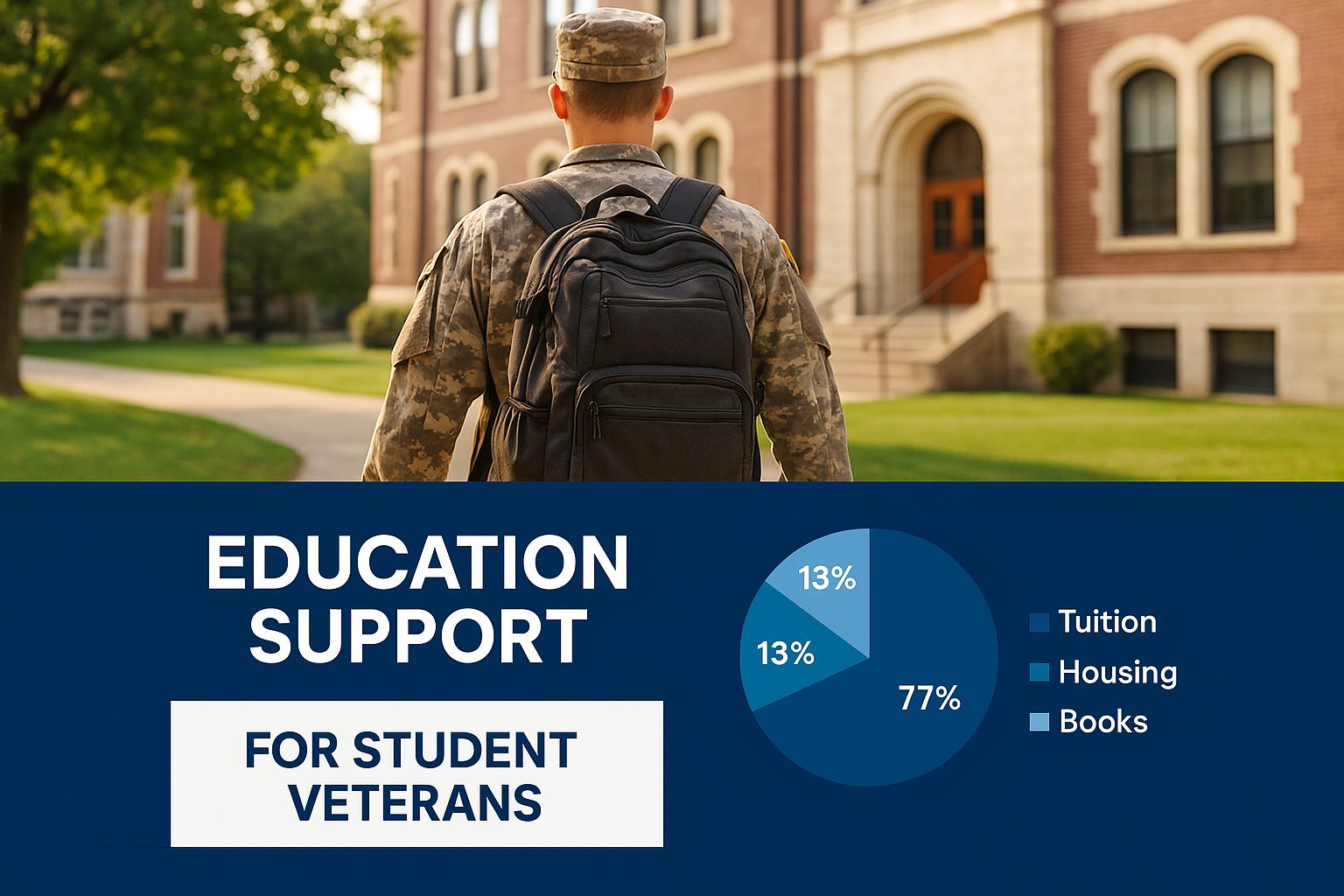
The infographic above illustrates the educational support available to veterans through their benefits. It highlights how these resources can help veterans transition to higher education and new career opportunities after their service. Accessing these benefits can be a significant step towards a successful return to civilian life.
Securing VA disability compensation offers a vital safety net for many veterans. However, navigating the claims process can be daunting. This guide provides proven strategies to improve your chances of approval, based on the experiences of veterans who have successfully secured their benefits.
Building a Strong Case: Documentation and Service Connection
A successful VA disability claim hinges on thorough documentation. This involves gathering all pertinent medical records, including diagnoses, treatment plans, and any evidence connecting your condition to your military service.
This service connection is paramount. It's about establishing a clear link—a direct line—between your time in the military and your current disability. Think of it as building a bridge between your service and your condition.
Understanding VA Ratings and Common Denial Triggers
The VA uses disability ratings, expressed as percentages, to reflect the severity of your condition and its impact on your daily life. These ratings determine your monthly compensation amount. Claims are often denied due to insufficient documentation or a weak service connection.
For instance, failing to provide comprehensive medical evidence or not clearly linking your condition to a specific in-service incident or exposure can result in delays or denials. As of August 2024, 5.5 million U.S. veterans were recognized as having a service-connected disability, affecting their eligibility for various benefits. You can find more detailed statistics at VA Claims Insider.
To better understand how different disability ratings translate to benefits, take a look at the comparison table below:
VA Disability Rating Benefits Comparison
| Disability Rating | Monthly Compensation | Additional Benefits | Healthcare Coverage | Employment Resources |
|---|---|---|---|---|
| 10% | $165.92 | Limited | May be eligible for certain healthcare services | Access to vocational rehabilitation and employment services |
| 30% | $466.73 | May qualify for additional allowances for dependents | Enhanced healthcare coverage | Prioritized access to employment services |
| 50% | $978.25 | Increased allowances for dependents, including spouse and children | Comprehensive healthcare coverage | Individualized employment support |
| 70% | $1,547.60 | Substantial allowances for dependents, including parents | Full healthcare coverage, including mental health services | Specialized employment programs for veterans with disabilities |
| 100% | $3,621.95 | Maximum allowances for dependents, including aid and attendance benefits | Complete healthcare coverage with priority access | Comprehensive vocational rehabilitation and employment assistance |
This table provides a general overview and individual benefits may vary. Consult the VA website for the most up-to-date information.
This table highlights how the level of support increases alongside the disability rating, underscoring the importance of accurately representing the severity of your condition.
Effective Appeals Strategies and Professional Representation
If your claim is denied, don't lose hope. The appeals process allows you to submit new evidence and bolster your case. Understanding the various appeal options is crucial. Seeking professional representation from an accredited Veteran Service Officer or a lawyer specializing in VA claims can significantly improve your odds of success. They can offer expert advice and guide you through the often complex appeals process.
Requesting Increases and Staying Informed
Your condition might worsen over time, warranting a higher disability rating and increased compensation. Don't hesitate to request an increase if this happens. This requires submitting updated medical documentation and demonstrating how the worsening condition further impacts your abilities.
Staying informed about VA regulations and benefit changes is also essential. Regularly checking the VA website and consulting with veteran service organizations can keep you up-to-date.
Key Takeaways for VA Claim Success
- Thorough Documentation: Compile comprehensive medical records and any evidence connecting your condition to your service.
- Clear Service Connection: Demonstrate a direct link between your military service and your current disability.
- Understand Ratings: Familiarize yourself with the VA rating system and how it affects your benefits.
- Appeals Process: Don’t be discouraged by denials. Explore the appeals process and consider professional assistance.
- Stay Informed: Keep current with VA regulations and benefit changes to maximize your support.
By following these strategies, you can confidently navigate the VA disability claims process and improve your chances of receiving the benefits you've earned. Your service deserves this support; don't hesitate to pursue it.
Navigating VA Healthcare Without Getting Lost

The VA healthcare system offers substantial benefits for veterans. However, many find it challenging to access all the services available to them. This guide will help you navigate the system and ensure you receive the care you deserve, based on insights from VA healthcare navigators and veterans currently using the system.
Enrolling in VA Healthcare: A Clear Path
Understanding your eligibility is the first step to enrolling. Your service history and discharge status, including the period served, time in service, and type of discharge, are key factors. After confirming your eligibility, the application process is simple through the VA website. Working with a VA healthcare navigator can streamline this process, offering personalized guidance and answering any questions.
Understanding Priority Groups and Accessing Services
The VA assigns veterans to priority groups based on factors like service-connected disabilities and income. This system prioritizes resources for those with the greatest need. Knowing your priority group will help you understand your position within the system and potential wait times for appointments. Once enrolled, you can access services by contacting your assigned VA medical center.
Comparing VA Healthcare to Private Insurance
VA healthcare differs significantly from private insurance. Unlike most private insurance, copayments for many VA services are waived. Understanding these differences can help veterans make informed choices about their healthcare options. Some specialized services offered by the VA may not be readily available through private insurance.
For example, the VA provides era-specific care programs designed for the unique health needs of veterans from different service eras, recognizing the particular exposures and risks associated with those times.
Specialized VA Programs and Veteran Experiences
The VA offers specialized programs often highly regarded by veterans. These programs cater to specific needs with focused expertise and support. Women's health services, mental health support, and era-specific care programs are just a few examples of specialized services designed for diverse veteran populations. These programs greatly contribute to the overall well-being of veterans.
Community Care, Emergency Services, and Coordination with Other Insurance
Veterans can use community care when VA facilities are not easily accessible. This allows veterans to receive care from non-VA providers, improving access to timely medical services.
Understanding the procedures for accessing emergency services is vital. This includes knowing when to visit a VA emergency room versus a community emergency room. Coordinating VA benefits with other insurance, such as private insurance or Medicare, can optimize coverage and minimize out-of-pocket costs.
Pharmacy Benefits, Telehealth, and Preventive Services: Veteran-Tested Strategies
Using the VA mail-order pharmacy is often a good strategy for maximizing pharmacy benefits. Telehealth offers convenient access to remote consultations and care, reducing travel time and expanding access to specialists. Taking advantage of preventive services, like routine checkups and screenings, helps promote long-term health and well-being. These strategies improve the overall healthcare experience for veterans.
By using this guide, you can confidently navigate the VA healthcare system and access the services you’ve earned. Don’t hesitate to take advantage of the benefits you deserve.
Transforming Your Future With Education Benefits
Your GI Bill benefits are a powerful tool for career advancement and personal growth. Many veterans, however, don't fully utilize this incredible resource. This guide explores how successful veterans have maximized these benefits to transform their post-military lives.
Comparing the Post-9/11 GI Bill and the Montgomery GI Bill
The Post-9/11 GI Bill and the Montgomery GI Bill offer distinct advantages. Understanding these differences helps veterans select the program best suited for their individual needs and goals.
-
Post-9/11 GI Bill: This program often covers full tuition and fees at public institutions. It also provides a monthly housing allowance based on the cost of living in the area where you attend school. This is a significant benefit for veterans attending school in high-cost areas.
-
Montgomery GI Bill: This program offers a set monthly payment, regardless of location or tuition costs. This can be advantageous for veterans pursuing less expensive education programs or attending school in lower-cost areas.
Choosing the right GI Bill depends on individual circumstances and career aspirations. For veterans navigating VA healthcare, understanding how their medical information is managed is important. More information about knowledge management in healthcare can be helpful.
Maximizing Your Education Benefits
Several strategies can help you maximize your GI Bill benefits. Consider these options to make the most of your educational opportunities:
-
Housing Allowance Optimization: Attending school in a higher cost-of-living area can increase your monthly housing allowance. However, carefully weigh this against potentially higher tuition costs at private institutions in those areas. Consider the overall cost of attendance, not just the housing allowance.
-
Extending Benefit Periods: Combining different education programs can extend the period you receive benefits. For example, pursuing a bachelor's degree followed by a master's allows veterans to pursue advanced degrees and increase their career opportunities over a longer period.
-
Non-Traditional Paths: The GI Bill can also fund apprenticeships, certifications, and entrepreneurship training, offering flexible pathways to civilian careers. These non-traditional options are a significant advantage for veterans pursuing specific trades or starting their own businesses.
Transferring Benefits and Avoiding Costly Mistakes
Transferring GI Bill benefits to dependents can provide educational opportunities for family members. This process, however, has specific requirements and deadlines. Understanding the rules avoids costly mistakes and ensures a smooth transfer.
Furthermore, accurately completing the application process and providing all necessary documentation is crucial. This minimizes delays and ensures you receive the benefits you've earned.
Supplementing Your GI Bill
State-specific programs can supplement your GI Bill, significantly increasing your educational funding. Researching and applying for these programs can provide additional financial support. These programs often offer grants and scholarships specifically for veterans, easing the financial burden of higher education and expanding your educational opportunities.
By leveraging these strategies, veterans can transform their futures through education, maximizing the valuable benefits they have earned. This empowerment contributes to a stronger workforce and community.
Securing Your Home With VA Housing Benefits
The VA Home Loan benefit is a powerful tool for veterans seeking the stability and financial security of homeownership. This guide explores how these programs can help veterans build wealth and achieve their housing goals. We'll cover strategies for maximizing benefits, securing favorable interest rates, and responsibly navigating the no-down-payment option.
Maximizing Your VA Loan Entitlement
The VA loan entitlement is the amount the VA guarantees to the lender. This guarantee minimizes lender risk and often eliminates the need for a down payment. Understanding your entitlement and how to maximize it is crucial. A larger entitlement allows you to purchase a more expensive home with fewer upfront costs. A full entitlement, for example, can cover the loan amount up to the conforming loan limits established by the Federal Housing Finance Agency.
Competitive Interest Rates and the No-Down-Payment Advantage
VA loans frequently offer competitive interest rates compared to conventional mortgages. This can lead to considerable savings over the life of the loan. The no-down-payment option is a significant benefit, but responsible borrowing is paramount. While you can borrow a substantial amount, carefully consider your long-term financial goals and budget to determine how much you should borrow.
Minimizing or Waiving Funding Fees
The VA funding fee helps offset the cost of VA loans for taxpayers. Fortunately, veterans can minimize or waive this fee. Veterans with service-connected disabilities are often eligible for waivers. Understanding these options can significantly reduce initial costs, which is especially helpful for veterans with limited income.
Comparing Lenders and Navigating the Appraisal Process
It's essential to compare different VA-approved lenders to secure the most favorable interest rates and loan terms. Careful comparison can save you thousands over the loan's lifespan. The appraisal process, which ensures the property's value justifies the loan amount, protects both the veteran and the lender.
Adaptive Housing Grants and Property Tax Exemptions
Veterans with service-connected disabilities may qualify for adaptive housing grants. These grants can fund home modifications to meet specific accessibility needs, allowing veterans to live more independently and comfortably. Many states also offer property tax exemptions for veterans, potentially leading to significant savings. Researching these exemptions in your area is highly recommended.
VA Refinancing Options: Lower Payments and Accessing Equity
VA loans offer refinancing options such as the Interest Rate Reduction Refinance Loan (IRRRL) and the Cash-Out Refinance Loan. An IRRRL can lower your monthly payments, while a Cash-Out Refinance Loan lets you access your home equity for other financial needs. These options provide flexibility and can help you reach your financial objectives.
By understanding and utilizing these VA housing benefits, veterans can achieve homeownership and build a secure financial future. The 2025 Federal Benefits Guide for Veterans and the VA website provide valuable information on these programs. Contacting your local regional VA office is also a good resource. These resources are invaluable tools to help veterans understand and access the full range of available housing benefits.
Unlocking Hidden Financial Benefits Most Veterans Miss
Many veterans understandably focus on well-known benefits like healthcare through the VA and the GI Bill. However, a wide range of other financial advantages often go unnoticed. This guide explores these overlooked opportunities, empowering veterans to build a more secure financial future.
Pension Programs for Wartime Veterans
Wartime veterans experiencing financial hardship may qualify for pension programs offering substantial monthly support. These programs provide critical assistance to those who served during specific wartime periods and meet certain income and disability requirements. This support can significantly improve their quality of life.
Dependent and Survivor Benefits: Supporting Your Family
Dependent benefits are available to surviving family members of veterans, offering crucial financial assistance after the loss of a loved one. These benefits can help families manage expenses and maintain financial stability during difficult times. It's important for families to explore these options and secure the support they deserve.
Emergency Financial Assistance: Navigating Difficult Transitions
Life after service can bring unexpected financial challenges. Fortunately, several programs offer emergency financial assistance to veterans during these transitions. This aid can help cover immediate needs like housing, utilities, and food, acting as a safety net during times of crisis. Knowing these resources is essential.
Tax Advantages: Saving Thousands Annually
Veterans can access several tax advantages, potentially saving thousands of dollars annually. These include state-specific exemptions, which vary by location, and federal considerations for disability payments. Understanding these tax breaks is crucial for maximizing financial resources.
Some states, for example, offer property tax reductions for veterans, while others exempt a portion of military retirement income. Consult your state's Department of Revenue for specific details.
Additionally, the U.S. Department of Veterans Affairs (VA) proposed a $369.3 billion budget for fiscal year 2025. Of this amount, $210.6 billion is allocated for traditional veteran benefits, including disability compensation and pensions. You can explore the budget details further: FY 2025 VA Budget In Brief
Federal Hiring Preferences and Life Insurance: Career and Security
Veterans often receive hiring preferences in federal employment, giving them a competitive edge. This advantage can lead to fulfilling government careers. Furthermore, veteran-exclusive life insurance programs offer affordable coverage tailored to their needs, providing financial security for their families.
To understand more about federal hiring preferences for veterans, visit the U.S. Office of Personnel Management.
Specialized Financial Counseling: Expert Guidance
Navigating the complex world of veteran benefits can feel overwhelming. Specialized financial counseling services designed for veterans offer expert guidance and support. These services can assist with developing personalized financial plans, managing debt, and making informed financial decisions.
Before the table below, we'll add a brief introduction to explain its purpose. Following the table, we'll provide a short conclusion summarizing the key insights.
The following table provides a general overview of some financial support programs available to veterans. Note that eligibility requirements and specific benefits can vary. Always consult the respective program's official resources for the most up-to-date and detailed information.
Veteran Financial Support Programs: Overview of available financial assistance programs for veterans by category and eligibility
| Program Name | Financial Benefit | Eligibility Requirements | Application Process | Supporting Documentation |
|---|---|---|---|---|
| VA Pension | Monthly payments | Wartime service, financial need, disability | Apply through VA | Discharge papers, financial records, medical records |
| Survivors Pension | Monthly payments | Death of veteran due to service-connected disability | Apply through VA | Death certificate, marriage certificate, veteran's service records |
| VA Home Loan Guaranty | Loan guaranty for home purchase | Qualifying service | Apply through a VA-approved lender | Certificate of Eligibility, loan application |
| GI Bill | Educational benefits | Qualifying service | Apply through VA | Discharge papers, educational plan |
| Vocational Rehabilitation and Employment | Job training and placement services | Service-connected disability | Apply through VA | Medical records, employment history |
This table highlights the variety of financial support programs available to veterans, ranging from direct financial assistance like pensions to educational and employment support. It’s important to thoroughly research each program to understand the specific eligibility criteria and application procedures.
Building a Strong Financial Future
By exploring these often-overlooked benefits, veterans can build a stronger financial foundation. From pension programs and tax advantages to career opportunities and specialized financial counseling, these resources are designed to support veterans and their families in achieving financial well-being. Take advantage of the full spectrum of benefits earned through service.
Conquering the VA Application Process With Confidence
The difference between a denied and approved VA claim often hinges on how effectively you navigate the application process. This guide draws insights from successful applicants and Veteran Service Officers (VSOs) to break down each step, empowering you with the confidence to pursue your benefits.
Creating Your VA.gov Account and Gathering Documentation
Begin by creating a secure account on VA.gov. This portal will be your central hub for accessing and managing all your VA benefits. It’s your personalized command center for everything VA-related. Next, carefully gather your documentation. This includes your DD-214 (discharge papers), medical records, and any supporting evidence relevant to your claim. Organize these documents clearly to ensure a smooth submission process. A well-organized approach will minimize processing time and potential frustration.
Submitting a Stand-Out Application
When submitting your application, clarity and completeness are paramount. Clearly state the benefits you are seeking and provide detailed information to support your claim. Think of your application as telling a story – a clear and compelling narrative of your service and how it relates to your current situation. Ensure the narrative is easy for VA raters to understand. A well-crafted application significantly improves your chances of a positive outcome.
The Critical Role of Veteran Service Officers
Accredited Veteran Service Officers (VSOs) are invaluable resources during the claims process. They offer expert guidance, help gather documentation, and represent you before the VA. They are your advocates, experienced in navigating the complexities of the VA system. Finding a reputable VSO with a proven track record is highly recommended. Seek recommendations from fellow veterans or veteran organizations. This partnership can significantly strengthen your application.
Tracking Your Application Status and Responding to Requests
After submitting your application, actively track its status through your VA.gov account or by contacting the VA directly. Be proactive in responding to any requests for additional information. Consider these requests as opportunities to bolster your case. Provide clear, concise, and compelling responses that directly address the VA’s inquiries.
Interpreting Decision Letters and Navigating Appeals
When you receive a decision letter, review it carefully to understand the outcome. If approved, the letter will detail your benefit award. If your claim is denied, don't be discouraged. The VA offers various appeals options. Choosing the right appeal path depends on your specific circumstances. A VSO can offer valuable assistance in navigating this process. Understanding the different review options, such as a Higher-Level Review or a Board Appeal, allows you to make informed decisions about the best way to proceed. These options provide several ways to continue pursuing your benefits, ensuring you have every opportunity to receive the support you earned. The VA website offers comprehensive information about the appeals process.
By following these strategies, you can confidently navigate the VA application process and increase your chances of a successful outcome for all your benefit applications. Your service and sacrifice deserve this support; pursue it diligently. Homefront Group provides expert legal and professional services specifically designed for veterans. Our team can help you navigate the complexities of VA benefits, ensuring you receive the support you deserve. Take our free 3-minute quiz to identify your qualifying benefits, and let us help you develop a personalized strategy for achieving your post-military goals.