

Understanding Your Veteran Benefits Eligibility
Eligibility for veteran benefits can often feel overwhelming. This section clarifies the key factors determining your access to VA support. We'll explore the fundamental criteria, drawing from insights shared by benefits specialists and veterans experienced with navigating the system. This foundational knowledge will equip you to explore specific benefit programs with greater confidence.
Discharge Status and Service Length: The Cornerstones of Eligibility
The most crucial aspects of eligibility are your discharge status and length of service. These factors often carry more weight than veterans initially realize. For example, a veteran with an honorable discharge and extensive service will likely qualify for a broader range of benefits than a veteran with a general discharge and shorter service time. Understanding these fundamental criteria is essential.
For most U.S. Department of Veterans Affairs (VA) benefits, veterans must have been discharged from active military service under conditions other than dishonorable. This basic eligibility criterion affects millions of veterans, from World War II to recent engagements. The VA also categorizes veterans into priority groups to manage access to healthcare and benefits, prioritizing those with service-connected disabilities, former prisoners of war, and those receiving federal or state aid. Explore this topic further: Find more detailed statistics here
Understanding VA Priority Groups
The VA uses a priority group system to allocate resources and manage access to healthcare and other benefits. This system prioritizes veterans with greater needs, such as those with service-connected disabilities or former prisoners of war. Veterans receiving federal or state aid may also receive higher prioritization. Interestingly, understanding how different types of absences affect eligibility requires strategies similar to those used in workplace absence management. Check out some helpful absence management strategies.
How Service History Affects Benefit Levels
Even within the same priority group, individual circumstances can influence available benefits. Two veterans with similar service lengths and disability ratings might receive different benefit levels based on their number of dependents. The type of service—combat versus non-combat—can also influence eligibility for specific programs. Understanding these nuances is crucial for veterans seeking to maximize their benefits.
Service Requirements That Determine Your Benefits
Eligibility for veteran benefits hinges on military service. However, the specifics of your service history are key in determining which benefits you qualify for. This includes factors like the length of your service, where you were deployed, and your military occupational specialty (MOS). We’ll explore how these factors can significantly impact your access to different VA programs.
Minimum Service Length and Benefit Types
The length of your service is a primary factor in determining your eligibility for many VA benefits. Some benefits might require a minimum service of 180 days during wartime. Others might require longer periods of service during peacetime.
There are also exceptions to these rules. Veterans with service-connected disabilities may be eligible for benefits even with shorter service periods. Understanding these nuances is crucial for navigating the VA benefits system.
To help clarify these requirements, let's take a look at the minimum service requirements for various benefit types.
To illustrate how service requirements impact benefit eligibility, the table below outlines the minimum service durations for qualifying for different VA benefit programs. The table also highlights how eligibility varies depending on whether the service was performed during wartime or peacetime, and notes any exceptions to these general rules.
Minimum Service Requirements by Benefit Type
| Benefit Type | Minimum Service Required | Wartime Service | Peacetime Service | Exceptions |
|---|---|---|---|---|
| VA Home Loan Guaranty | Varies | 90 continuous days | 181 continuous days | Certain wartime service periods may have shorter requirements. |
| Education Benefits (e.g., Post-9/11 GI Bill) | Varies by program | 90 days aggregate | 181 continuous days | Minimum service may vary depending on the specific education program and individual circumstances, such as service-connected disabilities. |
| VA Healthcare | Varies based on factors like service dates and disability status | Minimum requirements can be waived for service-connected disabilities. | ||
| VA Pension | 90 days or more with at least one day during wartime | 90 days | Must have a non-service-connected disability and meet income limits. |
The complexities of VA benefits mean that individual circumstances can greatly affect eligibility. Consulting with a Veterans Service Organization (VSO) can provide personalized guidance.
Combat vs. Non-Combat Service
Whether your service was in a combat or non-combat role can also affect your eligibility for certain benefits. Some benefits are specifically for veterans who experienced combat, acknowledging the unique challenges they face.
Certain operational deployments might also have special qualification provisions. These can expand access to benefits beyond standard requirements. It’s important to understand how the nature of your service can impact your eligibility for specific programs.
Guard and Reserve Service Considerations
Service in the National Guard and Reserves counts toward meeting minimum service requirements for certain benefits. Periods of active service for training and deployments are factored into eligibility calculations. This allows reservists and guardsmen to qualify for benefits even without extended periods of continuous active duty.
The specific rules for calculating Guard and Reserve service can be complex. Carefully reviewing eligibility guidelines is crucial for understanding how your service translates to benefit eligibility.
Understanding Special Eligibility Provisions
Special provisions can impact eligibility beyond standard service requirements. These provisions often apply to specific groups of veterans. This includes veterans exposed to toxic substances or those who served during particular conflict eras.
These special provisions can expand eligibility for veterans who might not otherwise qualify based on their service length or type. For example, some veterans may qualify for VA healthcare even with a less-than-honorable discharge, especially for service-connected conditions. Staying informed about these provisions is essential for maximizing your access to potential benefits.
How Your Discharge Status Shapes Benefit Eligibility

Your discharge paperwork contains codes that determine your access to veteran benefits. These codes reflect your discharge status, a critical factor in determining your eligibility. This section explains how different discharge types impact your access to these benefits and offers guidance for veterans experiencing challenges.
Understanding Discharge Status Categories
Discharge statuses are categorized on a spectrum, from Honorable to Dishonorable, with several designations in between. An Honorable Discharge generally grants full access to VA benefits. However, other discharges, like a General or Other Than Honorable discharge, may significantly limit or even prevent access to benefits.
- Honorable Discharge: Awarded for exemplary service.
- General Discharge (Under Honorable Conditions): Indicates some minor misconduct occurred during service.
- Other Than Honorable (OTH) Discharge: Issued for more serious offenses.
- Bad Conduct Discharge: Result of a court-martial conviction.
- Dishonorable Discharge: Reserved for the most severe offenses.
The specific details of each category have a significant impact on eligibility. Understanding your specific discharge status is essential.
How Discharge Status Affects Benefits
Your discharge status acts as a gateway to various VA benefits. An Honorable Discharge typically provides access to benefits such as healthcare through the VA, education through programs like the GI Bill, and home loans. A less-than-honorable discharge can drastically restrict access. For example, a veteran with an OTH discharge might face obstacles in accessing the GI Bill or VA home loan programs.
This means your discharge type directly affects your qualifications for crucial support services. Understanding the implications of your discharge is the first step toward accessing the benefits you may be entitled to.
Navigating Discharge Upgrade Requests
Veterans with less-than-honorable discharges have options. A discharge upgrade can potentially change your discharge status and restore your eligibility for benefits. This involves formally requesting a review by the appropriate board, accompanied by supporting evidence demonstrating a more favorable record of your service.
The discharge upgrade process can be challenging, but many veterans have successfully achieved upgrades. Thorough documentation and persistence are essential. Working with a Veterans Service Organization (VSO) or an attorney specializing in military law can significantly improve the likelihood of a successful outcome.
Special Considerations for Specific Circumstances
Certain circumstances may warrant specific consideration during the discharge review. For example, veterans discharged under the now-repealed "Don't Ask, Don't Tell" policy or those whose mental health conditions contributed to their discharge may qualify for an upgrade.
In addition, some veterans with less-than-honorable discharges may still be eligible for certain healthcare services, particularly for service-connected disabilities. It’s important to explore every avenue available and become familiar with the specific regulations pertaining to your individual circumstances. Consulting with a VSO can help you navigate these complex situations.
Maximizing Your VA Disability and Financial Benefits
Securing eligibility for veteran benefits is a critical first step. However, maximizing your VA disability and financial benefits requires a thorough understanding of the system. This means knowing how your disability rating translates into financial support and access to additional programs.
Understanding the VA Disability Rating System
The VA assigns disability ratings in 10% increments, ranging from 10% to 100%. These percentages reflect the severity of your service-connected disabilities and directly impact your monthly compensation. Even small differences in these ratings can significantly change your benefits.
For example, a 30% disability rating might provide a few hundred dollars each month, while a 50% rating could double that amount. This difference adds up over time and profoundly affects a veteran's financial well-being.
How Dependent Status Affects Compensation
Your dependent status, such as having a spouse, children, or dependent parents, also influences your monthly compensation. The VA provides additional allowances for dependents, acknowledging the increased financial responsibility of supporting a family.
A veteran with a 50% disability rating and two dependent children will receive a higher monthly payment than a veteran with the same rating but no dependents. Understanding these dependent allowances ensures you receive the full support available.
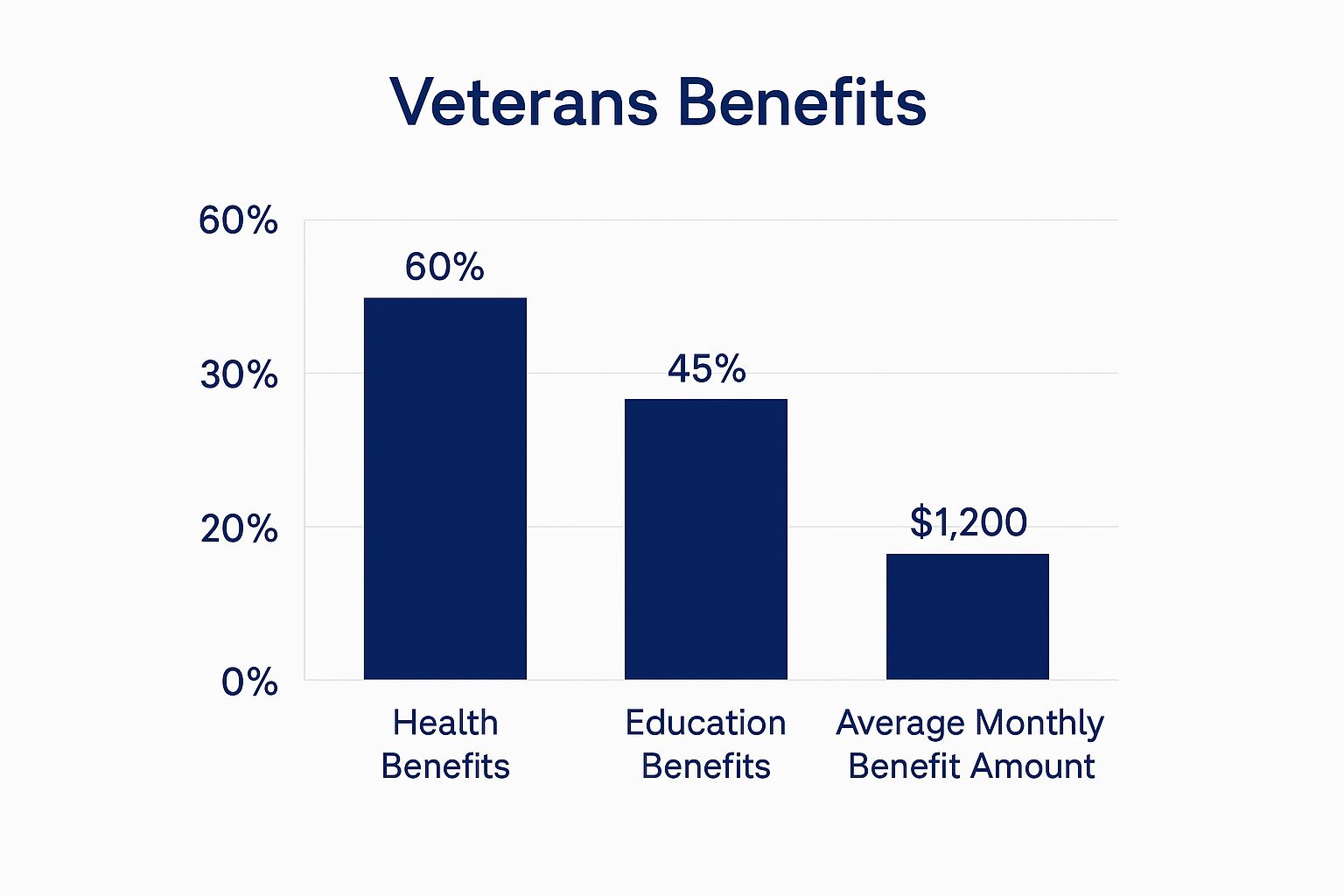
The infographic above illustrates veteran health and education benefit utilization and the average monthly benefit amounts. While many veterans utilize health benefits, fewer use education benefits. The average monthly benefit highlights the importance of maximizing your disability rating for optimal financial support.
2025 VA Disability Compensation Rates
In 2025, the VA adjusted its compensation rates, including a 2.5% cost-of-living adjustment (COLA). This adjustment helps veterans keep up with rising living costs. Ratings range from 10% to 100%, with compensation scaled accordingly.
To illustrate this, a veteran with a 50% disability rating receives $1,102.04 monthly if single. This increases to $1,378.79 if they support two parents. For further details on the 2025 pension benefits, visit VJ Russo Law.
The following table provides a more detailed breakdown of the 2025 VA Disability Compensation Rates. It illustrates the varying monthly compensation amounts based on disability rating and dependent status.
VA Disability Compensation Rates by Rating
| Disability Rating | Single Veteran | With Spouse | With Spouse and Child | With Two Parents |
|---|---|---|---|---|
| 10% | $165.92 | $165.92 | $190.54 | $165.92 |
| 20% | $327.99 | $327.99 | $360.62 | $327.99 |
| 30% | $496.19 | $496.19 | $537.06 | $496.19 |
| 40% | $684.29 | $684.29 | $733.42 | $684.29 |
| 50% | $907.04 | $987.47 | $1,051.54 | $1,102.04 |
| 60% | $1,102.88 | $1,268.81 | $1,348.05 | $1,378.79 |
| 70% | $1,361.33 | $1,615.02 | $1,713.58 | $1,724.25 |
| 80% | $1,596.95 | $1,934.74 | $2,052.86 | $2,042.89 |
| 90% | $1,808.17 | $2,225.07 | $2,363.10 | $2,331.13 |
| 100% | $2,094.89 | $2,593.14 | $2,752.06 | $2,699.06 |
As you can see, the compensation amounts increase significantly with higher disability ratings and the addition of dependents. This data underscores the importance of accurately reporting your disability and dependent information to the VA.
Special Monthly Allowances
Beyond standard disability compensation, veterans might qualify for special monthly allowances (SMAs) based on specific circumstances. These include allowances for Aid & Attendance if you need help with daily living or housebound status if you're mostly confined to your home.
These SMAs can substantially increase your monthly income and provide crucial financial relief. It's essential to understand the criteria for these allowances and apply if eligible.
Combining Multiple Disabilities
Many veterans have multiple service-connected disabilities. The VA uses a combined rating system to assess the overall impact of these conditions. This system acknowledges that the combined effect of multiple disabilities can be greater than the sum of individual ratings.
Understanding how the VA combines ratings is vital to ensure your combined disability rating accurately reflects your impairment. Working with a Veteran Service Officer (VSO) can be particularly helpful in navigating this process and getting the correct compensation.
Navigating VA Healthcare Priority Groups and Access
The VA healthcare system uses a priority group system to manage the high demand for its services. This system organizes veterans into eight priority groups, each with specific eligibility requirements, copay costs, and access to care. Understanding your assigned priority group is essential for managing your healthcare expectations and any potential out-of-pocket expenses.
How Priority Groups Affect Your Healthcare
These priority groups have a real impact on your healthcare experience. Your assigned group affects many aspects of your care, from appointment scheduling to prescription costs. For example, a veteran in Priority Group 1 (service-connected disabilities rated 50% or higher) typically experiences quicker access to appointments and reduced, or even waived, medication copays. However, veterans in lower priority groups might encounter longer wait times and higher out-of-pocket costs for certain services.
Criteria for Priority Group Assignment
Several key factors determine your priority group assignment. These include your service-connected disability rating, income level, and special eligibility status (such as being a former prisoner of war). The system can be complex, and two veterans with similar service histories could be placed in different priority groups. For example, a veteran with a 30% service-connected disability might be in Priority Group 5, while a veteran with a 70% service-connected disability would be in Priority Group 2. This difference can substantially impact the cost and accessibility of their care.
Moving to a Higher Priority Group
Your priority group is not permanently fixed. Changes in your health or financial situation could qualify you for a higher priority group. If your service-connected disability worsens and your rating increases, you could move to a higher group and receive increased benefits. Exploring resources like In Home Care Medicaid can also provide information about financial aid for home-based care, potentially influencing your VA healthcare costs. Staying informed about your eligibility and keeping your information current with the VA is essential.
Specialized Eligibility Pathways
Certain veterans qualify for specialized eligibility pathways due to unique circumstances. Veterans exposed to toxic substances, like Agent Orange or burn pits, during their service might be eligible for faster access to care and specialized health screenings. Veterans with catastrophic disabilities often require unique care and attention. These pathways are designed to offer targeted support and address the distinct health concerns of these veteran populations.
Accessing Specialized Services
Even veterans in lower priority groups can access specialized services. These services may include dental care, mental health services, and long-term care, although eligibility and cost-sharing may differ. Understanding the specific requirements for each service and working with a Veterans Service Officer can be helpful. Veteran benefits eligibility is a multifaceted topic that benefits from careful consideration and personalized support.

Unlocking Education and Housing Benefit Eligibility
Education and housing benefits are invaluable resources for veterans. However, understanding the eligibility criteria can be challenging. This section clarifies how veterans can maximize these benefits, focusing on service requirements, time limits, and other key factors.
Maximizing Education Benefits: GI Bill and VR&E
The GI Bill offers several programs, including the Post-9/11 GI Bill and the Montgomery GI Bill, each with distinct eligibility requirements. Eligibility for the Post-9/11 GI Bill often hinges on the length of active-duty service after September 10, 2001. This program can cover tuition, housing, books, and other education-related expenses.
The Montgomery GI Bill presents alternative eligibility pathways, often involving a service commitment and contribution during active duty. Understanding each program's specifics is crucial for selecting the best option for your educational pursuits. Veteran Readiness and Employment (VR&E), or Chapter 31, provides additional educational and vocational support for veterans with service-connected disabilities.
Transferring Education Benefits to Dependents
The Post-9/11 GI Bill allows for the transfer of benefits to dependents, such as spouses and children. This process, however, has specific requirements. Generally, the service member needs at least six years of service and must commit to four more. Initiating the transfer through the Department of Defense (DoD) while still on active duty is essential. Time limits apply to dependents using these transferred benefits, so careful planning is vital.
Navigating VA Home Loan Eligibility
VA home loans offer substantial benefits, including no down payment and competitive interest rates. Eligibility for these loans depends on meeting specific service requirements, which vary by service era and discharge status. Obtaining a Certificate of Eligibility (COE) is the first step, officially documenting your eligibility.
Understanding Service Requirements for Loan Guaranty
The VA doesn't lend money directly but guarantees a portion of the loan, mitigating risk for lenders. This guarantee facilitates mortgage approval for veterans. However, the required service length for the loan guaranty can differ. For example, wartime service may require a shorter minimum service period than peacetime service. Understanding these differences helps veterans determine their loan qualification status.
Housing Grants for Disabled Veterans
Beyond home loans, the VA provides specialized housing grants for disabled veterans. These grants can help veterans modify their homes to accommodate service-connected disabilities. For example, grants could fund modifications such as ramps, wider doorways, or adapted bathrooms. These changes promote independence and enhance quality of life. Accessing these programs requires careful attention to eligibility criteria related to the disability's nature and severity. Choosing the appropriate program—whether the Post-9/11 GI Bill, Montgomery GI Bill, VR&E, VA home loans, or housing grants—requires a clear understanding of your individual service history, current circumstances, and future ambitions. Consulting a Veterans Service Organization or a specialized advisor can offer personalized guidance. Ultimately, comprehensive knowledge of veteran benefits eligibility empowers veterans to utilize all available support.
Overcoming Common Veteran Benefits Roadblocks
Securing veteran benefits eligibility is a significant first step. However, many veterans face obstacles when accessing these hard-earned benefits. This section offers practical strategies for overcoming common challenges, such as missing service records, eligibility verification issues, and application denials.
Dealing With Missing Service Records
Missing service records can significantly delay or even prevent the approval of veteran benefits applications. This is especially frustrating for veterans who served decades ago. Fortunately, there are ways to reconstruct these vital documents. The National Archives and Records Administration (NARA) holds many military service records. Requesting copies through their website or by mail is a good starting point.
Additionally, contacting your former military unit or your state’s veterans' affairs office may also be helpful. These organizations might have copies of your records or can guide you toward obtaining them. Persistence and thorough documentation are crucial when dealing with missing records.
Addressing Eligibility Verification Issues
Even with complete records, eligibility verification can be complex. The VA has specific requirements for each benefit program, and minor discrepancies in your documentation can cause delays. Double-checking that your application is complete and includes all required supporting documentation is essential.
For instance, ensure your discharge paperwork accurately reflects your service dates and discharge status. These seemingly small details can significantly impact your eligibility. Working with a Veterans Service Organization (VSO) can be invaluable. They can review your application beforehand, catching potential errors that could lead to delays.
Appealing Benefit Application Denials
A benefit application denial is discouraging, but it’s not the end of the road. Many veterans successfully appeal denied claims. Understanding the reasons for the denial is the first step toward a successful appeal. The denial letter from the VA will outline the specific grounds for their decision.
Working with a VSO can help you navigate the appeals process and gather supporting evidence, strengthening your case. This might include medical opinions, buddy statements from fellow service members, or additional service records. Appeals can be complex, so expert assistance can significantly improve your chances of a successful outcome.
Working Effectively with Veterans Service Organizations
Veterans Service Organizations (VSOs) provide free assistance to veterans navigating the benefits system. These organizations employ experienced professionals who can help with everything from gathering documentation to filing appeals. They understand the intricacies of veteran benefits eligibility and offer personalized guidance.
Knowing which questions to ask and what documentation to prepare is crucial. VSOs can help you compile a complete and accurate application, minimizing potential delays. They can also advocate for you throughout the process, ensuring your rights are protected.
By using these strategies and partnering with a VSO, you can proactively address potential roadblocks. Persistence and meticulous preparation are key to securing the veteran benefits you have earned.