Navigating Your Military-to-Civilian Journey
Transitioning from military service to civilian life can be a significant adjustment. It requires careful planning and access to the right resources. The VA Transition Assistance Program (TAP) provides service members with the tools and support they need to successfully manage this important life change.
TAP plays a vital role in assisting the more than 200,000 U.S. service members who transition from active duty each year. The program offers comprehensive information, resources, and tools designed to help service members and their families navigate the often complex process of reintegrating into civilian life. These resources cover critical areas like employment, education, healthcare, and accessing benefits. TAP's holistic approach includes career counseling, benefit briefings, and job readiness workshops. Find more detailed statistics here
Understanding TAP Eligibility and Structure
Who qualifies for TAP? Generally, service members with a minimum of 180 continuous days of active duty are eligible, including members of the National Guard and Reserve. It's recommended that those planning retirement begin engaging with TAP at least two years in advance. This provides ample time to prepare. However, even those facing unforeseen separations should start TAP as soon as possible. Understanding the legal landscape is important during any transition. For example, you can find information on legal guidelines for employee background checks in India.
TAP uses a structured process to guide you through the transition. The process begins with Individualized Initial Counseling (IC). During IC, you'll meet with a TAP counselor, complete a self-assessment, and develop a personalized Individual Transition Plan (ITP). This plan outlines your individual needs and goals for civilian life.
Key Components of the TAP Program
After the IC, Pre-Separation Counseling provides vital information on benefits, entitlements, and available resources. Spouses and caregivers are encouraged to participate in these sessions. This ensures the entire family is prepared.
TAP also offers a modular curriculum covering essential areas of civilian life:
- Employment preparation, including resume writing and interview techniques.
- Higher education planning and exploration.
- Financial readiness and budgeting.
- Accessing VA benefits and healthcare services.
- Transitioning mental health care and stress management.
- Exploring entrepreneurship resources and opportunities through the SBA.
The curriculum undergoes regular reviews and updates to ensure it remains aligned with the current job market and the evolving needs of transitioning service members. The program concludes with a Capstone Event within 90 days of separation. During this event, your commander verifies that you've met Career Readiness Standards (CRS) and have a finalized ITP. This final step confirms your readiness for a successful civilian future.
Breaking Down the VA TAP Components That Matter

Understanding the individual components of the VA Transition Assistance Program (VA TAP) is crucial for a smooth transition to civilian life. It's more than just attending; it's about recognizing the impact of each element, from counseling sessions to career tracks. Taking the time to understand each component increases your chances of a successful transition.
Individualized Initial Counseling and the Individual Transition Plan
Your transition journey starts with Individualized Initial Counseling (IC). This critical first step helps you assess your skills, interests, and goals. Working with a TAP counselor, you'll develop a personalized Individual Transition Plan (ITP), your roadmap outlining specific steps based on your unique circumstances. This personalized approach acknowledges that each service member has individual needs and aspirations.
Pre-Separation Counseling and VA Benefits Briefings
Pre-Separation Counseling is the next key component, offering vital information about benefits and entitlements. This counseling clarifies complex topics like healthcare, education benefits, and financial planning. VA benefits briefings then provide a more in-depth look at specific VA programs and services, like the valuable home loan guarantee program. With an 85% positive rating from participating veterans, these briefings provide clarity and support during this significant life change.
Exploring Career Tracks and the Capstone Event
VA TAP offers various specialized career tracks, focusing on areas like entrepreneurship, education, or direct employment. Understanding licensing is also an important aspect of transitioning. For example, if you're interested in drones, research the requirements for an FAA Drone Pilot License. These career tracks allow you to tailor your transition plan to your career goals. The Capstone Event is the culminating experience, confirming your readiness for civilian life. Your commander verifies your completion of the Career Readiness Standards and reviews your finalized ITP, solidifying your preparedness for a successful civilian future.
To help you understand the program better, let's review the main components in more detail. The following table breaks down each component of the VA TAP program, explaining their duration, focus, and ideal timing for participation.
VA TAP Program Components
A breakdown of the main components of the VA Transition Assistance Program and what each offers to transitioning servicemembers
| Program Component | Duration | Focus Areas | When to Participate |
|---|---|---|---|
| Individualized Initial Counseling (IC) | ~2 hours | Self-assessment, Goal setting, Transition planning | 12-24 months prior to separation |
| Pre-Separation Counseling | ~2 hours | Benefits overview, Entitlements, Resources | 6-12 months prior to separation |
| VA Benefits Briefings | Varies | Specific VA programs and services (e.g., healthcare, education, home loans) | Throughout the transition process |
| Career Tracks | Varies | Entrepreneurship, Education, Direct Employment | Based on individual career goals |
| Capstone Event | ~2 hours | Readiness confirmation, Commander review of ITP | Just prior to separation |
This table provides a concise overview of the VA TAP components, helping you navigate the program effectively. Each element plays a vital role in preparing you for a successful transition to civilian life. By understanding these components and engaging fully with the program, you can maximize your opportunities for a fulfilling post-military career.
What Actually Works: TAP Success Stories and Outcomes
The VA Transition Assistance Program (VA TAP) offers a range of services designed to smooth the move from military to civilian life. But how effective are these services in practice? This section explores the real-world results veterans experience after completing TAP, highlighting the program elements with the most positive impact.
Employment and Education Successes
One of VA TAP's primary goals is helping veterans find meaningful employment. Many veterans credit the program's resume writing workshops and interview preparation sessions as instrumental in landing their first civilian job.
The focus on translating military skills into civilian-friendly language proves especially valuable. For instance, a former logistics officer might emphasize their project management experience, while a medic could highlight their medical training and experience. This helps bridge the gap between military experience and civilian career expectations.
Beyond employment, TAP assists veterans in accessing educational opportunities. The program provides guidance on using the GI Bill, navigating college applications, and selecting suitable educational programs. This support is crucial for veterans seeking higher education or vocational training.
Accessing Healthcare and Benefits
TAP helps veterans understand and utilize their VA healthcare benefits. This is particularly critical for those managing service-related injuries or disabilities. The program also provides information on other benefits, such as housing assistance and financial planning.
Veterans have given the VA benefits briefings an 85% positive rating, demonstrating high satisfaction with this program component. These briefings offer a clear and concise overview of available benefits, which is essential as veterans begin their civilian lives. For further statistics, see this article: VA Study Finds Transition Assistance Program Worthwhile.
Veteran Testimonials and Success Patterns
The real measure of TAP's success lies in the experiences of the veterans it serves. Many share how TAP helped them overcome obstacles, discover fulfilling careers, and build successful civilian lives. These personal accounts offer valuable insights into the program's practical impact.

By examining success patterns across different service branches, ranks, and career paths, we can understand which strategies are most effective and how veterans can optimize their transition journeys. These individual stories offer compelling evidence of VA TAP's value.
Through these combined resources, veterans acquire the skills, knowledge, and support necessary to not just survive, but thrive in their post-military lives. VA TAP effectively bridges the gap between military service and civilian success.
How TAP Is Evolving to Serve You Better
The VA Transition Assistance Program (TAP) isn't static. It's a dynamic program constantly evolving and improving based on veteran feedback and the latest research. This commitment to continuous improvement ensures TAP remains relevant and effective, addressing the ever-changing challenges of transitioning from military to civilian life.
Responding to Veteran Feedback and Emerging Needs
The Department of Defense (DoD) and Department of Veterans Affairs (VA) understand the importance of listening to veterans. Veteran feedback is crucial for shaping program enhancements, ensuring TAP addresses real-world needs. For example, feedback regarding the need for earlier engagement led to changes in program timelines, allowing service members to start planning their transition sooner.
TAP also recognizes that the job market and employer expectations are constantly shifting. The program actively incorporates new resources and training aligned with these changes, like focusing on skills needed for remote work and emerging industries. This proactive approach helps veterans gain a competitive edge.
The DoD and VA collaborate to improve TAP, often prompted by recommendations from organizations like the Government Accountability Office (GAO). Since 2022, the GAO has made at least 10 recommendations to boost TAP’s performance, including improvements to attendance tracking and earlier program access. Explore this topic further: Senate Armed Services Committee Hearing Statement.
Innovations in Program Delivery and Support
TAP embraces new technologies to enhance accessibility and effectiveness. Innovations in digital delivery provide flexible learning options, including online courses and virtual workshops. This allows greater participation and engagement, especially for those in remote locations or with demanding schedules.
TAP is also expanding its focus on specialized career tracks and post-separation support. Recognizing diverse career goals, TAP offers tailored guidance and resources for those pursuing entrepreneurship, education, skilled trades, and other specific fields. This individualized approach helps veterans find the right path for their post-military success.
Future Enhancements and Continued Support
The evolution of TAP is ongoing. The program continuously refines its services and strives to create more impactful outcomes for transitioning veterans. Initiatives like the Veteran and Spouse Transitional Assistance Grant Program, which provides funding to organizations offering employment resources, demonstrate the commitment to expanding support. This ensures veterans have access to needed resources not just during their transition, but for years to come. Veterans can count on TAP as a valuable resource throughout their civilian journey.
Maximizing Your TAP Experience: Veteran-Tested Strategies
The VA Transition Assistance Program (TAP) offers invaluable support for service members transitioning into civilian life. Simply attending the workshops, however, isn't enough to fully benefit from this resource. To unlock its full potential, consider these proven strategies, drawn from the experiences of fellow veterans.
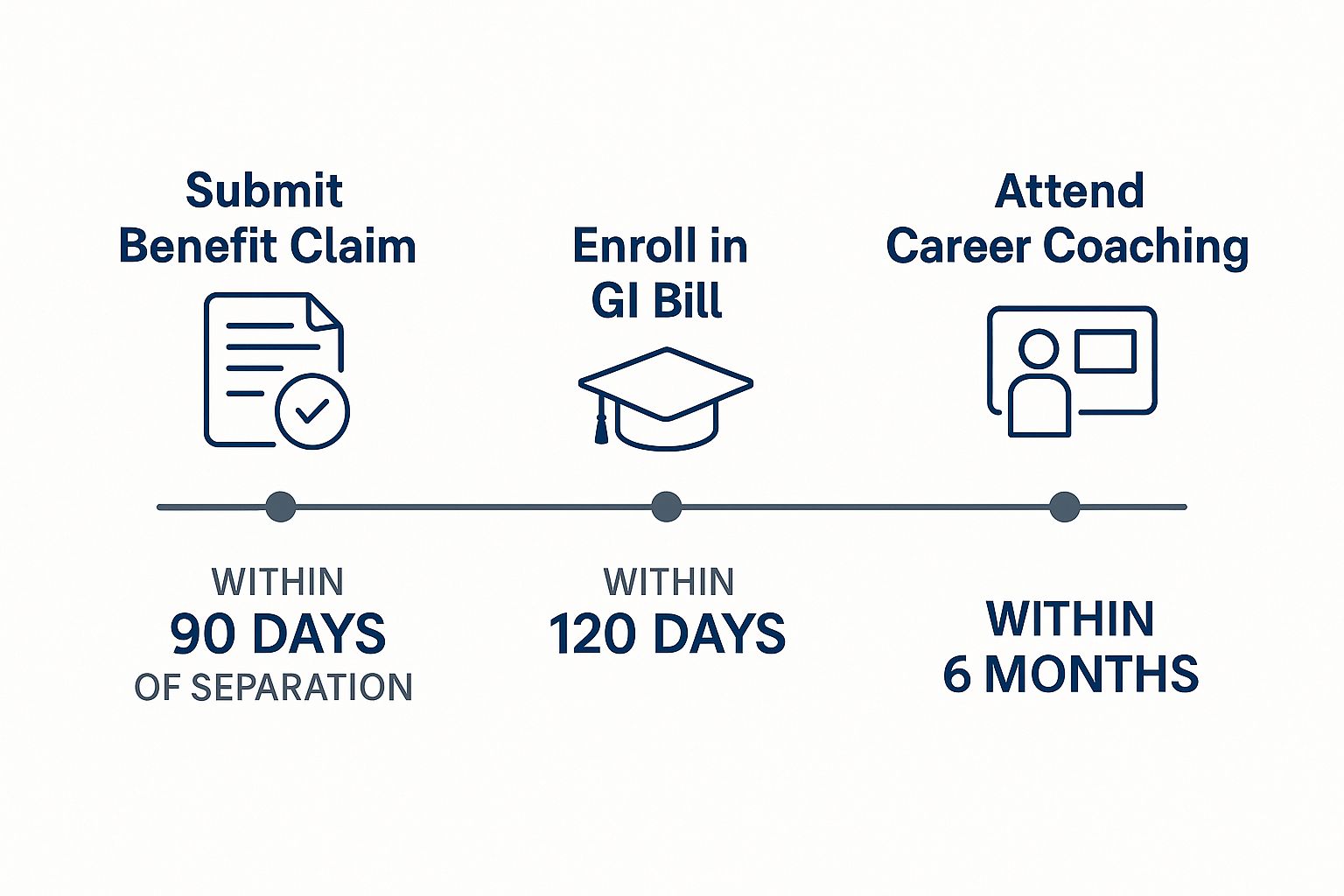
This infographic highlights important post-service milestones to remember during your transition. Meeting the deadlines, particularly within the first six months after separation, is essential for a smooth transition and access to vital benefits. Let's explore some practical strategies to maximize your TAP experience.
Preparing For Your First Workshop
Before your first TAP workshop, reflect on your skills, interests, and career aspirations. This self-assessment will help you focus your efforts and gain the most from the program. Gather any relevant documents, such as your military records and resumes, beforehand to streamline the process. Thorough preparation is key to utilizing all available resources effectively.
Asking the Right Questions
Don't hesitate to ask questions during the workshops. The facilitators are there to guide you. Inquire about specific career paths, educational prospects, or benefit programs that align with your objectives. Asking clarifying questions ensures a comprehensive understanding of the information presented and helps you build a relationship with the facilitators.
Building Relationships With Facilitators
TAP facilitators have valuable expertise and connections. Building rapport with them can provide personalized guidance and support throughout your transition. Discuss your individual circumstances and seek their insights on resources that cater to your specific needs. A strong network can significantly influence your transition success.
Documenting and Organizing Resources
TAP provides a significant amount of information. Create a system to document important details, deadlines, and contact information. This organization will be invaluable as you navigate the transition process, ensuring you don't miss crucial steps or opportunities.
Creating an Actionable Transition Plan
Your Individual Transition Plan (ITP) is more than just a document; it's your roadmap to civilian life. Use it to outline actionable steps, set realistic timelines, and monitor your progress. Regularly review and update your ITP as your goals and circumstances change to stay focused and make informed decisions.
Avoiding Common Pitfalls and Embracing Success Patterns
Be aware of common pitfalls, such as delaying engagement with TAP or failing to follow up on resources. Learning from other veterans' successes can offer valuable lessons. Research success stories and identify patterns applicable to your own transition journey. Avoiding these common mistakes and learning from others increases your likelihood of a successful transition.
To help you stay organized and make the most of TAP, here's a helpful timeline and checklist:
TAP Timeline & Checklist
A comprehensive timeline showing when to engage with different aspects of the VA Transition Assistance Program and key actions to take at each stage.
| Timeframe | Program Activities | Personal Actions | Resources to Access |
|---|---|---|---|
| 12-18 Months Pre-Separation | Begin researching transition resources. | Start thinking about career goals and interests. | VA website, Military OneSource |
| 10-12 Months Pre-Separation | Attend pre-separation counseling. | Update resume and begin networking. | Transition GPS, MySECO |
| 2-6 Months Pre-Separation | Enroll in TAP workshops. | Develop an Individual Transition Plan (ITP). | DOLE, VA benefits portal |
| 0-2 Months Pre-Separation | Finalize transition paperwork. | Secure housing and employment leads. | State employment agencies |
| Post-Separation | Utilize post-separation support services. | Connect with veteran organizations and mentors. | American Legion, VFW |
This table highlights the importance of proactive engagement with TAP throughout the transition process. Starting early and staying organized will help ensure you are well-prepared for civilian life.
By implementing these strategies, you can transform TAP from a requirement into a truly valuable resource. It's an investment in your future, equipping you with the tools and support necessary to thrive in your civilian career.
Beyond TAP: Building Your Complete Support Network

The VA Transition Assistance Program (TAP) is a crucial first step for service members returning to civilian life. However, it's important to remember that TAP is just the beginning. It's a foundation upon which veterans can build a robust support structure. This section explores how veterans can effectively leverage TAP as a springboard to a wider network of resources, ensuring ongoing support beyond the initial transition phase.
Connecting With Veteran Service Organizations
Veteran Service Organizations (VSOs) play a vital role in extending the support provided by TAP. These organizations offer a wide range of resources tailored to veterans' needs. These resources include assistance with disability claims, job placement services, networking opportunities, and mentorship programs.
Groups like the American Legion, Veterans of Foreign Wars (VFW), and Disabled American Veterans (DAV) provide specialized support based on individual circumstances. For example, a veteran navigating a complex disability claim could benefit from the legal expertise provided by some VSOs.
Many VSOs also have local chapters and community events. This provides veterans with a sense of camaraderie and connection as they adjust to civilian life. This social support network can be incredibly valuable during this significant period of change.
Leveraging Community Resources and Mentorship Programs
In addition to VSOs, numerous community resources and mentorship programs exist to support transitioning veterans. Local chambers of commerce often have programs specifically designed to connect veterans with business owners and potential employers. This can be especially beneficial for veterans pursuing entrepreneurship.
Mentorship programs pair veterans with experienced professionals in their chosen field, offering guidance and support as they navigate their new careers. Mentors provide valuable insights into industry best practices and can facilitate networking opportunities.
The VA has been actively increasing its collaboration with veteran organizations to ensure wider access to these vital resources. Ongoing reforms within TAP demonstrate its adaptability and focus on addressing the complex challenges faced by returning service members. These challenges include credentialing, employment preparation, and access to benefits. Learn more about these efforts here.
Building a Personalized Support Ecosystem
Every veteran's transition is different, and building a personalized support ecosystem is critical for a successful transition. This ecosystem can include elements from TAP, VSOs, community resources, and personal networks. The key is identifying which organizations and programs best align with your individual needs and goals. For some, this might involve focusing on career development resources. Others might prioritize mental health support or financial planning assistance.
It's important to remember that a strong support system isn't static. It should evolve along with your changing needs. As you progress in your civilian career and personal life, your support needs will likely shift. Regularly reassessing your network and seeking new resources as needed is essential for continued success. This proactive approach ensures you have the necessary support to navigate challenges and reach your goals.
Are you a veteran or first responder seeking specialized legal and professional guidance to help you transition into civilian life? Homefront Group provides personalized support to help veterans navigate the complexities of VA claims, estate planning, and more. Visit Homefront Group today to learn more and empower your civilian future.