Understanding The VA Rating System For Radiculopathy

The VA uses a percentage-based rating system from 10% to 100% to determine compensation for veterans with service-connected radiculopathy. These ratings directly affect monthly benefit payments. For veterans seeking appropriate benefits, knowing how the VA evaluates and rates radiculopathy symptoms is essential for getting fair compensation.
How The VA Evaluates Radiculopathy
The VA assigns specific diagnostic codes based on which nerve roots are affected and where the condition occurs in the spine. For example, neck (cervical) radiculopathy falls under codes 8510, 8610, and 8710, while lower back (lumbar) radiculopathy uses codes 8520, 8620, and 8720. This helps ensure consistent evaluation standards for each type.
The rating depends largely on symptom severity. Minor, occasional pain may receive a 10% rating, while serious cases with muscle deterioration and major functional limits could get 60% or higher. During evaluations, the VA looks at sensory problems like numbness and tingling, muscle weakness, and how much the condition restricts movement.
VA Rating Percentages And Their Implications
Your VA rating percentage has a direct impact on your monthly compensation amount. For instance, severe cases rated at 90% receive much higher payments than mild cases at 10%. This makes it crucial to fully document your symptoms to get an accurate rating.
Here are some basic examples of ratings and symptoms:
- 10% VA Rating Radiculopathy: Minor pain that comes and goes, minimal impact on activities
- 40% VA Rating Radiculopathy: Regular pain that affects daily tasks, clear muscle weakness
- 70% VA Rating Radiculopathy: Constant severe pain limiting movement, noticeable muscle loss
Keep in mind these are simplified examples. The actual rating process considers multiple factors working together.
The Importance Of Thorough Documentation
When deciding ratings, the VA relies heavily on medical proof from records, imaging tests (MRIs, CT scans), and Compensation & Pension (C&P) exam results. You need clear records showing how often symptoms occur, how bad they are, and how they impact your daily life. For example, keeping a detailed symptom diary can help prove your case.
You must also show a clear link between your radiculopathy and military service. This could mean providing records of service-related injuries or showing how military duties made an existing condition worse. Getting a medical opinion from a qualified doctor that explains this connection can greatly strengthen your claim.
Understanding how VA ratings work and keeping thorough records are vital steps toward getting proper benefits. This knowledge helps veterans effectively make their case and work toward receiving fair compensation. Next, we'll look at how to use secondary service connections to support your claim.
Leveraging Secondary Service Connections
Getting the full VA disability rating you deserve for radiculopathy requires understanding how to connect it to your existing service-connected conditions. By establishing these secondary connections, you can receive additional compensation for related nerve conditions that develop as complications of your primary service-connected disabilities.
Connecting Radiculopathy to Primary Service-Connected Conditions
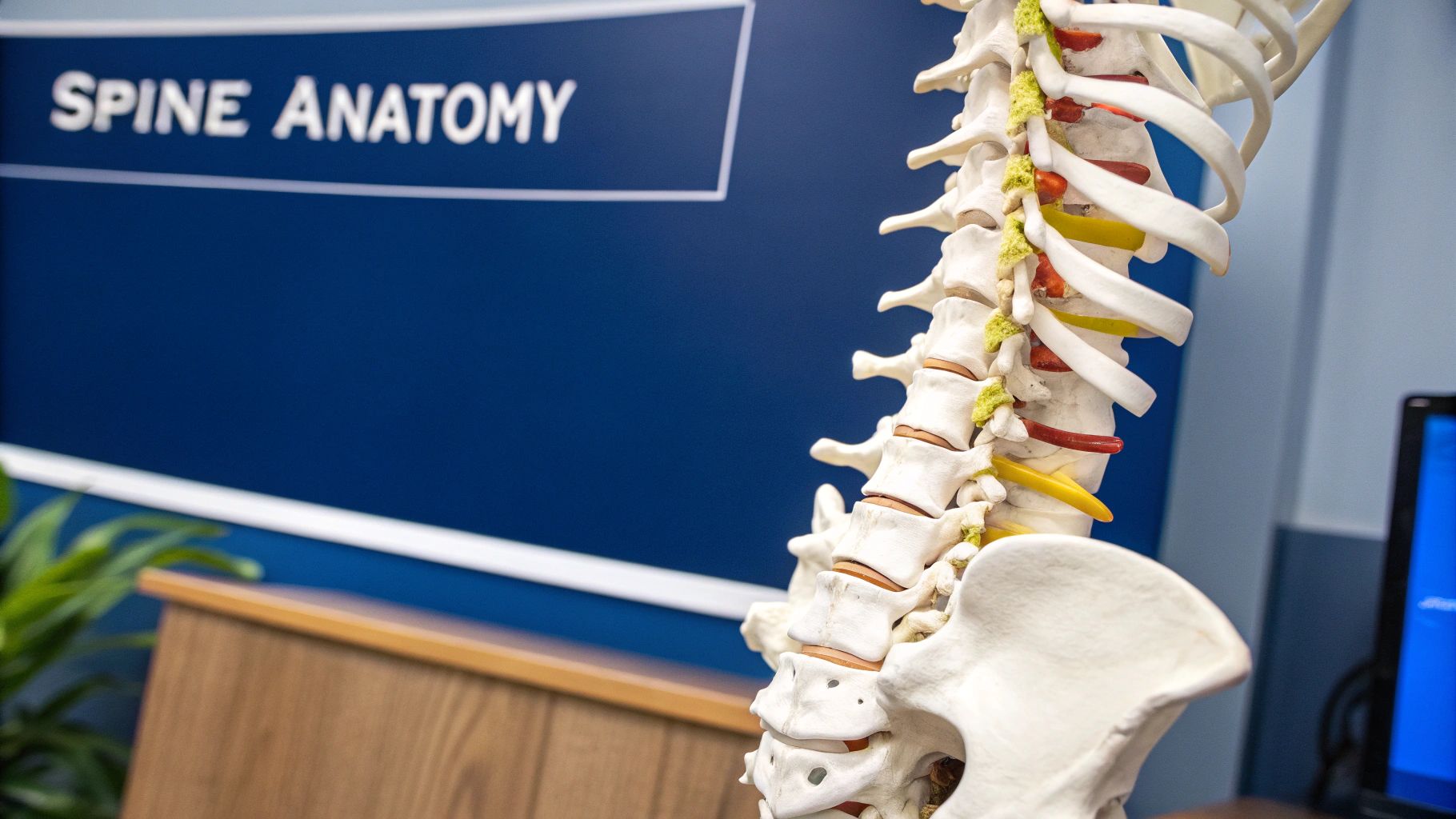
Back problems often lead to radiculopathy when nerve roots branching from the spinal cord become compressed. For example, if you have service-connected degenerative disc disease, any radiculopathy that develops from it can qualify for VA disability benefits – even if the nerve condition itself didn't start during service. By showing this clear medical connection between your primary back condition and the resulting nerve issues, you can establish a valid secondary service connection claim.
Common Primary Conditions Linked to Radiculopathy
Several service-connected conditions frequently cause radiculopathy. Besides degenerative disc disease, spinal stenosis can narrow the spinal canal and compress nerves. Herniated discs also commonly put pressure on nerve roots. Even scar tissue from prior service-connected back surgeries can lead to nerve compression and radiculopathy. When filing your claim, clearly documenting these connections helps build a stronger case.
The Importance of Sciatic Nerve Involvement
Problems with the sciatic nerve, which extends from the lower back down the legs, represent one of the most common VA disability claims. This specific type of lumbar radiculopathy, called sciatica, warrants special attention given how frequently it occurs and how severely it can impact mobility and daily functioning. Understanding how your sciatic nerve issues connect to your primary back condition helps ensure proper disability rating.
Maximizing Your Combined Rating Through Secondary Connections
Establishing secondary connections can significantly increase your overall disability rating. For instance, a 20% rating for degenerative disc disease plus a 10% rating for related radiculopathy won't simply add up to 30%. The VA uses a special combined ratings table that factors in how multiple disabilities affect you. While the math is complex, having connected conditions documented typically results in higher compensation. The key is providing strong medical evidence that clearly shows how your radiculopathy stems from your service-connected condition. This helps ensure you receive the full benefits you've earned through your service.
Building Your Strongest Medical Evidence Case
A solid medical evidence case is essential for getting an appropriate VA rating for radiculopathy. By carefully documenting your condition's severity, frequency, and daily impacts, you create the foundation that VA raters use to make decisions about your benefits.
Essential Medical Documentation for VA Rating Radiculopathy
Quality medical records are central to helping the VA understand your radiculopathy fully. Be sure to gather documentation from all healthcare providers, both within and outside the VA system, to paint a complete picture.
- Imaging Results: MRI and CT scans show nerve compression, disc herniation, and other spinal issues causing your radiculopathy. These provide clear, objective proof of the physical problems underlying your symptoms and strengthen your claim.
- Specialist Opinions: Detailed statements from neurologists or orthopedic specialists about your radiculopathy's severity, service connection, and effects on daily function carry significant weight. For instance, a specialist can explain the direct link between a service-related back injury and your current radiculopathy.
- Treatment Records: Document all treatments like physical therapy, injections, or surgeries to demonstrate that your condition needs ongoing medical care. This shows the VA that your radiculopathy requires consistent attention and management.
The Power of a Detailed Symptom Journal
While medical records provide clinical evidence, a detailed symptom journal adds essential context about your daily experience living with radiculopathy.
- Frequency and Severity: Track how often you experience pain, numbness, tingling, and weakness. Use a 1-10 pain scale for clarity. For example, note if you have constant level 3 dull pain versus sharp level 8 pain that comes and goes.
- Functional Limitations: Record exactly how radiculopathy affects your daily activities like dressing, bathing, cooking, working, and sleeping. Be specific – instead of "difficulty standing," write "Can only stand for 10 minutes before leg pain becomes unbearable."
- Flare-Ups: Document when symptoms suddenly worsen, including what triggers them, how long they last, and how severe they get. This helps show the unpredictable nature of radiculopathy and its disruption to your life.
Preparing for Your C&P Exam
The Compensation & Pension exam plays a key role in determining your VA rating. Good preparation helps ensure an accurate assessment.
- Review Your Records: Before the exam, go through your medical records and symptom journal to refresh your memory on important details and keep your reporting consistent.
- Practice Describing Your Symptoms: Work on clearly and briefly explaining your symptoms and their daily impacts. This helps you communicate effectively with the examiner.
- Be Honest and Specific: Give accurate, detailed information about your condition without overstating or understating symptoms. The examiner has training to assess claim validity.
A complete medical evidence case with thorough records, detailed symptom tracking, and solid C&P exam preparation gives you the best chance at receiving appropriate VA benefits for radiculopathy. This careful documentation helps the VA fully understand how your condition affects your life.
Navigating Different Types Of Radiculopathy Claims
Getting the right VA rating for radiculopathy depends on several key factors that the VA considers during evaluation. These include which nerve roots are affected, what symptoms you experience, and how much the condition impacts your daily activities. Understanding these elements can help you secure appropriate benefits for your condition.
Cervical vs. Lumbar Radiculopathy: Key Differences in VA Ratings
The VA evaluates neck (cervical) and lower back (lumbar) radiculopathy differently since they affect separate body regions. Cervical radiculopathy, which causes symptoms in the neck, arms and hands, falls under diagnostic codes 8510, 8610, and 8710. For instance, if you have neck pain and numbness going down your arm, the VA would rate this under one of these cervical codes. For lumbar radiculopathy affecting the lower back, legs and feet, the VA uses codes 8520, 8620, and 8720. This difference matters because the VA looks at how each type specifically limits your movement and function.
Upper and Lower Extremity Involvement: How It Affects Your Claim
The way radiculopathy affects your arms versus legs plays a big role in your VA rating. When it impacts your arms and hands, it can make tasks like writing, getting dressed, or picking up objects difficult due to problems with grip strength and arm movement. With leg involvement, you might struggle to walk, maintain balance, or stand for long periods. As an example, someone who has trouble walking due to lumbar radiculopathy may receive a higher rating than someone with mild arm symptoms from cervical radiculopathy.
Major vs. Minor Side Impairment: Understanding the Distinction
When radiculopathy affects both sides of your body, the VA looks at which side has worse symptoms (the "major" side) versus the less affected ("minor") side. This helps them give a more accurate rating based on how severely each side is impaired. For example, if you have radiculopathy in both legs but one has serious weakness while the other just has mild numbness, the weaker leg would be rated higher as the major side. This system ensures your rating reflects the true impact on each side of your body.
Multiple Nerve Involvement and Diagnostic Codes: Deciphering the Complexity
Sometimes radiculopathy affects more than one nerve root, which makes the rating process more detailed. The VA looks at how all affected nerves together impact your ability to function. Knowing your specific diagnostic codes is essential since they show which nerves are involved and how severe your condition is. For example, having both C6 and C7 nerve problems in your neck would be evaluated differently than L4 and L5 nerve issues in your lower back. Taking time to learn about your diagnostic codes and what they mean can help you better understand how the VA will assess your case and determine your rating. This knowledge helps you prepare stronger medical evidence to support your claim for fair compensation.
Mastering The Appeals Process
Many veterans disagree with their initial VA disability ratings for radiculopathy. Getting the right rating directly impacts your benefits and daily living. Let me walk you through how to effectively appeal your rating to get the compensation you deserve.
Understanding Your Current VA Rating Radiculopathy and Grounds for Appeal
Before starting your appeal, carefully examine why you received your current rating. Look for specific areas where the VA's assessment may not match your condition's reality. Common reasons for appeal include:
- Symptom Severity Not Fully Captured: Your rating might only reflect occasional pain when you actually experience constant, severe discomfort.
- Daily Limitations Not Considered: The rating may overlook how radiculopathy affects basic activities like walking, sitting, or lifting objects.
- Missed Service Connections: The VA might not have properly linked your radiculopathy to other service-related conditions, such as a back injury from your military service.
Gathering Compelling Evidence for Your Appeal
Strong evidence forms the foundation of any successful appeal. Be sure to collect:
- Recent Medical Documentation: Get current evaluations, imaging results, and treatment records showing your radiculopathy's current state.
- Professional Medical Opinions: Request detailed letters from your healthcare providers explaining how your military service caused or worsened your radiculopathy.
- Personal Impact Statements: Ask family, friends, or coworkers to describe how they've seen radiculopathy affect your daily activities.
- Symptom Records: Keep a detailed diary noting when symptoms occur, how intense they are, and how long they last. Include specific examples of tasks you can no longer do.
Navigating the Different Appeal Lanes: Choosing the Right Path
The VA provides three main ways to appeal:
- Supplemental Claim: File this when you have new evidence to support a higher rating. For example, if you now have updated medical records showing worsening symptoms.
- Higher-Level Review: Request a senior VA reviewer to look at your existing evidence if you believe mistakes were made in the initial review.
- Board of Veterans' Appeals (BVA) Appeal: Take your case to the BVA for a more formal review, typically after trying other appeal options first.
Timing Considerations and Professional Legal Support
Each appeal type has different processing times – supplemental claims often move faster than BVA appeals, which may take years. Consider getting help from organizations that specialize in VA claims, like Homefront Group. These experts understand VA rating criteria and can help present your case effectively, especially for complex situations involving multiple conditions or significant limitations. While appeals take work, careful preparation and professional guidance significantly improve your chances of getting a fair rating that properly reflects your condition's impact on your life.
Maximizing Your Total VA Benefits Package
Getting a VA rating for radiculopathy opens the door to many benefits beyond just monthly payments. While the rating itself is important, understanding how to access and combine all available benefits can significantly improve your quality of life and financial security.
How Your Radiculopathy Rating Affects Overall Benefits
Your radiculopathy rating determines which benefits you can receive. For example, a 10% rating may provide basic healthcare for your condition, while a 70% rating could qualify you for additional support like housing assistance and vocational training programs. The system is designed to provide more comprehensive support as disability ratings increase, ensuring veterans with greater needs receive appropriate assistance.
Exploring Additional Benefit Programs Based on Rating
Your rating can unlock access to benefits you might not know about. Veterans with higher ratings often qualify for expanded healthcare coverage, including dental and vision care. For instance, if you have a 50% or higher rating, you become eligible for complete dental benefits. Mental health services are also available, recognizing that physical conditions can affect overall wellbeing.
Combining Ratings for Increased Benefit Eligibility
Many veterans have several service-connected conditions. The VA uses a special table to calculate combined ratings – it's not simple addition. Even a relatively minor secondary condition can boost your overall rating enough to qualify for better benefits. For example, combining a 20% radiculopathy rating with 10% for tinnitus could push your total rating above 30%, potentially qualifying you for additional programs.
Strategies for Coordinating and Maximizing Benefits
Getting the most from your VA benefits requires careful planning. Here are proven approaches:
- Regularly Review Your VA File: Make sure all your conditions are properly documented and your medical records are current.
- Connect with a Veteran Service Officer (VSO): These trained professionals provide free help understanding and applying for benefits. They can identify programs you qualify for and guide you through applications.
- Utilize Online Resources: The VA website contains detailed information about available benefits and eligibility requirements. Check it regularly for updates.
- Consider Professional Assistance: Organizations like Homefront Group specialize in helping veterans navigate the VA system effectively.
Overlooked Benefits and How to Access Them
Veterans often miss out on valuable benefits they don't know about. These can include equipment grants to modify your home, travel reimbursement for medical appointments, and education benefits for family members. Working with a VSO helps uncover these lesser-known programs. For example, you might qualify for grants to adapt your living space to better manage radiculopathy symptoms.
Understanding how VA benefits work together, staying organized with your claims, and getting expert guidance helps ensure you receive all the support you've earned through your service.
Ready to take full advantage of your VA benefits? Homefront Group specializes in helping veterans understand and access their complete benefits package. Take our quick 3-minute quiz to learn what benefits you may qualify for and start working toward better support. Visit https://homefrontgroup.com/ today.