Understanding The VA Fully Developed Claim Advantage
The VA Fully Developed Claim (FDC) offers a faster way to receive your veteran benefits. It's designed to expedite the claims process, much like an express lane. Submitting a complete claim upfront helps avoid the back-and-forth communication that often causes delays. This proactive approach gives you more control over the process and its outcome.
What Makes an FDC Different?
The primary difference between an FDC and a standard claim lies in who gathers the supporting evidence. With a standard claim, the VA assists in collecting documentation, which can be time-consuming and extend the claims timeline. With an FDC, you compile and submit all necessary evidence from the outset.
Why Choose the FDC Route?
This shift in responsibility has significant advantages. The most important is faster processing. An FDC can potentially reduce the waiting period from years to months. Additionally, managing the evidence gathering yourself reduces stress and uncertainty. You’ll know exactly what’s been submitted and avoid waiting for the VA to request more information. The FDC process is a key initiative by the Veterans Benefits Administration (VBA) to streamline claims for compensation, pension, and survivor benefits. Submitting all documentation upfront improves efficiency and reduces processing time. For more information and statistics, visit the VA website: https://www.benefits.va.gov/reports/mmwr_va_claims_online.asp
Who Benefits Most From an FDC?
The FDC process is especially helpful for veterans with straightforward claims and easy access to their supporting documents. If your disability is directly connected to an in-service event, or if it involves a clear worsening of an existing service-connected condition, an FDC can be a highly effective strategy. This allows the VA to focus on reviewing your complete file, leading to a quicker decision and faster access to your earned benefits. The FDC empowers you to take control of your claim and get the support you deserve.
Building Your Bulletproof Documentation Package
A successful VA fully developed claim (FDC) relies heavily on one vital element: comprehensive and well-organized documentation. Instead of relying on generic checklists, building a strong claim requires a strategic approach to gathering and presenting evidence. This evidence must clearly connect your current condition to your military service for VA reviewers. Think of your claim as a puzzle: each document is a piece, and you need all the pieces for a complete picture.
Essential Documents for a Strong Case
A comprehensive claim should tell your story completely, from your military service through to your current condition. Start with your military records, including deployments, assignments, and any documented incidents or injuries. Next, gather all relevant medical evidence connecting your current condition to your time in service. This evidence can include doctor's reports, hospital records, treatment notes, and even private medical records. The goal is to create a clear and unbroken chain linking your military service to your current health.
Organizing Your Documentation For Maximum Impact
Submitting disorganized documentation can overwhelm VA reviewers. Instead, organize your documents logically and chronologically. Create a clear narrative that's easy to follow. Consider grouping records by condition or time period, and using dividers or tabs to facilitate easy navigation. A well-organized package makes a positive impression and helps ensure all evidence is reviewed.
Obtaining Hard-to-Find Records
Tracking down necessary documents can sometimes be challenging. Fortunately, several resources can help you locate hard-to-find records. The National Archives holds extensive military personnel files. Your state's Department of Veterans Affairs can also assist you in obtaining relevant service-related documents. Persistence is key; don't give up on finding the critical pieces of your claim.
Avoiding Common Documentation Pitfalls
Many VA FDC claims are delayed or denied due to preventable documentation errors. One common mistake is neglecting to provide a nexus letter. A nexus letter is a medical opinion from a qualified healthcare professional explicitly linking your current health condition to your military service. This independent medical evaluation is crucial for supporting your claim. Another frequent error is submitting incomplete medical records. This can lead to unanswered questions from the VA and result in processing delays. Be thorough and proactive in gathering all relevant information.
Presenting Complex Medical Conditions Clearly
Claims involving complex medical conditions require extra attention to clarity. Use simple language and avoid medical jargon when possible. Consider including visual aids like diagrams or timelines to illustrate the progression of your condition. Working with healthcare providers experienced in VA claims can be invaluable. They can help ensure your medical evidence is presented effectively to VA reviewers. Strategic timing of medical appointments, ensuring your information is current and relevant, can also strengthen your claim. Building a robust documentation package requires a proactive and detail-oriented approach. This approach allows you to present your case effectively and increases the likelihood of a successful outcome. For example, veterans submitting complete medical evidence with their initial FDC application see a 68% higher approval rate compared to standard claims. Processing times are also 40% faster when all necessary documentation is provided upfront. Learn more about these FDC documentation success rates.
Your Step-By-Step FDC Filing Strategy
Now that you understand the power of a VA fully developed claim (FDC) and have gathered all necessary documentation, let's explore the filing process. Thorough preparation transforms this potentially complex procedure into a straightforward path toward receiving your benefits. This guide breaks down the steps, incorporating proven strategies.
Choosing the Right Filing Method
The VA offers several FDC submission methods, each with its own benefits. Choosing the right method allows you to select the option best suited to your individual needs and preferences.
-
VA.gov: Filing online through VA.gov offers the convenience of digital submission and easy claim status tracking.
-
Veterans Service Organizations (VSOs): Partnering with a Veterans Service Organization (VSO) provides personalized support and expert guidance throughout the process. VSOs can assist with complex paperwork and advocate on your behalf.
-
Mail: Mailing your FDC is also possible for those who prefer traditional methods, though this option can be slower.
To illustrate these differences, let's take a closer look at a comparison of the various filing methods. The following table highlights the key characteristics of each approach.
FDC Filing Methods Comparison: Compare different methods for submitting your fully developed claim, including processing times, support availability, and ease of use.
| Filing Method | Processing Speed | Support Level | Best For |
|---|---|---|---|
| VA.gov | Fastest | Moderate | Tech-savvy veterans comfortable with online tools |
| Veterans Service Org | Moderate | High | Veterans needing personalized assistance |
| Slowest | Low | Veterans who prefer traditional methods |
As you can see, each method offers a unique balance of speed and support. Consider your individual circumstances to make the best choice for your needs. Streamlining your document collection process is also crucial for building a strong claim. For helpful tips, consider exploring resources like this guide on collecting documents from clients.
Timing Your Submission Strategically
While filing an FDC is possible at any time, strategic timing can be beneficial. Submitting your claim during periods of lower VA claim volume may lead to faster processing. Keep in mind factors like holidays and the end of fiscal quarters, as these can occasionally impact processing times.
Tracking Your Claim Like a Pro
After submission, actively monitoring your FDC's progress is essential. Regularly check your claim status online through VA.gov or by contacting your VSO. This proactive approach allows you to quickly address any potential delays. Staying informed keeps you in control of the process.
Handling Unexpected Hiccups
Even the most meticulously prepared FDCs can encounter occasional challenges. The VA may request additional evidence, or your claim could be denied. In such situations, remaining calm and taking appropriate action is crucial.
-
Requests for Evidence: Respond promptly and completely to any requests for more information from the VA. Each communication provides an opportunity to further support your claim.
-
Claim Denials: If your claim is denied, understand the reasons provided and explore your appeal options. Working with a VSO can be especially helpful during this phase. A denial isn't necessarily the end of the process.
By approaching the filing process strategically and anticipating potential hurdles, you improve your chances of a positive outcome. A well-executed FDC is key to securing the benefits you deserve. Careful preparation and diligent follow-through will ultimately make a significant difference in obtaining a timely and favorable decision.
Strategies That Actually Win Claims

Filing a VA fully developed claim (FDC) is more involved than simply filling out forms. It requires a strategic approach to present your case effectively. This means thoughtfully demonstrating the connection between your military service and your current conditions, backed by compelling evidence that will satisfy VA decision-makers.
Connecting Military Service to Current Conditions
A cornerstone of a successful FDC is establishing a clear nexus, the link between your current disability and your military service. This connection must be direct and well-documented. For example, if you are filing a claim for back pain, include documentation of back problems during your service, or evidence of an in-service injury potentially contributing to your current condition.
Utilizing Effective Medical Evidence
Medical evidence is essential for any VA disability claim. However, some evidence carries more weight than others. VA reviewers generally find specialist opinions more persuasive than those from general practitioners. Furthermore, objective medical findings, such as imaging studies and diagnostic test results, hold significant weight.
Addressing Potential Weaknesses Proactively
Before submitting your claim, identify and address any potential weaknesses. If there are gaps in your medical treatment history, explain the reasons. If your condition has periods of improvement, document how it still impacts your daily life. Anticipating questions and providing clear explanations demonstrates thoroughness and strengthens your claim. This proactive approach can greatly improve your chances of a first-time approval.
The VA reports that over 60% of processed claims are granted, suggesting a high probability of success with a well-prepared FDC. More detailed statistics are available here: VA Statistics
Framing Complex Medical Conditions
Clarity is essential when dealing with complex medical conditions. Simplify complex medical terminology. Chronological timelines and visual aids can help VA reviewers understand the progression and impact of your condition. Collaborating with healthcare providers experienced in preparing VA disability claims is highly beneficial. They can help present your medical information clearly and persuasively, potentially significantly impacting your claim's outcome. These strategic approaches empower you to take control of your FDC, building a stronger case and improving your likelihood of receiving the benefits you deserve.
Real Processing Times And What To Expect
Understanding the potential timelines for your VA fully developed claim (FDC) is crucial. While official estimates exist, it's important to understand the current realities of VA processing performance. This section offers a data-driven perspective on how FDC claims typically progress compared to standard claim submissions.
Comparing FDC and Standard Claim Timelines
One of the most significant advantages of filing an FDC is the potential for drastically reduced processing times. Standard claims can often take months, sometimes even years, as the VA gathers evidence and communicates with the veteran. With an FDC, you provide all necessary documentation upfront, which can significantly accelerate the process.
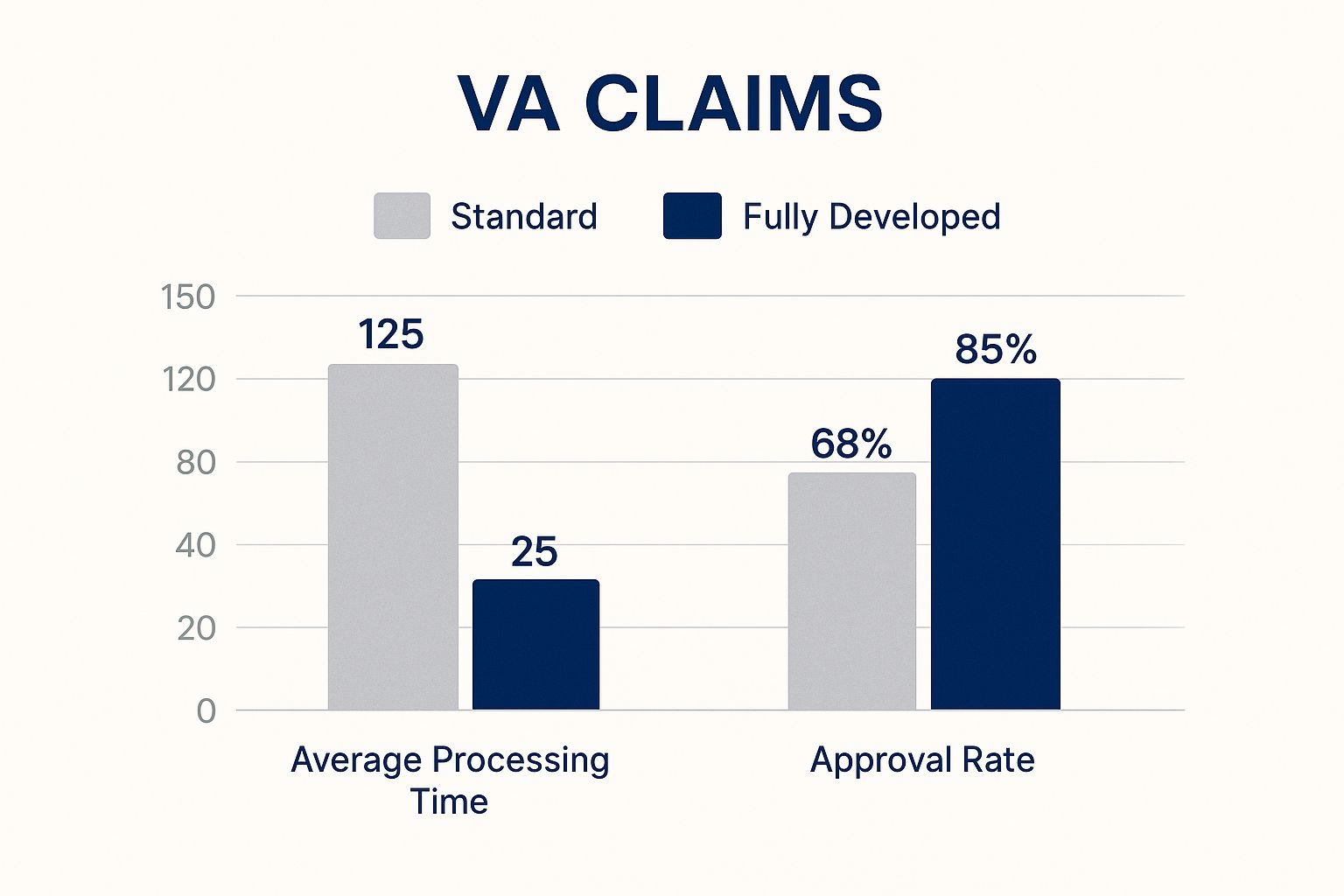
This infographic highlights the difference in average processing times and approval rates between standard and fully developed claims. Submitting a fully developed claim could potentially reduce your wait time by 100 days and increase your chances of approval by 17%. This improved efficiency translates to faster access to your earned benefits.
To further illustrate the potential time savings, let's examine a comparison of average processing times:
VA Claims Processing Timeline Comparison
| Claim Type | FDC Average Time | Standard Claim Time | Time Savings |
|---|---|---|---|
| Disability Compensation | 150 days | 250 days | 100 days |
| Pension | 120 days | 200 days | 80 days |
| Appeal | 90 days | 180 days | 90 days |
This table shows a significant reduction in processing time across various claim types when using the FDC process. Submitting a fully developed claim can save veterans considerable time and effort.
Factors Influencing Processing Speed
Several factors can influence the processing time of your FDC. The complexity of your disability, the availability of your medical records, and even seasonal variations in VA claim volume all play a role.
Claims involving rare or complex medical conditions might require additional review by specialists, which could extend the processing time. If the VA needs to obtain records from multiple healthcare providers, this could also cause delays.
Navigating the Stages of Review
Understanding the different stages of the FDC review process can help you gauge your claim's progress. Your claim undergoes an initial review for completeness. If everything is present, it proceeds to an in-depth medical review.
During the medical review, VA medical professionals assess your documentation and may schedule a Compensation and Pension (C&P) exam. After the medical review, a rating decision is made, and you are notified of the outcome.
Signs of Normal Progress vs. Potential Delays
While processing times vary, there are signals to look for to determine if your claim is progressing normally. Regular updates to your claim status on VA.gov usually indicate forward movement.
Extended periods without a status change or repeated requests for additional evidence, despite submitting a complete FDC, might suggest potential delays.
The VA continues its efforts to reduce claim backlogs. The backlog reached 417,855 claims in January 2024, but has since decreased by 42.2%. The FDC program is crucial to this strategy, encouraging upfront documentation to reduce processing times and improve efficiency. You can find more detailed statistics here. For those interested in business growth strategies, check out this helpful resource: business growth strategies.
Technological Advancements Reducing Wait Times
The VA is continually implementing technological advancements to improve claims processing. These improvements, combined with the proactive approach of the FDC program, are making a difference in reducing wait times for veterans who submit fully developed claims. By understanding realistic timelines and potential roadblocks, you can confidently navigate the claims process and gain a clearer picture of what to expect.
When Things Don't Go As Planned
Even with meticulous planning, a fully developed VA claim (FDC) can hit unexpected snags. This section covers common challenges veterans face and offers practical solutions to keep your claim moving forward. Consider this your troubleshooting guide for the VA system.
Understanding Common Roadblocks
Several issues can arise even with a well-prepared FDC. The VA may request additional evidence, sometimes due to unclear documentation or missing service records. Unexpected claim denials can also happen, often because of insufficient evidence linking your condition to your service. Appealing these denials is an option, but preserving your FDC advantages during the appeal requires careful attention.
Request for Additional Evidence
Receiving a request for more evidence doesn't automatically mean your claim is at risk. The VA might just need clarification or further records. Respond promptly and completely to these requests, seeing them as chances to strengthen your claim. Provide all requested information clearly and concisely for VA personnel.
Navigating Claim Denials
A denial can be discouraging, but it's not the final word. Carefully examine the denial letter to understand the reasons for the decision. Denials often result from insufficient medical evidence connecting your condition to your military service. Consulting with Homefront Group at this point can be invaluable. Their team can help you understand the denial, find missing documentation, and guide you through the appeals process.
Effective Communication Strategies
Clear communication with VA personnel is essential. When contacting the VA, keep your questions focused and professional. Provide concise information, including your claim number and other relevant details. Keep records of every communication: dates, times, and names of individuals you speak with. This creates a comprehensive history of your interactions.
Decoding VA Correspondence
VA letters can be dense with jargon and technical terms. Homefront Group can help you understand these official communications, clarify confusing language, and pinpoint key information regarding your claim's status and next steps.
Templates for Follow-Up Communication
Regular follow-up is important to keep your claim progressing. However, knowing what to say and when can be difficult. Homefront Group offers templates for follow-up communication, ensuring your inquiries are professional, effective, and specific to your situation.
Handling Special Circumstances
Life has its complexities. You might be juggling multiple claims, needing to adjust your FDC mid-process, or even working with different VA regional offices because of a move. Homefront Group can help manage these unique circumstances, ensuring your claim receives proper attention.
Appealing While Preserving FDC Advantages
Appealing a denial while keeping the expedited processing of your FDC is a top priority. Homefront Group specializes in navigating this process, using their expertise to protect your FDC benefits as you pursue a positive outcome. Their commitment to helping veterans guides them in creating a personalized strategy for your claim. They offer support and guidance at each step, ensuring your claim is presented effectively.
Key Takeaways
Navigating the VA disability claims process can be daunting. A VA Fully Developed Claim (FDC) provides a streamlined path to receiving benefits. This section offers actionable steps you can take today. These strategies, based on successful veteran experiences, can significantly impact the speed of your claim.
Preparation Is Key: Building Your FDC Foundation
A successful FDC begins with thorough preparation. Gather all necessary documents: military records, medical evidence, and nexus letters. Organize these materials chronologically to present a clear narrative for VA reviewers. A well-organized foundation is essential for a smooth process. For instance, ensure your medical evidence encompasses your entire history, not just recent records. Proactively addressing potential gaps, such as explaining periods without treatment, can prevent delays.
- Key Success Indicator: All required documents are organized before applying.
- Warning Sign: Searching for missing documents after submission.
Strategic Filing: Choosing the Right Path
The VA offers several filing methods: online via VA.gov, through a Veteran Service Organization (VSO), or by mail. Each method has its own pros and cons. Select the method that best suits your needs and resources. Online filing is generally the fastest, while a VSO offers personalized guidance.
- Key Success Indicator: Choosing a filing method you understand and are comfortable with.
- Warning Sign: Selecting an unfamiliar method, leading to potential errors.
Managing Expectations: Realistic Timelines and Potential Roadblocks
While FDCs are processed more quickly than standard claims, delays can still occur. Factors like claim complexity and VA workload can impact processing time. Even with a complete FDC, the VA may request additional information. Responding promptly to these requests is vital.
- Key Success Indicator: Regularly monitoring your claim status online or with your VSO.
- Warning Sign: Extended periods without any updates on your claim status.
Staying the Course: Troubleshooting and Appeals
Even well-prepared claims can encounter challenges. A denial isn't the end of the process. Understanding the reasons for denial and exploring appeal options are essential. Maintaining open communication with the VA is crucial. Keep detailed records of all interactions, including dates, times, and names of VA personnel.
- Key Success Indicator: Proactive communication with the VA and timely responses to requests.
- Warning Sign: Ignoring VA correspondence or not following up on information requests.
Remember Your Why: Maintaining Momentum
The VA claims process can be long and frustrating. Remember your goal: receiving the benefits you deserve. Stay organized, informed, and proactive throughout the process. Persistence is key.
Don’t go through this alone. Homefront Group provides expert guidance and support throughout the VA claims process. Our team of experienced professionals, including veterans, understands the system’s complexities and can help you build a strong claim. From gathering evidence to navigating appeals, we are dedicated to helping you achieve the best possible outcome. Take the first step towards securing your benefits. Visit Homefront Group today for a free consultation and learn how we can help you reach your goals.