
Navigating the VA Disability Maze for Depression
Understanding VA disability ratings for depression is crucial for veterans seeking appropriate compensation and support. This listicle breaks down each rating level—from 0% to 100%—for depression. You'll learn the symptoms associated with each level and how these impact your claim. This information is vital for veterans pursuing appeals, navigating toxic exposure claims, or seeking other legal and financial assistance. We'll clarify what each VA disability rating for depression means, empowering you to understand your eligibility and take the necessary steps.
1. 0% VA Disability Rating for Depression
A 0% VA disability rating for depression signifies that a veteran has a diagnosable and service-connected depressive disorder, but the symptoms are not currently severe enough to impact their work, social life, or require ongoing medication. While this rating doesn't provide any monetary compensation, it's a crucial first step in acknowledging the condition and opening the door to vital VA healthcare benefits specifically for depression. This rating confirms the connection between your military service and your depression, creating a foundation for future claims if your condition worsens.
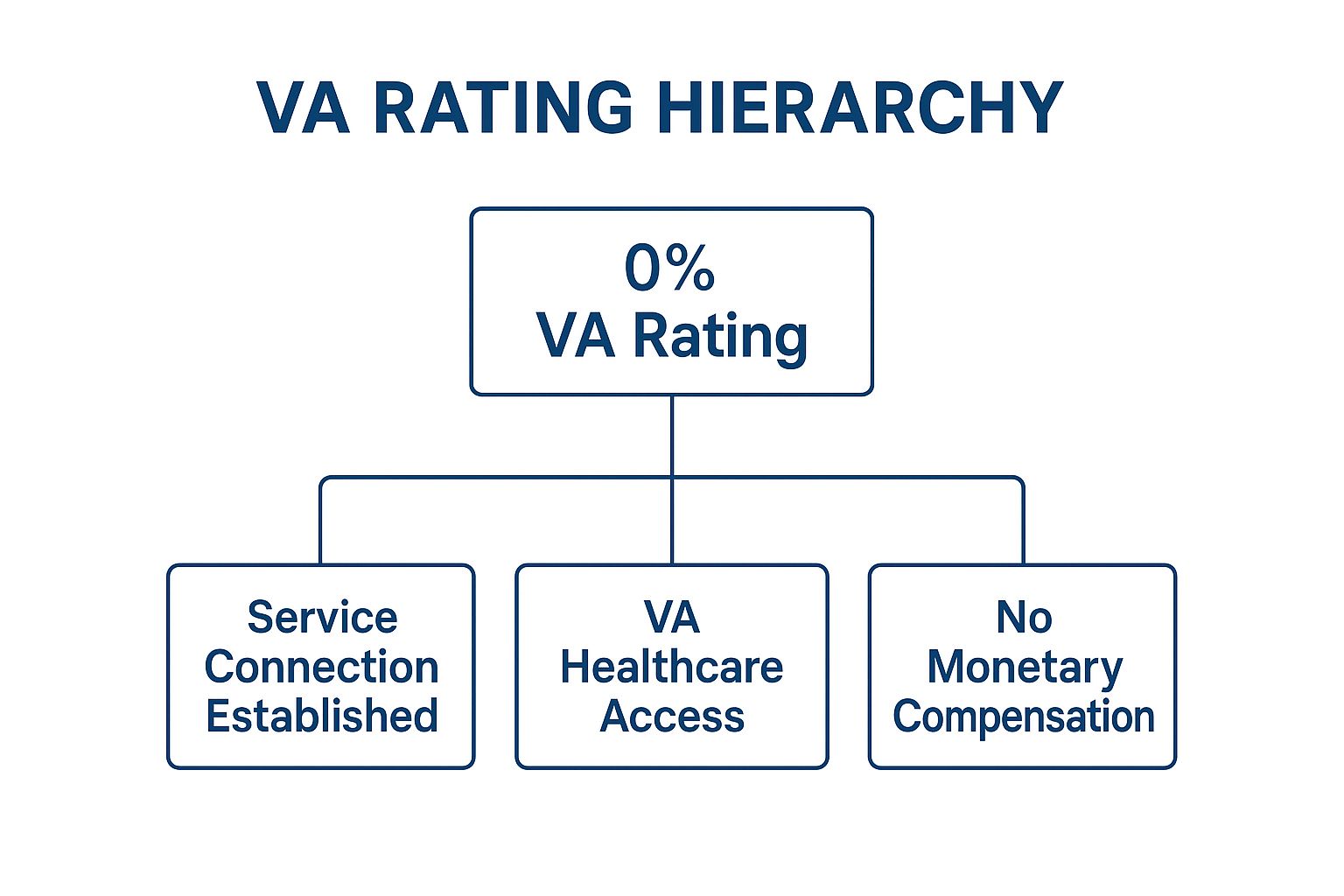
The infographic visually represents the hierarchy of factors considered for a 0% VA disability rating for depression. At the top is the diagnosis of depression itself, connected to the core requirement of service connection. Branching down from there, we see the criteria of mild symptoms or successful management of symptoms, coupled with the absence of significant occupational or social impairment. These elements together result in the 0% rating. As the infographic demonstrates, even with a 0% rating, access to VA healthcare benefits is granted.
This 0% rating deserves its place on this list because it's often the starting point for many veterans seeking VA disability benefits for depression. It’s a critical stepping stone, even without immediate financial compensation. The key features of this rating are established service connection, mild or well-managed symptoms, and no demonstrable impairment in work or social settings.
Pros:
- Establishes service connection: This is foundational for future claims should your depression worsen. It creates a documented link between your condition and your military service.
- Provides access to VA treatment: You can access therapy, counseling, and other mental health resources through the VA specifically for your depression.
- Can be increased later if condition worsens: If your symptoms escalate and begin to affect your daily life, you can file for an increased rating.
Cons:
- Provides no monetary compensation: A 0% rating does not entitle you to monthly disability payments.
- May underrepresent fluctuating symptoms: Depression can fluctuate, and a 0% rating may not capture periods of increased symptom severity.
- Requires additional evidence for rating increase: Gathering evidence to support a future claim for an increased rating requires consistent documentation and medical records.
Examples:
- A veteran with documented depression in their service records who is currently managing their symptoms well without medication.
- A veteran experiencing mild depressive symptoms effectively managed through therapy alone.
Tips:
- Keep detailed records of all symptoms, even if mild: This creates a valuable history of your condition and can serve as crucial evidence for future claims. Note specific instances, dates, and the impact of symptoms on your daily life.
- Attend regular mental health appointments to document your condition: Consistent engagement with mental healthcare demonstrates your commitment to managing your condition and provides ongoing documentation of your symptoms.
- File for an increase if symptoms worsen or begin to affect your work or relationships: Don’t hesitate to seek a higher rating if your depression starts impacting your ability to function effectively.
When considering VA disability ratings for depression, understanding the implications of a 0% rating is essential. While it doesn't offer immediate financial benefits, it establishes a crucial link between your condition and your military service, paving the way for future claims and providing access to valuable healthcare resources. This approach is particularly relevant for veterans experiencing mild symptoms or successfully managing their depression with minimal intervention. It's a crucial first step in the VA disability claims process for depression.
2. 10% VA Disability Rating for Depression
A 10% VA disability rating for depression is the lowest compensable level for this condition. It signifies that a veteran's depression, while service-connected, causes mild occupational and social impairment. This rating is assigned when the veteran experiences mild symptoms that primarily decrease work efficiency and the ability to perform occupational tasks only during periods of significant stress. Alternatively, a 10% rating can be granted if symptoms are adequately controlled by continuous medication. This rating acknowledges that depression impacts the veteran's life but in a relatively minor, manageable way.
The 10% rating recognizes the reality that even mild depression can have a demonstrable impact on a veteran's ability to function, particularly in demanding work environments. It distinguishes between veterans whose depression is effectively managed with medication and those who experience intermittent symptoms primarily triggered by stress. For example, a veteran consistently taking antidepressants to maintain a stable mood, but who otherwise functions well, might qualify for a 10% rating. Similarly, a veteran who experiences heightened anxiety and depressive symptoms only during high-stress periods at work, impacting their performance, could also receive this rating.
Features of a 10% Rating:
- Mild symptoms that are generally controlled.
- Occupational impairment primarily during significant stress.
- Often requires continuous medication for symptom management.
Pros:
- Provides monthly compensation (approximately $165 as of 2023).
- Acknowledges service connection with a compensable impact, opening the door for future increases if the condition worsens.
- Ensures continued access to mental health treatment through the VA.
Cons:
- Compensation amount is relatively small.
- May not fully capture the impact of intermittent, more severe episodes that fall outside periods of high stress.
- Requires consistent evidence of medication or treatment for maintenance of the rating.
Tips for Claiming a 10% Rating for Depression:
- Document how stress affects work performance: Provide specific examples of how stress triggers your symptoms and how those symptoms negatively impact your ability to complete work tasks, meet deadlines, or interact with colleagues.
- Keep medication logs and pharmacy records: Maintain detailed records of all medications taken, including dosages and frequency. This provides concrete evidence of continuous medication management.
- Have your treating physician document the relationship between your symptoms and work efficiency: A medical opinion linking your depression to occupational impairment strengthens your claim. Ensure your doctor specifically addresses how even mild symptoms impact your ability to function at work, particularly under stress.
- Maintain a symptom journal noting difficult periods: A journal can provide valuable context and detail about the frequency, duration, and severity of your symptoms, even if they are mild. Documenting periods of increased stress and their impact on your mood provides crucial supporting evidence.
This 10% rating deserves its place on the list because it recognizes the impact even mild depression can have on a veteran's life, particularly their ability to maintain consistent employment. While the compensation may be modest, it provides a crucial financial safety net and ensures continued access to vital mental health services. For veterans experiencing mild, manageable symptoms, this rating represents an important first step in acknowledging the service connection of their mental health condition and accessing the support they deserve. This information is especially relevant for veterans seeking VA claim appeals, those affected by toxic exposure (as it can exacerbate mental health conditions), and those pursuing other claims like medical malpractice, as the financial support and access to treatment can be invaluable during challenging times.
3. 30% VA Disability Rating for Depression
A 30% VA disability rating for depression signifies that your condition has a moderate impact on your occupational and social functioning. This rating is assigned when your depression causes occasional decreases in work efficiency and intermittent periods where you're unable to perform occupational tasks. While you may generally function satisfactorily in areas like daily routine, self-care, and conversation, the symptoms still present noticeable challenges. This level of impairment acknowledges the difficulties veterans face while still recognizing their ability to maintain some level of normalcy. This is a crucial step on the VA disability rating scale, reflecting a more significant impact than a 10% rating, but less severe than a 50% rating. Understanding the specifics of this rating is vital for veterans seeking appropriate compensation and benefits.
The defining characteristics of a 30% rating for depression include:
- Occasional decrease in work efficiency: You might experience periods of reduced productivity or require more time to complete tasks due to your depression.
- Intermittent inability to perform tasks: There may be times when your symptoms prevent you from carrying out your work duties altogether, though these instances are not constant.
- Symptoms like panic attacks (weekly or less often): While panic attacks can be debilitating, at this level, their frequency is generally weekly or less.
- Chronic sleep impairment: Difficulty falling asleep, staying asleep, or experiencing restful sleep is a common symptom that impacts daily functioning.
- Generally satisfactory functioning in most areas: Despite the challenges, individuals at this level can generally manage their daily routine, personal care, and social interactions.
Examples:
- A veteran working as a mechanic misses work one day a month due to an overwhelming depressive episode.
- A veteran experiences a weekly panic attack that forces them to step away from their desk and take a break, temporarily halting their productivity.
- A veteran with documented insomnia struggles with daytime alertness, affecting their ability to concentrate on tasks.
Pros:
- More substantial monthly compensation (approximately $508 as of 2023): The increased rating provides a higher level of financial support.
- Recognizes moderate impact on quality of life: A 30% rating acknowledges the significant, albeit not constant, challenges posed by depression.
- May qualify for additional benefits: Depending on individual circumstances, this rating may open doors to additional VA benefits and services.
Cons:
- Requires substantial documentation of symptoms: Thorough medical records, including diagnoses, treatment plans, and therapist notes, are crucial.
- May still underrepresent episodic severe symptoms: If your depression fluctuates with periods of severe symptoms, the 30% rating may not fully capture the extent of your disability during these times.
- Requires evidence of direct impact on occupational functioning: Clearly demonstrating how your depression affects your ability to work is essential for securing this rating.
Tips for Veterans Seeking a 30% Rating for Depression:
- Obtain statements from coworkers or supervisors about work performance: These statements can provide valuable third-party evidence of how your depression impacts your ability to fulfill your job duties.
- Track frequency of panic attacks, sleep disturbances, and memory issues: Maintaining a log of your symptoms can help establish a pattern and demonstrate their impact on your daily life.
- Obtain detailed medical opinions connecting symptoms to functional limitations: Your mental health provider should clearly articulate how your depression symptoms directly affect your ability to work and function socially.
- Consider a Disability Benefits Questionnaire (DBQ) from your mental health provider: A DBQ is a standardized form specifically designed for VA disability claims and can streamline the evaluation process.
This 30% rating deserves its place on the list because it represents a significant benchmark in the severity of depression and its impact on a veteran's life. It acknowledges the struggle faced by those experiencing moderate symptoms and provides a level of compensation that reflects the challenges of living with this condition. For veterans experiencing occupational and social impairment due to depression, pursuing a 30% VA disability rating can be a critical step in securing the support they need and deserve. If your symptoms are more severe, or if you believe your current rating doesn't accurately reflect your level of disability, consider seeking assistance from a Veterans Service Officer (VSO) or an attorney specializing in VA disability claims to discuss appealing for a higher rating.
4. 50% VA Disability Rating for Depression
A 50% VA disability rating for depression signifies that your condition has a significant impact on your occupational and social functioning. This rating level acknowledges that your depression goes beyond occasional sadness or low mood and involves a cluster of symptoms that interfere with your ability to work, maintain relationships, and manage daily life. The VA uses specific criteria to determine the appropriate disability rating, focusing on the severity and frequency of symptoms and the resulting functional impairment. A 50% rating falls within the "moderate" range of impairment, indicating reduced reliability and productivity in work and social settings.

This rating recognizes that veterans experiencing depression at this level struggle with a variety of challenges. Key features of depression that might lead to a 50% rating include reduced reliability and productivity, frequent panic attacks (more than once weekly), difficulty understanding and completing complex tasks or commands, impaired abstract thinking and judgment, significant and disruptive mood disturbances, and difficulty establishing and maintaining effective working and social relationships. These challenges are not merely inconveniences; they represent substantial hurdles to leading a fulfilling life.
Pros of a 50% Rating:
- Substantial Monthly Compensation: As of 2023, a 50% rating provides approximately $1,041 per month (this amount can vary based on individual circumstances, dependents, etc.). This financial assistance can be crucial in helping veterans manage their expenses and access necessary resources.
- Acknowledgment of Impact: A 50% rating officially recognizes the serious impact depression has on your daily functioning, validating your struggles and providing a sense of legitimacy to your claims.
- Eligibility for Additional Benefits: This rating may open doors to other VA benefits and services, including mental health treatment, vocational rehabilitation, and financial aid for education.
- Potential State Benefits: Some states offer additional benefits or tax breaks to veterans with a 50% or higher VA disability rating.
Cons of a 50% Rating:
- High Burden of Proof: Achieving a 50% rating requires substantial documentation to demonstrate the severity and frequency of your symptoms across multiple areas of your life. This can be a challenging and time-consuming process.
- Requirement of Multiple Evidence Sources: The VA favors evidence from various sources, including mental health professionals, family members, and employers. Gathering this information can be complex.
- Potential Employment Difficulties: Disclosing your disability rating to potential employers can sometimes lead to discrimination or misconceptions, although it's important to remember that employers are legally obligated to provide reasonable accommodations.
Examples of Veterans Who Might Qualify for a 50% Rating:
- A veteran consistently unable to maintain regular work attendance due to debilitating depressive episodes.
- A veteran experiencing multiple panic attacks per week, severely disrupting their ability to perform tasks at work or home.
- A veteran who has lost several jobs due to persistent mood instability and interpersonal conflicts stemming from their depression.
Tips for Securing a 50% VA Disability Rating for Depression:
- Detailed Letters from Providers: Obtain comprehensive letters from your mental health providers that specifically detail your symptoms, functional limitations, and the impact of your depression on your daily life.
- Vocational Assessment: Consider a vocational assessment to objectively document the impact of your depression on your ability to work.
- Maintain Employment Records: Keep records of any disciplinary actions, performance issues, or accommodations requested at work related to your depression.
- Document Social Impacts: Document social withdrawal, relationship difficulties, and any other ways your depression affects your social functioning.
- Track Cognitive Issues: Keep a log of cognitive difficulties, such as problems with concentration, memory, and decision-making.
This 50% rating level is significant because it acknowledges the substantial challenges veterans face when dealing with moderate levels of depression. The associated benefits and services can provide crucial support for navigating these difficulties and working towards recovery and improved well-being. While the process of obtaining this rating can be demanding, it's a vital step for veterans seeking the recognition and assistance they deserve. While we don't have a specific website link to offer, searching online for "VA disability ratings for depression" will provide additional resources and information.
5. 70% VA Disability Rating for Depression
A 70% VA disability rating for depression signifies that a veteran's condition severely impacts their occupational and social functioning, leading to considerable deficiencies in most areas of life. This rating within the VA disability ratings for depression scale acknowledges the serious nature of the condition and its pervasive effects on a veteran's ability to work, maintain relationships, manage their thoughts and emotions, and perform daily activities. This level of impairment requires substantial evidence demonstrating the depth and breadth of the depression's impact.
This 70% rating falls within the higher range of VA disability ratings for depression and is often seen as a crucial threshold for Total Disability based on Individual Unemployability (TDIU) eligibility. This means that even if a veteran is not technically rated at 100% disabled, they may still qualify for the same compensation benefits if their depression prevents them from securing and maintaining substantially gainful employment.
Features of a 70% Rating:
A 70% rating for depression is characterized by significant deficiencies in most areas of life, including:
- Occupational and Social Impairment: Difficulty maintaining employment, attending school, or engaging in social activities.
- Disturbed Thinking and Mood: Problems with concentration, memory, decision-making, and emotional regulation. This may manifest as illogical speech, obsessional rituals, near-continuous panic or depression, and difficulty adapting to stressful circumstances.
- Impaired Impulse Control: Unprovoked irritability, difficulty managing anger, and potential for impulsive behaviors.
- Relationship Problems: Inability to establish and maintain healthy relationships with family, friends, and romantic partners.
- Self-Care Deficits: Neglect of personal appearance, hygiene, and basic needs.
- Suicidal Ideation: Thoughts of suicide, which may require intervention. While not always present, suicidal ideation is a serious symptom that should be promptly addressed.
- Spatial Disorientation: Though less common, some veterans may experience difficulty with spatial awareness and navigation.
Pros of a 70% Rating:
- Significant Monthly Compensation: A 70% rating provides a substantially higher monthly compensation amount (approximately $1,663 as of 2023), offering crucial financial support.
- Potential TDIU Eligibility: Opens the door for TDIU benefits, allowing veterans unable to work due to their depression to receive compensation equivalent to a 100% rating.
- Recognition of Severity: Acknowledges the severe impact of depression on the veteran's quality of life.
- Access to Comprehensive Mental Health Services: Facilitates access to VA mental health services, including therapy, medication management, and other support.
Cons of a 70% Rating:
- Stringent Documentation Requirements: Requires extensive and compelling evidence documenting the severity and pervasiveness of symptoms.
- Potential Stigma: While decreasing, stigma surrounding mental health conditions may still exist in some contexts.
- Regular Re-Evaluations: May necessitate frequent re-evaluations by the VA to monitor the condition and ensure the rating remains accurate.
Examples:
- A veteran consistently loses jobs due to severe depressive episodes interfering with their ability to perform their duties.
- A veteran experiences repeated relationship failures due to intense mood swings and erratic behavior stemming from their depression.
- A veteran has a documented history of suicidal ideation requiring hospitalization or crisis intervention.
- A veteran struggles with basic self-care, neglecting hygiene and personal appearance during depressive episodes.
Tips for Achieving a 70% Rating:
- Collaborate with a Mental Health Professional: Work closely with a therapist or psychiatrist to document the full range of symptoms, their severity, and their impact on daily life.
- Gather Supporting Statements: Obtain statements from family members, friends, or colleagues who can attest to the observed behaviors and impact of the depression.
- Maintain Detailed Records: Keep thorough records of all mental health treatment, including hospitalizations, therapy sessions, and medication regimens. Document any job losses, academic failures, or relationship problems related to the depression.
- Document Crisis Interventions: If applicable, provide documentation of any suicide attempts, hospitalizations for suicidal ideation, or other crisis interventions.
- Consider Applying for TDIU: If your depression prevents you from maintaining substantial gainful employment, apply for TDIU benefits.
This 70% rating is often highlighted by veteran advocacy groups as it represents a critical point in the VA disability ratings for depression, often signifying eligibility for TDIU and providing substantial financial relief for veterans struggling with severe depression. It is important to thoroughly document the impact of the condition to strengthen your claim.
6. 100% VA Disability Rating for Depression
A 100% VA disability rating for depression represents the highest possible rating assigned by the Department of Veterans Affairs. This rating signifies that a veteran's depression is so severe that it causes total occupational and social impairment, significantly impacting their ability to function in daily life. This level of impairment requires substantial evidence demonstrating the profound impact of depression on the veteran's overall well-being. The rating criteria describe symptoms such as significant impairment in thought processes or communication, persistent delusions or hallucinations, grossly inappropriate behavior, persistent danger of hurting oneself or others, intermittent inability to perform activities of daily living (like bathing and dressing), disorientation, and memory loss concerning basic personal information. It's crucial to understand that these are examples, not exhaustive requirements, as established in cases like Mauerhan v. Principi.
This 100% rating acknowledges the completely debilitating nature of the veteran's depression. It isn't simply about feeling sad or having occasional bad days; it's about a condition that profoundly impacts every aspect of their existence, from holding a job to maintaining basic hygiene. This level of impairment often requires ongoing treatment and support.
Examples of veterans who might qualify for a 100% rating for depression include:
- A veteran requiring repeated hospitalization for suicidal ideation or attempts.
- A veteran experiencing psychotic episodes, including delusions or hallucinations, necessitating constant supervision.
- A veteran unable to maintain basic self-care, such as personal hygiene or regular mealtimes, due to severe depressive symptoms.
- A veteran with documented, total inability to function in any occupational or social setting, despite reasonable accommodations.
Pros of receiving a 100% VA disability rating for depression:
- Maximum monthly compensation: This translates to approximately $3,621 per month as of 2023 for a single veteran, offering vital financial support.
- Additional allowances for dependents: Extra financial assistance may be available for spouses and children.
- Full access to VA healthcare services: Comprehensive medical care, including mental health treatment, is provided at no or minimal cost.
- Eligibility for additional benefits: Veterans may qualify for benefits like Aid & Attendance if they require assistance with daily living activities.
- No separate TDIU claim required: Total Disability based on Individual Unemployability (TDIU) is automatically granted with a 100% rating for depression.
Cons of pursuing a 100% VA disability rating for depression:
- High level of scrutiny: Claims for this rating face rigorous review by the VA, requiring comprehensive and compelling evidence.
- Periodic re-examinations: The VA may require periodic reevaluations to confirm the ongoing severity of the depression.
- Challenges in daily functioning: While the benefits provide financial relief, the veteran continues to face significant hurdles in their day-to-day life.
Tips for veterans seeking a 100% rating for depression:
- Gather comprehensive medical evidence: This includes hospitalization records, therapy notes, medication records, and any documentation from mental health professionals.
- Consider a fiduciary: If managing finances is challenging, a fiduciary can help oversee financial matters.
- Secure statements from medical professionals: Obtain statements specifically addressing the total occupational and social impairment caused by the depression.
- Document failed work attempts or accommodations: Provide evidence demonstrating the inability to maintain employment, even with accommodations.
- Seek assistance from a Veterans Service Officer (VSO): A VSO can provide invaluable guidance and support throughout the complex claims process.
This 100% rating holds a critical place in the VA disability rating system for depression because it recognizes the most extreme cases where the condition severely impacts a veteran's life. While challenging to obtain, this rating provides crucial financial and healthcare support to those veterans most in need. Understanding the criteria, benefits, and challenges associated with this rating is essential for veterans struggling with severe depression and their families.
VA Disability Ratings for Depression: 6-Level Comparison
| Rating Level | Implementation Complexity 🔄 | Resource Requirements ⚡ | Expected Outcomes 📊 | Ideal Use Cases 💡 | Key Advantages ⭐ |
|---|---|---|---|---|---|
| 0% VA Disability Rating for Depression | Low – Establish service connection with mild documentation | Minimal – Basic medical evidence, records | Acknowledges condition, no compensation, access to VA healthcare | Veterans with diagnosed but mild, well-controlled depression | Establishes service connection; access to treatment; claim can increase later |
| 10% VA Disability Rating for Depression | Low to Moderate – Requires evidence of continuous medication or stress impact | Moderate – Medication records, symptom logs | Small monthly compensation; mild occupational impairment | Veterans with mild symptoms controlled by medication, stress-related episodes | Monthly compensation; acknowledges compensable impact; mental health access |
| 30% VA Disability Rating for Depression | Moderate – Documentation of intermittent symptom impact on work and social function | Moderate to High – Medical and workplace evidence | Moderate compensation; occasional decreased work efficiency | Veterans with moderate symptoms affecting job performance occasionally | Recognizes moderate life impact; qualifies for additional benefits |
| 50% VA Disability Rating for Depression | High – Requires detailed proof of multiple functional impairments | High – Medical, supervisor/co-worker statements | Substantial compensation; significant occupational and social impairment | Veterans with frequent panic attacks, impaired judgment, productivity issues | Acknowledges serious daily impact; access to VA and state benefits |
| 70% VA Disability Rating for Depression | Very High – Extensive documentation of severe, multi-domain deficiencies | Very High – Medical, family, hospitalization records | Significant compensation; severe occupational/social deficits | Veterans severely impaired across multiple life areas with suicidal ideation | May qualify for TDIU; access to comprehensive services; high compensation |
| 100% VA Disability Rating for Depression | Very High – Comprehensive medical and functional evidence required | Very High – Hospital records, expert statements | Maximum compensation; total impairment in occupational/social domains | Veterans with total incapacity, psychotic symptoms, danger to self/others | Max compensation; no separate TDIU needed; full VA benefits access |
Seeking Support for Your VA Disability Claim
Understanding the nuances of VA disability ratings for depression can be challenging. This article has outlined the criteria for ratings ranging from 0% to 100%, highlighting the specific symptoms and occupational impairments associated with each level. From mild symptoms with minimal impact on daily life (0% and 10%) to total occupational and social impairment (100%), securing the appropriate rating is crucial for receiving the benefits you deserve. Mastering these concepts empowers you to accurately assess your situation and effectively advocate for your needs. If you're exploring alternative methods for managing depression symptoms, you may want to consider hypnotherapy for depression as a potential support. (Source: Depression from Hypnothera.ai).
A successful claim depends on thorough documentation and a clear understanding of the VA’s evaluation process. This understanding directly impacts your financial well-being, access to crucial healthcare resources, and overall quality of life. Remember, securing the right VA disability rating for depression isn’t just about a number; it's about obtaining the support you need to live a fulfilling life.
Homefront Group specializes in navigating the complexities of VA disability claims for depression, providing expert guidance and personalized support to veterans. Don't navigate this process alone. Contact Homefront Group today and let their expertise help you secure the benefits you've earned.