

Understanding Your VA Appeal Journey

Imagine the VA appeals process as a maze, perhaps one of those elaborate cornfield mazes. Knowing the layout is key to finding your way through. After receiving an unfavorable decision on your claim, you have three distinct paths you can take – like choosing different routes to the same destination. Each has its own timeline, requirements, and advantages.
Three Paths On Your Appeal Journey
These three paths, created by the Appeals Modernization Act (AMA) of 2019, offer distinct approaches to appealing your claim:
- Supplemental Claim: This path is best if you have new and relevant evidence you didn't submit initially. Think of it like finding missing pieces of a puzzle that complete the picture.
- Higher-Level Review: Here, you request a more experienced reviewer to re-examine your existing evidence. It's like asking a senior specialist for a second opinion on a diagnosis.
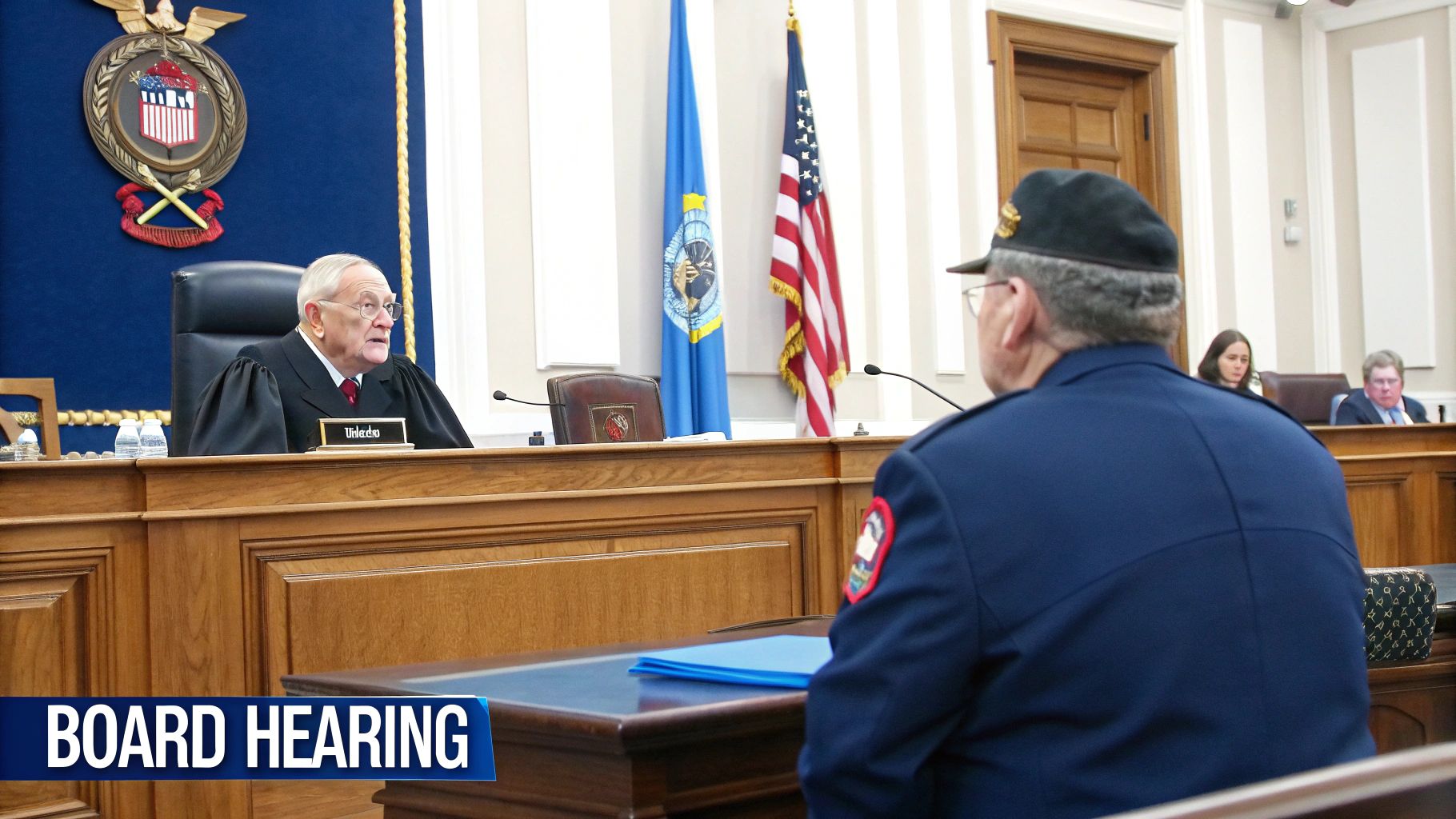
- Board Appeal: This option takes your case before a Veterans Law Judge (VLJ), where you can present new evidence and have a hearing. This is similar to a formal court proceeding.
Each path provides a different strategy to achieve a favorable outcome. Understanding the nuances of each is crucial for making the best choice for your situation.
The Impact of the Appeals Modernization Act
The AMA significantly changed VA appeal timelines. Before 2019, the appeals process was known for its extensive delays. Veterans often waited an average of 1,573 days (over four years) for a Board of Veterans' Appeals (BVA) decision.
This lengthy process, from the initial claim through the Notice of Disagreement and Substantive Appeal, underscored the need for a change. One of the most significant improvements in VA appeal timelines came with the implementation of the Appeals Modernization Act (AMA) in 2019.
Prior to the AMA, the average time to receive a BVA decision was a staggering 1,573 days—over four years—as reported in assessments around 2017 and 2018. This long wait was a major source of frustration for veterans. The old process involved multiple steps: filing a claim, receiving a Rating Decision, submitting a Notice of Disagreement, receiving a Statement of the Case, filing a Substantive Appeal, and finally, waiting for the Board's decision. Discover more insights into VA appeal timelines.
The AMA streamlined the system, offering multiple appeal paths and significantly reducing wait times.
Navigating The Nuances of Timelines
While the AMA was designed to speed up the process, understanding your specific VA appeal timeline means looking at several factors. The complexity of your claim, the availability of evidence, and your chosen appeal path all play a role in how long the process takes. Regional differences and seasonal workloads within the VA can also affect processing times.
Choosing the appropriate path and understanding these influencing factors can help you navigate the process more effectively.
Breaking Down Current VA Appeal Timelines
Understanding how long a VA appeal takes can feel a bit like predicting the weather. Lots of factors come into play, from the specifics of your case to the sheer volume of appeals being processed. To help you get a better handle on things, let's break down the different appeal "lanes," each with its own timeline and process. This way, you can set realistic expectations and avoid relying on overly optimistic projections.
Understanding the Three Appeal Lanes
The Appeals Modernization Act (AMA) created three distinct paths, or lanes, that veterans can take to pursue their claims:
- Supplemental Claims: Think of this lane like adding a missing ingredient to a recipe. It's perfect for when you have new and relevant evidence to submit, and it often has shorter timelines.
- Higher-Level Reviews (HLRs): Similar to getting a second opinion from a specialist, this lane involves a fresh look at your existing evidence by a more senior reviewer within the VA.
- Board Appeals: This is the most formal lane, resembling a court proceeding. It involves presenting your case before a Veterans Law Judge (VLJ) and may include hearings and the submission of new evidence.
Each lane has a different timeline, influenced by the specifics of your individual case and the overall backlog of appeals.
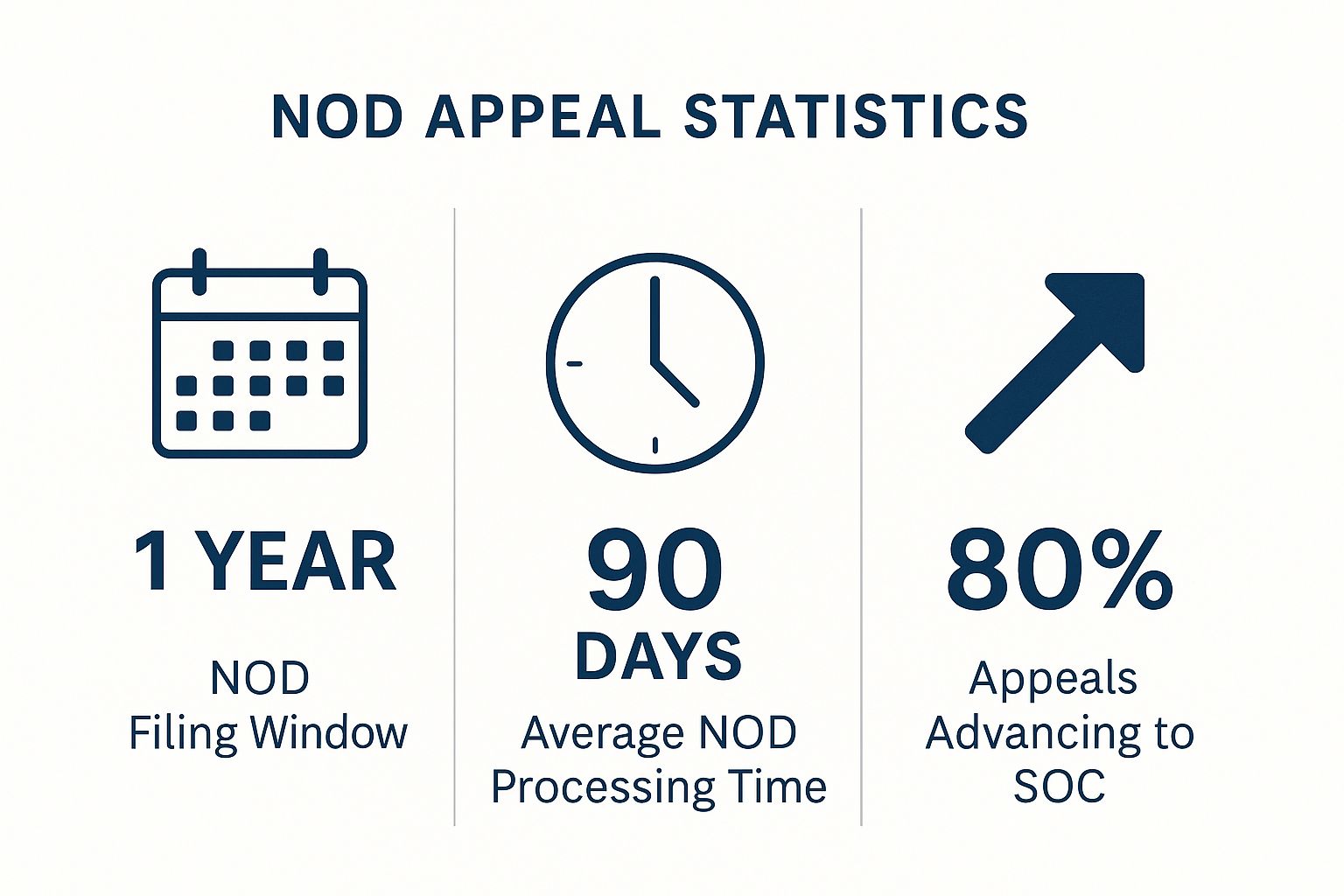
This infographic provides some historical context on the VA appeals process. While the Notice of Disagreement (NOD) shown here is no longer used under the AMA, the data highlights key timelines related to the NOD filing window, its average processing time, and the percentage of appeals that went on to the Statement of the Case (SOC). The data shows that historically most appeals progressed to the next stage, suggesting that persistence can pay off.
Realistic Timelines and Influencing Factors
While the AMA aimed to make the system more efficient, it's important to have realistic expectations. It doesn't mean every appeal will be resolved quickly. The VA system has seen some improvements. For instance, a 2023 government report indicated that some Higher-Level Reviews (HLRs) were completed in as little as 23.6 days. Similarly, the average completion time for Supplemental Claims was 36.6 days. However, these faster timelines are based on a small sample size of specific, streamlined review channels and don't represent the entire picture.
Looking at the bigger picture, the average processing time for appeals at the Board of Veterans' Appeals reached over 640 days in March 2024 but improved to just over 500 days by the end of the year. That's still an improvement compared to the pre-AMA system, but significantly longer than those faster timelines mentioned earlier. You can discover more insights here.
Keep in mind that these are just averages. More complex cases, those requiring extensive evidence gathering or expert opinions, will naturally take longer. Other things that can influence your individual timeline include the specific regional processing center handling your case and even seasonal variations in the VA's workload.
To help you understand the potential timeframes involved, let's look at a comparison table. This table gives a general overview of how long different types of appeals might take, broken down by case complexity.
VA Appeal Timeline Comparison by Lane
| Appeal Type | Simple Cases | Complex Cases | Average Timeline |
|---|---|---|---|
| Supplemental Claims | A few weeks to a few months | Several months | Varies widely |
| Higher-Level Reviews (HLRs) | A few weeks to a few months | Several months | Varies widely |
| Board Appeals | Several months to over a year | Potentially multiple years | Typically the longest |
As you can see, simple Supplemental Claims and HLRs tend to have shorter timelines than complex Board Appeals. However, the complexity of your case will significantly influence how long the process takes, regardless of the chosen lane. This table offers a general overview; your individual experience may vary.
Critical Deadlines You Cannot Miss
Think of VA appeal deadlines less like guidelines and more like the departure time for a train. Miss it, and you’re left standing on the platform watching your claim chug away without you. Understanding these deadlines is absolutely essential for a successful appeal.
The One-Year Deadline: Your First Hurdle
The most critical deadline is the one-year mark for filing your initial appeal. This isn't one year from when you think you should have gotten a decision, but precisely one year from the date stamped on your official notification letter. Pinpointing this date is key. Mark it on your calendar, set reminders, and work backward to ensure all your paperwork arrives at the VA before the deadline. Remember, "filed" means the VA has it in hand, not just that you dropped it in the mail.
Deadlines Within Each Appeal Lane
Beyond that initial one-year deadline, each appeal lane – Supplemental Claims, Higher-Level Reviews, and Board Appeals – has its own set of internal deadlines. These are often overlooked, but they’re just as important. They might involve submitting evidence, requesting hearings, or responding to VA requests for information. For example, in a Board Appeal, you usually have a specific window to submit new evidence after your hearing. Miss it, and that evidence might not be considered, jeopardizing your appeal even if you met that initial one-year filing deadline.
Real-World Consequences of Missed Deadlines
Let’s talk about John. He missed the deadline to submit crucial evidence for his Board Appeal by just a couple of days. Even though he had strong documentation, the judge couldn’t consider it because it arrived late. His appeal was delayed, all because of a missed deadline. Now consider Sarah. She meticulously tracked her VA appeal timeline, submitting everything well in advance. This proactive approach allowed the VA to process her claim quickly, leading to a much faster decision. These examples highlight just how significant deadlines are in the VA appeals process.
Grace Periods and Extensions: A Potential Lifeline
While VA deadlines are generally firm, there are limited situations where grace periods or extensions might be possible. If you encounter an unexpected emergency or extenuating circumstance that prevents you from meeting a deadline, contact the VA immediately. Thoroughly document your situation and reach out for help as soon as possible. This can be vital to protecting your appeal rights. While an extension isn’t guaranteed, it’s always worth exploring if you're facing a genuine hardship. Knowing the deadlines and when to seek help can be the difference between a successful appeal and a frustratingly long delay.
What Actually Affects Your VA Appeal Timeline
Your VA appeal timeline isn't fixed. It's more like planning a road trip – unforeseen detours, road closures, and traffic jams can all impact your arrival time. Similarly, several factors can significantly influence the duration of your appeal.
The Strength of Your Evidence
Think of your evidence as building a legal case. A strong case, built on clear medical records, comprehensive service records, and compelling supporting statements, will move through the review process efficiently. Conversely, incomplete or disorganized evidence is like having missing pieces of a puzzle. It can lead to requests for more information, adding significant time to the process. Correct paperwork is essential. Using the right US Government Forms and following the required format is like having a well-organized travel itinerary – it keeps things moving smoothly and prevents unnecessary delays.
The Nature of Your Disability
Just as some car repairs are quick and easy while others require specialized attention, some medical conditions require a more thorough review. A claim for a well-documented, straightforward injury, like a broken bone, may be processed faster than a complex mental health condition requiring extensive evaluation and specialist input.
Your Choice of Representation
Imagine navigating a complex legal system on your own versus having an experienced guide. A knowledgeable representative, such as a veterans advocate or attorney, can act as your navigator, ensuring all the necessary paperwork is correctly filed and effectively presenting your case. This expertise can often prevent delays and lead to a quicker decision.
Regional Processing Center Differences and Seasonal Variations
Just as some airports are busier than others or experience delays due to weather, VA processing times can fluctuate depending on the regional center handling your claim and even the time of year. Higher caseloads or staffing levels at different centers contribute to variations in processing speed.
The Impact of Current Events and Policy Changes
Unexpected events, like a major policy change within the VA or a national event impacting resources, can also affect your appeal timeline. These are generally outside your control, but staying informed about VA updates can help you manage your expectations.
The variability of the VA appeals system is reflected in the general timelines. Informal claims may have a decision within 9-12 months, while more complex claims can take 18-24 months in the post-AMA era. Fully Developed Claims (FDCs) or simpler cases might be resolved in as little as a month. However, many veterans experience wait times ranging from several months to over a year, demonstrating both the progress made and the continuing challenges in addressing the VA backlog. Learn more about VA appeal timelines here. Understanding these factors empowers you to make informed decisions and set realistic expectations for your individual appeal.
Tracking Your Appeal Progress Like A Pro
Waiting for a decision on your VA appeal can feel like being lost at sea without a compass. It's unsettling not knowing where things stand. But you have more control than you might think. This guide will show you how to effectively track your appeal's progress and understand what each step means for your overall timeline.
Utilizing the VA's Online Resources
The VA provides online tools to keep tabs on your appeal status. The most helpful is the VA.gov website, which offers a dedicated portal for checking the status of both claims and appeals. The screenshot below shows the homepage of this valuable tool. It allows you to securely log in and see personalized updates specific to your case.
The portal clearly explains how to access your information using your DS Logon, My HealtheVet, or ID.me account. Offering these various login options ensures all veterans can access their information. Regularly checking this portal is essential for staying informed about your claim or appeal's journey.
Direct Communication With The VA
While online tracking is convenient, sometimes you need to speak to a real person. Here are a few ways to connect with the VA directly:
-
VA hotline: Calling the VA hotline at 1-800-827-1000 can be helpful for general questions. Think of it like calling a store's main customer service line. It's good for basic information, but may not be the best route for specific questions about your case.
-
Direct contact with your regional office: Reaching out to your regional office directly is often more effective than the general hotline for specific updates. This is like talking to the specific department within the store that handles your type of issue.
-
Working with a VSO or attorney: A Veteran Service Officer (VSO) or attorney often has direct access to VA personnel and systems. This allows them to get more detailed and timely updates. They can act as your advocate, ensuring your questions are answered quickly and efficiently.
Documenting Your Communications
Keep a detailed record of all your VA interactions, including phone calls, emails, and letters. Think of it as keeping a meticulous journal of your appeal's progress. This documentation can be incredibly helpful if discrepancies or questions arise later on.
Understanding VA Correspondence
VA letters and notices can sometimes be difficult to understand. Learning to interpret the language used can be very beneficial. For instance, a status update that says "evidence gathering" could mean anything from a simple request for medical records to a more in-depth investigation.
Understanding these nuances helps you more accurately interpret your appeal's progress. Working with a representative, like a VSO or attorney, can be invaluable in deciphering these communications. They can help you understand what seemingly standard updates actually mean for your specific timeline. Knowing how to effectively track your appeal is key to successfully navigating the VA system and increasing your chances of a positive outcome.
Proven Strategies To Accelerate Your 3.1 VA Appeal
While the VA appeals process can feel like a long and winding road, you're not completely powerless. You can influence the timeline. Think of it like choosing between a leisurely stroll and a brisk walk – both get you to the destination, but one gets you there much faster. Let’s explore how to legitimately expedite your VA appeal and improve your odds of a favorable decision.
The Power of Preparation: Front-Loading Your Evidence
Just like a builder needs a strong foundation before constructing a house, the VA needs a solid foundation of evidence to efficiently review your claim. Submitting a comprehensive evidence package upfront is crucial. This means providing all relevant medical records, service records, and supporting statements from the beginning. This prevents the VA from having to request additional information, a process that can add months to your wait time.
Fully Developed Claims: The Fast Track Option
Imagine applying for a loan and having everything pre-approved – it speeds things up considerably, right? A Fully Developed Claim (FDC) works similarly within the VA system. By submitting all necessary evidence at the outset, you're essentially providing the VA with everything they need to make a decision. This proactive approach can significantly reduce processing time, potentially leading to a much quicker resolution.
Leveraging Existing Medical Evidence and Seeking Expert Opinions
Think of your medical evidence as the core of your argument. Highlighting key diagnoses, treatments, and the impact of your condition on your daily life is like presenting a well-researched case. The more compelling the evidence, the stronger your claim becomes. Sometimes, seeking a private medical opinion that directly links your condition to your military service can add significant weight to your claim and potentially expedite the VA’s decision.
Working With Qualified Representatives: Your Navigation Team
Navigating the VA appeals process can feel like traversing a complex maze. A qualified representative, such as a Veterans Service Officer (VSO) or attorney, can act as your experienced guide. They understand the intricacies of the VA system, helping you avoid common pitfalls that cause delays. Think of them as expert navigators who help you stay on course and reach your destination faster. They can ensure all required paperwork is correctly filed and advocate on your behalf throughout the process. For more insight on staying organized, similar to contract management, see: Tracking Contract Obligations
Effective Communication: Staying Connected With the VA
Staying connected with the VA and proactively managing your appeal is vital. Regularly checking your online portal for updates, promptly responding to requests for information, and keeping detailed records of all communication are essential. This prevents your appeal from getting bogged down and keeps it moving toward a resolution.
To help visualize strategies for expediting your appeal and their potential impact, let's take a look at the table below.
Appeal Acceleration Strategies by Timeline Impact
Ranking of strategies by their potential to reduce appeal processing time
| Strategy | Potential Time Savings | Difficulty Level | Success Rate (Estimated) |
|---|---|---|---|
| Fully Developed Claim (FDC) | Significant (months) | Medium | High |
| Front-Loading Evidence | Moderate (weeks-months) | Low | Medium-High |
| Working with a Qualified Representative | Moderate (weeks-months) | Low | Medium-High |
| Seeking Expert Medical Opinions | Variable (weeks-months) | Medium-High | Medium |
| Effective Communication | Moderate (weeks) | Low | High |
As you can see, some strategies offer a higher potential for time savings than others. While a Fully Developed Claim can significantly shorten the process, simply maintaining consistent communication with the VA can also make a noticeable difference.
These strategies aren't magic bullets, but they are proven methods for navigating the VA system more efficiently. They empower you to take control of your appeal timeline and improve your chances of receiving the benefits you've earned.
Your Action Plan For Success

Now that you understand the VA appeal timeline, let's talk about creating a personalized plan for your specific appeal. Think of it like planning a road trip – you need to know where you're going and how to get there.
Creating a Personalized Checklist
No two VA appeals are exactly alike. Yours will be unique based on your situation, the supporting evidence you have, and the type of appeal you choose. A personalized checklist helps you stay organized and on track. Here’s what to include:
-
Initial Filing: Write down the date you received your decision letter. This is important because it starts the one-year clock on your appeal. Mark this date on your calendar and count backward to make sure your initial appeal is filed on time.
-
Evidence Gathering: Make a list of all the evidence you have and anything else you need. If you’re missing important documents or medical records, getting those should be your top priority.
-
Appeal Lane Selection: Figure out which appeal lane – Supplemental Claim, Higher-Level Review, or Board Appeal – is the best fit for your situation. This choice has a big impact on how long your appeal will take.
-
Representation: If you’re working with a Veterans Service Officer (VSO) or an attorney, add their contact information and any scheduled meeting dates to your checklist. If you’re not working with a representative yet, start researching and consider their availability.
Building Your Support System
A successful appeal often takes more than just filling out paperwork. It’s about building a support system that can offer help and guidance along the way. This can include:
-
Family and Friends: They can offer emotional support and even help with practical things like organizing your paperwork.
-
Medical Professionals: Your doctors are crucial for providing updated medical records and possibly expert opinions connecting your condition to your service.
-
Veterans Organizations: Groups like the American Legion and Disabled American Veterans (DAV) provide valuable resources and support during the appeals process.
Staying Proactive During the Waiting Period
Waiting for a decision can be tough. If you’re feeling overwhelmed, consider applying the principles of prioritizing tasks, just like you would with a demanding project. You can find some helpful strategies in this article on how to prioritize work. The key is to stay active and involved in your appeal:
-
Regularly Checking the VA Website: Use the VA website to track your appeal's status and look out for any requests for information.
-
Communicating with Your Representative: Stay in touch with your VSO or attorney for updates and advice.
-
Staying Informed: Keep up with VA news and updates in case any policy changes or events affect your appeal.
Developing Realistic Expectations and Staying Positive
While everyone wants a quick decision, it’s important to be realistic about the VA appeal timeline. Complex cases can take time, and sometimes unexpected delays happen. Try to maintain a positive outlook and focus on the steps you're taking.
This personalized action plan is more than just a to-do list; it's your roadmap to navigating the VA appeal process effectively. By taking a proactive approach, you can stay organized, make smart decisions, and work toward a positive outcome. Ready for expert help? Visit Homefront Group for personalized support and guidance.