The Hidden Challenges of Military-to-Civilian Transition
Transitioning from military to civilian life involves a significant shift in identity, lifestyle, and mindset. It's much more than simply trading a uniform for business attire. While many veterans look forward to civilian life, they often face unforeseen obstacles beyond just finding employment. These challenges can affect their mental health, social connections, and financial well-being.
Psychological Adjustments: From Regimentation to Self-Direction
One of the most substantial adjustments is moving from the highly structured military environment to the independent nature of civilian life. The military provides a clearly defined framework for daily routines, tasks, and even long-term career goals. This structure, while demanding at times, offers a sense of purpose and predictability.
This same structure, however, can make self-direction and decision-making difficult in the civilian world. The sudden freedom can feel overwhelming, leading to feelings of uncertainty and a lack of direction. Furthermore, the absence of a defined hierarchy and the close bonds of unit life can contribute to social isolation.
The Impact of Rank and Experience
Research shows that the transition experience isn't the same for all veterans. A 2011 Pew Research Center survey of 1,853 U.S. veterans found that 27% reported difficulties transitioning. This number increased to 44% for post-9/11 veterans. Find more detailed statistics here.
Factors like rank and education play a role. Commissioned officers and college graduates generally had smoother transitions than enlisted personnel and those with only high school diplomas. This difference underscores the importance of understanding the varied experiences within the veteran community and providing tailored support services.
Redefining Purpose and Identity
Beyond the practical aspects, transitioning veterans often struggle to redefine their sense of purpose and identity after leaving the military. Military identity is frequently deeply connected to one's role and unit. Leaving the service can create a sense of loss and the need to build a new personal narrative. This can be especially challenging for those who experienced combat or trauma.
By acknowledging these psychological adjustments and seeking appropriate support, veterans can successfully manage this life change and thrive in their civilian endeavors. Recognizing these potential hidden challenges is the first step toward a fulfilling post-military life.
Mastering Your Finances Beyond the Military Paycheck

Financial stability is crucial for a successful transition from military to civilian life. The steady military paycheck provides a sense of security, but the civilian world presents new financial realities. This requires adapting to different compensation structures, understanding new benefits, and planning for unfamiliar expenses.
Creating a Transition Budget
One of the first steps is developing a transition budget. This budget serves as a financial roadmap, guiding your spending during the initial months after leaving the service. It’s important to factor in potential gaps between your last military paycheck and your first civilian paycheck. Relocation, job searching, and further education are additional costs to consider.
Creating a successful transition budget involves honestly assessing your current spending habits and anticipated civilian income. Make a detailed list of essential expenses. These include housing, food, transportation, and healthcare. Don't forget non-essential expenses, such as entertainment and hobbies.
Maximizing Military Benefits
Veterans transitioning to civilian life have a significant advantage: access to military benefits. These benefits are designed to ease financial burdens. The GI Bill, for instance, can fund education, reducing the need for student loans. VA loans offer favorable terms for homeownership, helping veterans build financial security through property investment.
Understanding these benefits and how to access them is essential. Connecting with a Veterans Service Officer (VSO) can provide personalized guidance. Understanding the different GI Bill programs and their eligibility requirements, for example, can significantly impact your educational funding.
Planning for Civilian Healthcare
Healthcare costs can often surprise transitioning veterans accustomed to military medical coverage. Preparing for these costs is key to avoiding unexpected financial strain. Research civilian health insurance options, understand co-pays and deductibles, and consider potential costs for ongoing medical needs.
Financial transitions aren't always straightforward. A 2024 longitudinal study revealed that financial success rates for post-9/11 veterans improved from 40% to 48% between 3 and 36 months post-service. However, other transitions, like educational success, showed different trends. Discover more insights about this topic.
To help visualize the financial journey during this time, the following table provides a framework for understanding potential challenges and recommended focus areas:
Financial Success Indicators During Transition Periods
This table showcases how different financial aspects change throughout the transition timeline and provides benchmarks for veterans to evaluate their own progress.
| Transition Period | Financial Success Rate | Common Challenges | Recommended Focus Areas |
|---|---|---|---|
| 0-3 Months Post-Service | Often below 40% | Establishing civilian income, initial relocation costs, navigating unemployment benefits | Aggressive job searching, creating a detailed budget, utilizing transitional assistance programs |
| 3-12 Months Post-Service | 40%-48% | Balancing new income with new expenses, managing civilian healthcare costs, adjusting to a non-military lifestyle | Refining budget based on real-world expenses, securing long-term housing, exploring career development opportunities |
| 12-36 Months Post-Service | 48% and increasing | Long-term financial planning, potential career changes, managing debt accumulated during transition | Investing in retirement accounts, seeking professional financial advice, pursuing additional education or certifications |
This table highlights the dynamic nature of financial stability during transition. While the financial success rate improves over time, consistent focus and adaptation are essential.
Successfully navigating these financial changes requires planning, resourcefulness, and adaptability. By proactively addressing these financial challenges, veterans can build a strong foundation for long-term success in their civilian careers and personal lives.
Translating Your Military Career for Civilian Employers
Transitioning from a military career to the civilian workforce can be challenging. One of the biggest hurdles is effectively communicating the value of your military experience to potential employers. While your service has undoubtedly equipped you with valuable skills, simply listing military jargon and acronyms on your resume won't resonate with hiring managers unfamiliar with military terminology. A strategic approach to presenting your skills is essential for a successful transition.
Decoding Your Military Achievements
Consider your military experience as a specialized language that you’re fluent in, but civilian employers may not understand. Your goal is to translate your accomplishments into a language they can easily comprehend. For example, instead of simply stating you were a "Squad Leader," describe yourself as a "Team Leader who supervised and mentored a team of eight individuals, consistently exceeding performance expectations."
This method emphasizes transferable skills such as leadership, mentorship, and performance management—skills highly valued across various industries. By focusing on the practical application of your skills, you effectively demonstrate their relevance in a civilian context. This requires looking beyond military job titles and focusing on the specific tasks, responsibilities, and outcomes you achieved.
Crafting a Civilian-Ready Resume
Your resume is your first impression, and it's crucial to present your military experience in a way that highlights its relevance to civilian roles. Instead of listing your military occupational specialty (MOS), concentrate on the core skills and experiences you gained. Whenever possible, quantify your accomplishments with specific numbers and data. For instance, instead of saying you managed logistics, state that you "Managed logistics for a unit of 200 personnel, ensuring timely delivery of essential supplies and equipment, resulting in a 15% reduction in operational delays." Adding quantifiable achievements makes it easier for employers to understand the impact of your contributions.
This quantifiable approach provides concrete evidence of your abilities. Remember, your resume needs to capture attention quickly, so clear, concise language and quantifiable results are essential. Furthermore, understanding industry-specific hiring practices can significantly improve your chances. For example, if you are considering a role in retail, understanding pre-employment screening is helpful. Learn more about retail background checks.
Networking Beyond the Military
Networking is vital for any job seeker, and transitioning veterans are no exception. While your military network is valuable, expanding your connections to include civilian contacts is equally important. Attend industry events, connect with professionals on LinkedIn, and consider joining relevant professional organizations. When networking, be prepared to articulate your military experience in civilian-friendly terms, emphasizing the transferable skills you offer. This also involves actively listening and learning about the current civilian job market.
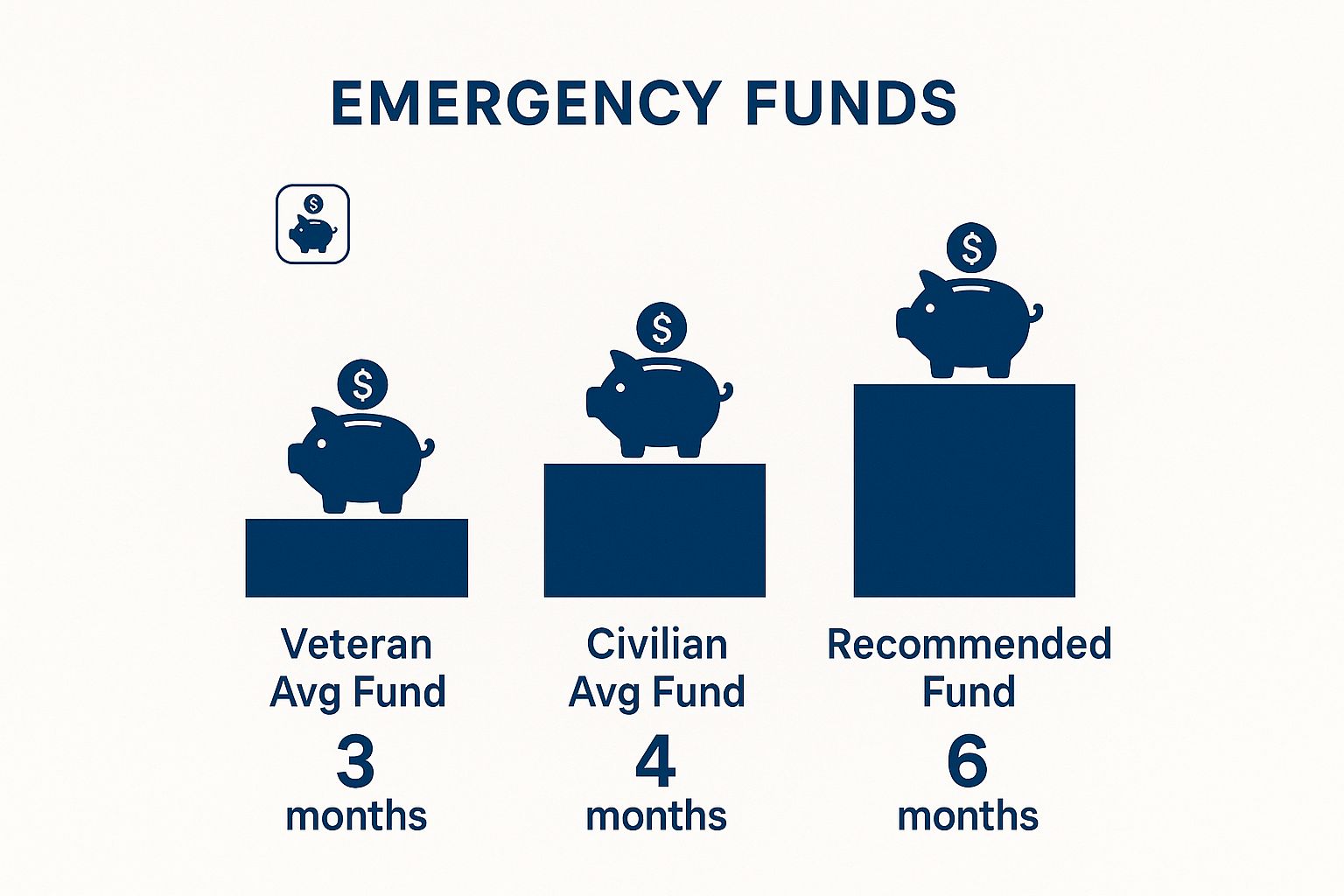
The following data chart illustrates some of the key challenges veterans face during their transition, based on a 2019 study. In 2019, 48% of post-9/11 veterans reported difficulty adjusting to civilian life. You can find more detailed statistics from the Pew Research Center. This emphasizes the importance of proactive planning and skill translation during your transition.
Veteran Transition Challenges (2019)
(This space is reserved for a bar chart infographic visualizing data on finding employment, translating military skills, networking, and mental health support during veteran transitions. The chart will highlight the percentage of veterans who reported difficulties in each area, showcasing the most significant hurdles.)
This chart reveals that finding suitable employment and translating military skills are significant challenges.
To help translate your skills, consider the following table:
Military-to-Civilian Skills Translation Guide
| Military Experience/Skill | Civilian Translation | Industries Valuing This Skill | Resume Keywords |
|---|---|---|---|
| Squad Leader | Team Leader/Supervisor | Management, Operations, Project Management | Leadership, Team Management, Supervision, Mentoring, Performance Management, Goal Setting |
| Logistics Management | Supply Chain Management/Inventory Control | Logistics, Retail, Manufacturing, Healthcare | Supply Chain, Logistics, Inventory Control, Procurement, Distribution, Operations Management |
| Risk Assessment | Risk Management/Analysis | Finance, Insurance, Healthcare, Information Technology | Risk Management, Risk Assessment, Analysis, Mitigation, Compliance, Security |
| Operational Planning | Project Planning/Management | Construction, Engineering, IT, Business Development | Project Management, Planning, Execution, Strategy, Organization, Time Management |
This table provides a framework for translating common military skills and experiences into civilian terminology. By using this guide, you can effectively communicate the value you bring to potential employers. Successfully navigating the military-to-civilian transition requires proactive planning, effective communication, and a willingness to adapt. By presenting your military experience in a way that resonates with civilian employers, you can open doors to a fulfilling civilian career.
Finding Your Purpose Beyond the Uniform
The transition from military to civilian life presents a unique challenge: redefining your purpose. Military service provides a clear mission and structure. Civilian life, in contrast, requires individuals to forge their own path. This shift can be especially difficult for veterans accustomed to the camaraderie and shared sense of purpose found in the military. Successfully navigating this transition means acknowledging the challenge and taking proactive steps to rebuild a sense of identity and meaning.
Navigating the Absence of Clear Missions
One of the most significant adjustments is the lack of clearly defined missions. In the military, objectives are usually straightforward, and your role is well-defined. Civilian life often lacks this inherent structure. Veterans must establish their own goals and a plan for achieving them. This process can be daunting, yet also empowering.
Many veterans find purpose in pursuing higher education, starting businesses, or engaging in community service. Setting personal goals and actively working toward them cultivates a sense of direction and accomplishment. This helps fill the void often left by the absence of military missions. This process requires self-reflection and a willingness to explore new possibilities.
Building Authentic Civilian Connections
Another challenge is building authentic connections outside the military. The close bonds forged during service are often hard to replicate in civilian life. This can lead to feelings of isolation and make it difficult to relate to those without similar experiences. However, building new civilian connections is crucial for a successful transition.
One effective way to connect with civilians is to get involved with community organizations, professional groups, or volunteer opportunities. Understanding how different industries hire, such as the retail sector, can be beneficial. Researching areas like retail background checks can offer valuable insights when searching for civilian employment. These activities provide opportunities to network, develop new skills, and contribute to a larger purpose.
Integrating Your Military Experience Into a New Narrative
Integrating your military experience into your civilian identity is essential. While your time in the military may be complete, the skills, values, and experiences you gained remain valuable. It's important to recognize your military-developed strengths and how they translate to civilian pursuits.
This involves presenting your military experience in a way that civilian employers and colleagues understand. Highlighting transferable skills, such as leadership, teamwork, problem-solving, and discipline, demonstrates your value. Sharing your experiences in a relatable manner, even with those unfamiliar with the military, builds bridges and fosters connection. By embracing your military background and weaving it into your civilian narrative, you create a sense of continuity and purpose. The transition from military to civilian life is a journey of self-discovery and reinvention. By proactively addressing the challenges and focusing on purpose, connections, and integration, you can build a fulfilling and meaningful civilian life.
Leveraging Education as Your Transition Superpower
Education can be a powerful resource as you transition from military to civilian life. However, it's important to approach educational opportunities strategically. Choosing the right program shouldn't be a matter of convenience, but rather a calculated decision based on your career goals and personal growth. This section explores how veterans can effectively use their education benefits to successfully bridge the gap to a civilian career.
Maximizing Your Military Education Benefits
Many veterans qualify for education benefits such as the GI Bill, which can significantly offset the cost of further education. Understanding the various GI Bill programs and their eligibility criteria is essential to maximizing these benefits. For instance, the Post-9/11 GI Bill offers varying levels of coverage based on length of service. Consulting with a Veterans Service Officer (VSO) can provide personalized guidance to determine which programs best fit your needs and help you navigate the application process. This personalized approach can help you make sound decisions about your education and avoid common mistakes.
Choosing Programs Aligned With Your Career Vision
Before enrolling in a program, take the time to carefully consider your career aspirations. Are you seeking a completely new career path, or do you want to build upon your existing military skills and translate them to a civilian context? Researching in-demand industries and career paths will help you select programs aligned with your objectives. If you're interested in project management, for example, pursuing a Project Management Professional (PMP) certification after completing a project management course can significantly enhance your job prospects. This strategic approach to education ensures you invest your time and resources wisely.
Thriving in Academic Environments
The academic environment is quite different from the structured nature of military training. Self-directed learning, time management, and independent study are essential for success in civilian education. Many veterans find that joining student veteran groups offers valuable support and a sense of community during this transition. These groups can connect you with resources and mentors who understand the unique challenges veterans face in academia. This support network can be invaluable as you adapt to a new learning style.
Balancing Studies With Family and Service-Connected Challenges
Transitioning veterans often balance numerous responsibilities, including family commitments and potentially, managing service-connected physical or mental health conditions. A 2023 report highlighted that veterans often pursue education to boost confidence during transitions. Developing a realistic study schedule that accommodates these commitments is essential. If you are facing service-connected challenges, reach out to your school's disability services office. They can provide accommodations and support to ensure equal access to educational opportunities. Proactive planning and self-advocacy are key to academic success.
Sector-Specific Pathways and Certifications
Certain industries, such as information technology or healthcare, often require specialized certifications or credentials. Researching these requirements early in your transition process allows you to plan your educational path strategically. For example, veterans interested in human resources might consider pursuing human resource management certifications to strengthen their qualifications. Focusing on industry-recognized certifications can make you more competitive in the civilian job market. This targeted approach not only improves your employment prospects but also demonstrates your commitment to professional growth within your chosen field. Leveraging education strategically enables you to build a solid foundation for your civilian career and achieve your post-military aspirations. Education is an ongoing journey of learning and adaptation, empowering you to succeed in civilian life.
Creating Your Civilian Support Network From Scratch
Transitioning from the military to civilian life can be challenging. The close-knit military community, with its shared experiences and inherent support system, is often starkly contrasted with the more individualistic nature of civilian life. This can lead to a sense of social disconnect for veterans, making the establishment of a new support network crucial for a successful transition.
Overcoming Social Isolation
The structured military environment naturally fosters strong bonds and camaraderie. Replicating this in civilian life requires a proactive approach. Veterans often experience social isolation as they navigate a world where shared experiences are less common. Connecting with civilians who haven't served requires finding common ground beyond military service.
This doesn't mean disregarding your military background. Rather, it involves communicating your experiences in ways that resonate with a wider audience. Consider joining community groups, volunteering, or pursuing hobbies to connect with like-minded individuals.
Connecting With Civilians
Building authentic civilian relationships involves understanding and bridging the potential cultural gap between military and civilian life. While your military experience is a valuable part of your identity, connecting with others on shared interests, values, and hobbies is key.
Effective communication is essential. Avoid using military jargon that might not be understood by civilians. Instead, focus on sharing stories and insights in a relatable manner, fostering genuine connections and understanding.
The Power of Veteran Organizations
Veteran organizations, such as the Veterans of Foreign Wars (VFW) and the American Legion, offer a vital support system for transitioning veterans. These groups provide a sense of community and shared understanding, mitigating the feelings of isolation.
They also offer practical resources, including job search assistance, mentorship opportunities, and access to valuable benefits information. Connecting with other veterans who understand your challenges can be incredibly helpful during this transition.
Building Professional Networks
A strong professional network is crucial for career success after military service. Connecting with professionals in your chosen field provides valuable insights into civilian career paths, industry-specific job search strategies, and networking opportunities.
Consider pursuing relevant certifications to further enhance your career prospects. For example, those interested in human resources might explore human resource management certifications. Leveraging your military skills and experience can propel your civilian career forward.
Community Engagement for Support and Purpose
Engaging with local communities offers a path to building connections and finding a sense of belonging. Volunteering, joining hobby clubs, or participating in local initiatives can help rebuild a sense of purpose after leaving the military.
The 2023 National Veteran Suicide Prevention Annual Report highlights the vulnerability of transitioning veterans, emphasizing the importance of robust support systems. Community involvement allows you to contribute your skills and experiences while fostering a sense of belonging and purpose.
A strong support network is fundamental for a successful transition to civilian life. Proactively engaging with new communities and individuals contributes significantly to employment success, mental well-being, and a smoother reintegration overall. This effort can lead to a more fulfilling and successful civilian life.
Are you a veteran or first responder preparing for civilian life? Homefront Group understands the unique challenges of this transition and offers specialized legal and professional services. Visit their website to learn how they can empower you to achieve your civilian life goals.