
Understanding The Civilian Workplace (And What Really Matters)
Making the move from military service to the civilian job market can feel like you're trying to learn a completely new language and culture all at once. The way things are structured, how people communicate, and even the unspoken expectations are often quite different. Getting a handle on these distinctions is key for a smooth transitioning from military to civilian jobs. It’s more than just securing employment; it’s about finding your footing and flourishing in a new setting.
A critical first move in this process is taking stock of your own abilities. The image below depicts a veteran carefully considering their skillset, which is an essential exercise when gearing up for the civilian job market.
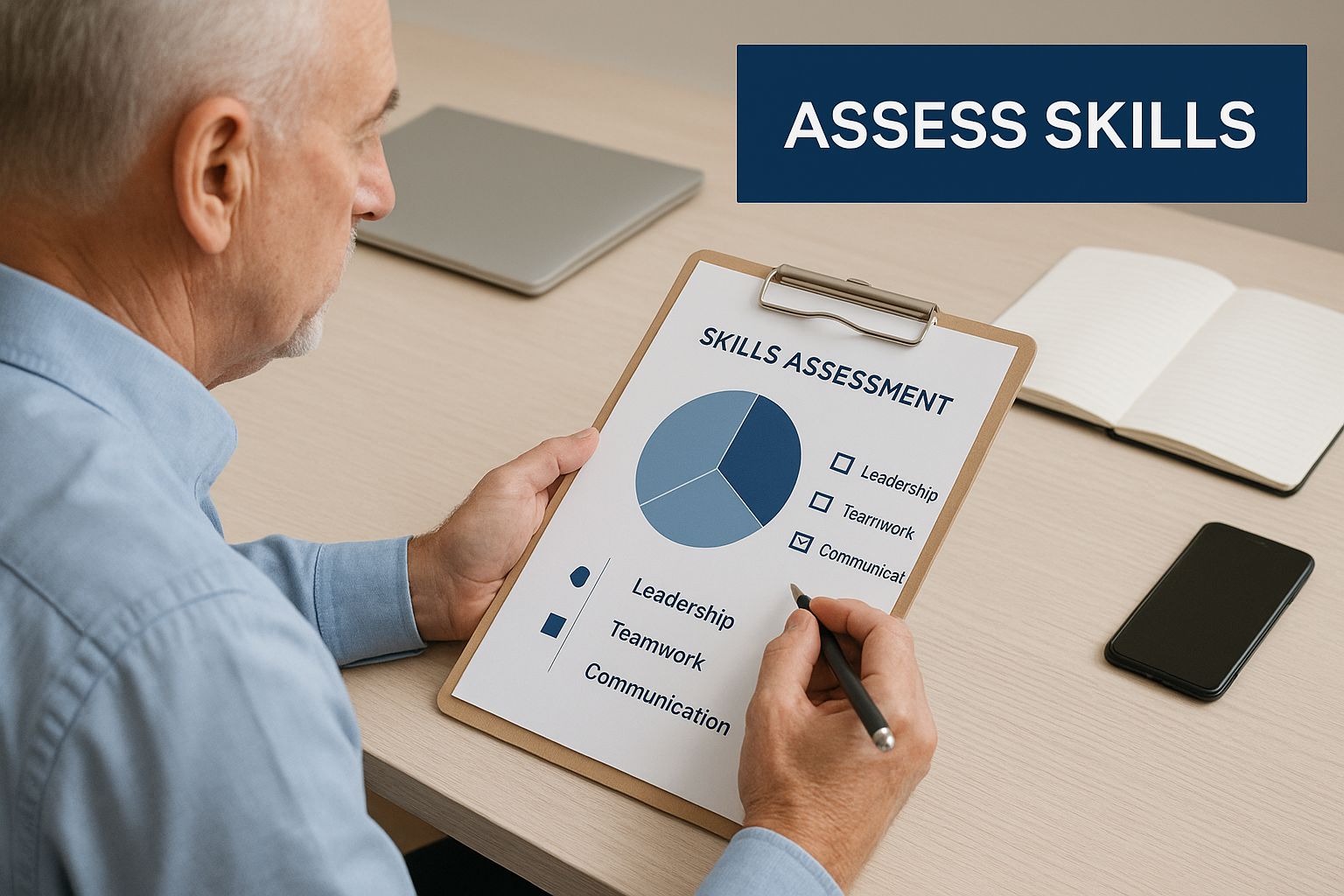
This graphic, highlighting 'Assess Skills,' really drives home how vital it is to pinpoint and clearly state your transferable skills before you even start talking to potential employers. This self-knowledge is the foundation for how you'll present yourself.
Navigating New Norms: Key Cultural Shifts
In the military, you're likely used to a very defined hierarchy and straightforward communication. Civilian workplaces, on the other hand, often have more fluid structures and communication can be more subtle, sometimes indirect. For instance, what would be a direct order in the military might be a collaborative discussion or a delicately phrased request in a corporate office. Recognizing this change can help you avoid misunderstandings and build good working relationships.
Decision-making can also be a different ball game. Military decisions often come from the top down, while civilian organizations might prefer building consensus or using committee-based approaches. This shift calls for patience and a readiness to participate in discussions that might take longer.
The scope of this change is considerable. Between 2002 and 2021, more than 2.8 million enlisted service members were honorably discharged from the U.S. military. Studies indicate that job outcomes can differ significantly depending on military occupation and rank. Those in highly specialized fields like drone operations or intelligence often find higher civilian pay compared to those in combat roles with less directly transferable skills. This shows the variety of challenges and opportunities veterans encounter. You can explore this topic further on Census.gov.
To help you visualize these differences more clearly, the following table offers a comparison of key aspects between military and civilian work environments. It aims to help veterans understand what to expect.
Military vs. Civilian Workplace Comparison
| Aspect | Military Environment | Civilian Environment | Transition Tips |
|---|---|---|---|
| Structure | Hierarchical, clear chain of command | Often flatter, matrixed, or project-based | Be prepared for less defined hierarchies; identify informal leaders and influencers. |
| Communication | Direct, formal, jargon-heavy | Indirect, nuanced, less formal, industry-specific language | Practice active listening, ask clarifying questions, and learn to "read between the lines." |
| Decision-Making | Top-down, often rapid | Collaborative, consensus-driven, can be slower | Offer input respectfully, understand the value of diverse perspectives, and be patient with the process. |
| Pace & Urgency | Mission-driven, high urgency | Varies by industry/role, often project or deadline-driven | Adapt your sense of urgency to the specific context; learn to manage multiple, sometimes conflicting, priorities. |
| Performance Metrics | Clearly defined, tied to readiness and mission success | Can be subjective, tied to KPIs, team goals, individual goals | Seek clarity on expectations and how your performance will be measured; ask for regular feedback. |
This comparison highlights that adapting to new communication styles and decision-making processes are main takeaways for a successful shift.
Leveraging Your Service: Turning Experience Into Opportunity
Many employers understand the significant value that military service brings, such as leadership qualities, discipline, and strong problem-solving abilities. However, the onus is on you to frame these qualities in language that civilian employers will readily grasp. For example, instead of just saying you "led a platoon," detail how you managed a team of X individuals, were accountable for equipment valued at $Y, and successfully carried out Z important operations.
It's also helpful to address any potential preconceived notions, like an assumption of inflexibility, by emphasizing your adaptability and eagerness to learn. Certain sectors, including logistics, cybersecurity, and government contracting, actively look for individuals with military backgrounds. Researching a company's culture before you apply is also very important; seek out organizations that have established veteran hiring initiatives or employee resource groups, as these can signal a welcoming atmosphere for your transitioning from military to civilian jobs.
Strategic Pre-Transition Planning That Actually Works

Making a smooth move from military service to a civilian career isn't usually about getting lucky. It’s typically the result of careful preparation that begins long before your last day in uniform. Getting to know the civilian job market is important, but creating and following a solid plan early on can make your journey much easier and lead to better job opportunities.
The Power of an Early Start: Your 12-18 Month Advantage
Thinking about your transition 12-18 months before leaving the service might sound like a lot of lead time, but this period offers a real benefit. This extended timeframe allows you to approach each step thoughtfully, without the stress of a rapidly approaching separation date. For instance, it gives you sufficient time to explore different industries, figure out any skills you might need to develop, and start making connections well before you actively begin applying for jobs. This early start makes for a more composed and effective process.
This timeframe is perfect for setting up a strong base. You can begin to really get a handle on what civilian employers are seeking and how your distinct military experiences can meet their requirements, building a solid foundation for your next career.
Building Your Transition Toolkit: Essential Preparations
A practical first step is to start translating your military achievements into terms that civilian employers will understand. Instead of just listing your duties, concentrate on measurable accomplishments and their effects – such as leadership roles, project management successes, budget responsibilities, and problem-solving skills. At the same time, begin to identify people who can write strong letters of recommendation for you, ones that go beyond general statements.
This early stage is also ideal for several other key preparations:
- Creating a financial cushion: Try to save enough money to cover your living expenses for a few months. This safety net can greatly reduce stress while you're looking for a job.
- Using military education benefits wisely: Look into how programs like the GI Bill can help pay for degrees or certifications that will improve your chances in the civilian job market.
- Researching valuable certifications: Certain professional certifications can make you a much more attractive candidate in particular fields. For example, a PMP (Project Management Professional) certification from the Project Management Institute (PMI) is great for project management roles, or a CompTIA Security+ for IT positions.
These components come together to form a dependable toolkit that will aid your transition.
Activating Your Plan: Key Pre-Separation Actions
As your separation date gets closer, it's time to actively use the transition resources available. The Department of Defense’s Transition Assistance Program (TAP) and initiatives like SkillBridge are there to support the roughly 200,000 service members who transition out of the military each year. SkillBridge, for instance, provides opportunities for internships and training during your final 180 days of service. However, planning ahead is important, as participation can sometimes be affected by operational needs or time limitations.
Building a professional network also becomes very important. This doesn't need to be an overwhelming task; you can start by having informational interviews and connecting with veterans who are already working in the industries you're interested in. Also, aim to use your terminal leave effectively for focused job searching, attending interviews, and finalizing job offers. The fact is, many veterans start their job search without a position already secured. A 2019 survey by the Pew Research Center revealed that only about one-in-four veterans (25%) had a civilian job waiting for them when they left the military. Interestingly, commissioned officers were almost twice as likely (46%) to have a job secured compared to NCOs (25%) or enlisted personnel (21%), highlighting different experiences in the job search. Find more detailed statistics here.
Addressing the Human Element: Emotional and Family Considerations
Beyond the practical and professional planning, the process of transitioning from military to civilian jobs has a considerable personal aspect. It's very important to have frank conversations with your family about what to expect, potential difficulties, and the new way of life that lies ahead. Setting achievable timelines that consider the emotional adjustment of leaving military service is also essential. It’s helpful to know what support is available for service members as they adapt to this change; one important part is understanding the resources for mental health in the workplace. Paying attention to these personal factors helps create a smoother and less stressful transition for everyone involved. This well-rounded preparation readies you not just for a new job, but for a new phase of life.
Translating Your Military Value Into Civilian Gold

The skills and experiences gained during military service are substantial and highly sought after. However, a common hurdle when transitioning from military to civilian jobs is conveying this value in terms civilian employers can readily grasp. This means translating military terminology and achievements into impactful business stories that connect with those making hiring decisions.
Demystifying Your Military Accomplishments for Civilian Employers
Begin by shifting away from military-specific language and highlighting the universal abilities and outcomes you achieved. It’s important to quantify your achievements rather than just listing job duties. For example, instead of stating 'responsible for unit readiness,' you could say, 'Oversaw logistics and maintenance for a 150-personnel unit, achieving 98% operational readiness for equipment worth $5 million. This performance surpassed readiness goals by 10% for two years straight.' This method clearly shows your impact through metrics civilian employers understand.
A helpful way to structure these accomplishments is the STAR method (Situation, Task, Action, Result). This framework helps distill intricate military experiences into straightforward narratives showcasing your abilities. For instance:
- Situation: "During a significant exercise, our logistics systems encountered a major slowdown."
- Task: "My assignment was to pinpoint the inefficiencies and deploy a fix within 48 hours."
- Action: "I reviewed the workflow, reassigned staff, and brought in a new tracking method."
- Result: "This led to a 30% reduction in processing time and guaranteed all essential supplies were delivered as planned."
This approach allows you to present your problem-solving skills and leadership in a concrete manner.
Crafting Your Narrative: Storytelling and Addressing Perceptions
Beyond just numbers, effective storytelling plays a vital role. Your military service offers abundant material for stories that illustrate resilience, adaptability, and leadership in high-pressure situations. These narratives can help address unspoken worries employers might have, such as concerns about rigidity or cultural adjustment. Sharing examples of how you adapted to new situations or worked with varied teams can dispel such notions.
Clearly communicating your abilities is key. In 2023, the Veterans of Foreign Wars (VFW) noted it takes veterans an average of four months to secure civilian employment post-service, and roughly seven months to feel fully settled into civilian life. A survey involving 1,000 veterans revealed that although the military equips them with valuable skills like performing under pressure (50%), teamwork (41%), and problem-solving (39%), many face challenges with self-assurance and adapting. Articulating your unique strengths effectively can make this transition smoother. Learn more about the transition hurdles veterans face from the VFW's report.
Positioning Your Unique Experiences as Assets
Your military service—encompassing deployments, leadership positions, and specialized technical instruction—provides clear competitive benefits. Present deployments as experiences that sharpened your capacity to perform in demanding settings, oversee intricate projects, and engage with diverse cultures, rather than just periods away. Leadership experience, even at early ranks, often exceeds that of civilian peers. Likewise, technical skills acquired in the military are frequently in demand across numerous sectors. When planning your shift, think about entrepreneurial avenues; for instance, abilities developed in surveillance or logistics could be very useful if you are considering how to launch a UAV enterprise.
Should questions arise about being overqualified, tackle them by stressing your dedication to developing a civilian career and your enthusiasm for applying your broad experience to fresh challenges within their company. Convey that you see the position as a chance to make substantial contributions while also learning and adjusting. Demonstrating a clear understanding of the civilian workplace and the specific role you're aiming for is crucial for transforming potential drawbacks into advantages.
Building Resumes And Profiles That Get You Noticed
Your resume and online professional profiles are your primary marketing materials when you're moving from military service to a civilian career. They need to clearly show your value to hiring managers using language they understand, making your unique military background a clear asset. These documents are more than just historical records; they are your tools for career advancement.
Making sure your application materials connect with both automated screening software and human decision-makers is essential. This is why putting careful effort into your resume and how you present yourself online is so important for your transitioning from military to civilian jobs.
Crafting a Resume That Speaks the Civilian Language
The core of a strong resume is effectively translating your military duties and accomplishments into terms that civilian employers readily grasp. As you've learned, this translation is fundamental. Many companies use Applicant Tracking Systems (ATS) to initially screen resumes. To pass this first hurdle, your resume must contain industry-specific keywords that align with the job description. You can find these terms by looking at job ads in your chosen field.
When you describe your experience, emphasize what you achieved with numbers. For instance, instead of just listing a duty, you could say you "led a team of 10 to improve logistical efficiency by 15%." A common misstep is sending the same generic resume for every job. Each application should have a resume customized for that specific role, showcasing the skills and successes most relevant to it. As Nick DeLeonardo, a Marine Corps veteran, emphasized, adapting resumes for different industries is vital, changing how you describe your military background for each career direction.
The Power of a Compelling Summary Statement
Consider the summary statement (sometimes called a professional profile) at the top of your resume as your quick sales pitch. This brief section is your prime opportunity to capture a recruiter's interest swiftly. It should concisely state who you are, the value you bring, and how you can address the employer's needs, framing you as an ideal candidate.
This statement needs to be adjusted for every job you apply for, drawing a direct line between your most significant qualifications and the specific requirements of the role. It’s about demonstrating you're interested in their job, not just any job.
Optimizing Your LinkedIn Profile for Visibility
In the current job market, having a well-maintained LinkedIn profile is crucial. It serves as more than just an online version of your resume; it’s an active space for building your professional network and showcasing your personal brand. Optimize your profile by:
- Using a professional photo and a strong headline that includes keywords relevant to your desired field.
- Writing a comprehensive "About" section that builds on your resume's summary, sharing your career story and future goals.
- Requesting recommendations from former colleagues and supervisors who can speak to your abilities and work ethic.
- Being active by sharing relevant industry content, joining pertinent groups, and contributing to discussions. This helps grow your network naturally and shows your engagement and expertise.
Such activities can help you get noticed by recruiters and open doors to opportunities you might not discover otherwise.
Strategic Social Media Use Beyond LinkedIn
While LinkedIn is the main platform for professional networking, other social media channels can be used carefully. If it makes sense for your field, sharing relevant articles, your own insights, or even short pieces of content related to your skills can help build your reputation and knowledge.
The most important thing is to present a professional image and concentrate on platforms where professionals in your target industry are active. By carefully developing these assets—your resume and online profiles—you greatly enhance your visibility and your prospects for a successful transitioning from military to civilian jobs. These efforts communicate your professionalism and preparedness for the civilian job market.
Interview Success: From Military Evaluations To Civilian Conversations
Once your resume and profile have successfully opened the door, excelling in the civilian interview is the next vital checkpoint in your journey from military to civilian jobs. This part of the process calls for a notable change in perspective. Unlike the often formal and structured military evaluations, civilian interviews are much more like professional conversations. Getting comfortable with this conversational style can really boost your chances of securing the role you're aiming for.
Shifting Your Interview Mindset
The biggest change to make is moving from a straightforward reporting style to a more interactive dialogue. In military settings, evaluations usually stick to a clear, rank-based structure. Civilian interviews, on the other hand, flourish on a two-way exchange of information. Your aim is to build a connection and show not just your skills, but also your personality and how you might fit into the team. As Marine Corps veteran Nick DeLeonardo wisely puts it, "Have humility and be very humble. Understand that your service, while valuable, does not automatically make you entitled or an expert in each field." This sense of humility, paired with quiet confidence in what you can do, usually hits the right note.
To get ready, make sure you thoroughly research the company. Look into its mission, core values, recent achievements, and any challenges it might be facing. This demonstrates genuine interest and helps you shape your answers. Consider how your distinct military background lines up with their particular requirements, so you're prepared to clearly explain the value you bring.
Showcasing Your Experience Through Storytelling
While your resume lists what you've accomplished, the interview is your stage to bring those achievements to life. The STAR method (Situation, Task, Action, Result) is a fantastic way to structure your answers, especially for behavioral questions. For instance, if you're asked about a time you demonstrated leadership:
- Situation: "During a critical joint training exercise, our communications systems unexpectedly failed."
- Task: "My responsibility was to re-establish secure communications for a 50-person team within one hour to ensure mission objectives could still be met."
- Action: "I quickly evaluated available backup systems, assigned troubleshooting tasks to specialists based on their areas of expertise, and coordinated with an adjacent unit to temporarily patch into their network."
- Result: "We managed to restore partial communications within 30 minutes and achieved full functionality within 55 minutes. This was done with no compromise to exercise data or timelines. This experience really sharpened my skills in rapid problem-solving and team coordination under pressure."
Using this method allows you to offer solid, real-world examples of your abilities, taking you beyond vague statements.
Interviews often include questions designed to understand your past behavior and how you might act in future scenarios. The table below outlines common types of questions veterans might encounter and provides a framework for structuring thoughtful responses, often using the STAR method mentioned above.
Common Interview Questions for Veterans
Frequently asked interview questions for military veterans with strategic response frameworks
| Question Category | Sample Question | Key Points to Address | Example Response Framework |
|---|---|---|---|
| Behavioral (Leadership) | "Tell me about a time you led a team through a challenge." | Initiative, decision-making, problem-solving, team motivation, clear communication, specific actions taken, and the quantifiable outcome. | Use the STAR method: Describe the Situation, your Task/role, the Actions you took, and the positive Result of your leadership. |
| Transition & Motivation | "Why are you interested in this role and our company?" | Genuine enthusiasm for the specific role, how your skills align, understanding of the company's mission/values, and how military experience translates. | Connect your career goals and learned skills to the company's objectives. Show you've done your research on what they do and what they stand for. |
| Strengths & Weaknesses | "What would you consider your greatest strengths and weaknesses?" | Strengths: Focus on 2-3 skills relevant to the job (e.g., discipline, technical proficiency, adaptability), providing brief examples. Weaknesses: Choose a genuine area for development, explain steps you're taking to improve, and frame it positively. | For strengths, provide concrete examples. For weaknesses, demonstrate self-awareness and a proactive approach to growth, not a critical flaw. |
| Problem Solving | "Describe a complex problem you solved." | Analytical skills, methodical approach, resources used, creativity in finding solutions, and the impact of your solution. | Again, the STAR method is effective. Detail the problem (Situation), what needed to be achieved (Task), your problem-solving process (Action), and the successful Resolution. |
| Teamwork & Collaboration | "Tell me about a time you worked effectively as part of a team." | Your role in the team, communication style, ability to collaborate with diverse individuals, conflict resolution (if applicable), and contribution to shared goals. | Highlight your ability to contribute to a team effort, support colleagues, and achieve collective success. Use a specific scenario. |
This table provides a solid foundation for preparing your answers. Remember to tailor your specific examples to the role and company you are interviewing for.
Navigating Different Interview Formats
You might come across a few different interview settings, and each one benefits from a slightly adjusted approach:
- Phone Screens: These are often the initial contact. Focus on giving clear, to-the-point answers and letting your enthusiasm come through in your voice.
- Panel Interviews: When speaking with multiple people, make sure to address each panel member, maintain good eye contact, and stay composed. Be ready for a variety of questions from different viewpoints.
- Behavioral Assessments: These interviews dig into your past experiences. Have several STAR stories prepared to illustrate skills like teamwork, problem-solving, and adaptability.
- Virtual Meetings: Double-check that your technology is working smoothly. Pick a professional-looking background, keep distractions to a minimum, and use non-verbal cues like nodding to show you're engaged.
Knowing about these formats beforehand can help you prepare more effectively for your interviews as you are transitioning from military to civilian jobs.
Asking Insightful Questions and Evaluating Fit
When the interview wraps up, asking well-thought-out questions shows your active engagement and your ability to think strategically. Instead of jumping straight to questions about pay or benefits, try asking about team dynamics, the company culture, or pathways for professional growth. For example, you could ask, "What does success look like in this role during the first six months?" or "How does this particular team contribute to the company's wider objectives?"
This part of the interview is also your opportunity to figure out if the company is a good match for you. Pay close attention to how the interviewers talk about the work environment and team collaboration. It's important to remember that an interview is a two-way street; you're evaluating them just as much as they're evaluating you.
Handling Outcomes and Negotiation
If you're fortunate enough to receive a job offer, be ready to discuss the terms. It's wise to research salary benchmarks for similar positions in your geographical area to get a clear idea of your market value. Your military background often includes unique leadership and operational skills that are extremely valuable to civilian employers.
Should you receive a rejection, try to see it as a chance to learn and improve. If it feels appropriate, you can politely ask for feedback on your interview. Every interview, whether it leads to an offer or not, provides valuable experience that helps you refine your technique for the next one. A professional follow-up after every interview, regardless of the outcome, leaves a positive lasting impression and can sometimes even turn a near-miss into a future opportunity. This kind of resilience is a key characteristic developed during military service and is a significant asset in your job search.
Building Networks That Open Doors (Not Just Collect Contacts)
In the civilian world, the quality of your professional network can greatly affect your career path. This is particularly true when transitioning from military to civilian jobs. It’s not just about collecting names; it’s about fostering real relationships that offer mutual help and create chances you might not discover on your own. Developing such a network needs a careful and planned method.
The bright side is that, as a veteran, you often come with a natural head start. This existing base, when paired with new civilian contacts, can really speed up your career progress.
Leveraging Your Built-in Advantage: The Veteran Network
Your shared military experiences forge an instant connection with other veterans. This veteran network is a strong, often overlooked asset. Fellow service members who have already made the shift to civilian life understand your history, the worth of your training, and the specific difficulties you might encounter. They are frequently very open to giving advice, sharing their views, and making introductions.
To connect with this supportive group:
- Reach out to Veteran Service Organizations (VSOs) like the VFW or American Legion, which usually have local chapters and networking functions.
- Join online groups on platforms such as LinkedIn for professional connections that are focused on your branch of service, Military Occupational Specialty (MOS), or veteran status.
- Attend job fairs and transition workshops specifically for veterans; these are excellent venues for meeting peers and understanding employers.
This established sense of community can be a major benefit as you work through your career change.
Expanding Your Horizons: Cultivating Civilian Connections
While your veteran network is very valuable, making connections within your desired civilian industry is just as crucial. This means actively reaching out and talking with professionals who can provide knowledge about their field and company atmosphere. One of the best ways to do this is through informational interviewing. This isn't a job interview; instead, it's a discussion where you ask for advice and details about someone’s career journey, industry developments, and their company. Most people are happy to share their stories if asked with respect.
Also, think about joining professional associations related to your target career. These groups often hold conferences, workshops, and local meetings, offering good chances to meet people in your field. Online forums and industry-specific groups also let you join discussions and build relationships with professionals worldwide. As Marine Corps veteran Nick DeLeonardo suggests, it’s helpful to connect with peers who offer different viewpoints.
The Art of Meaningful Engagement: Giving Before You Get
Good networking goes both ways. The most effective networkers concentrate on providing value to others before seeking help for themselves. This could be sharing an interesting article, offering a useful thought on an issue, or introducing two people who could gain from knowing each other. By becoming a helpful resource yourself, you build confidence and positive feelings, making others more likely to assist you when you need it.
Finding mentors who grasp the difficulties of transitioning from military to civilian jobs can also be extremely useful. A good mentor can offer direction, listen to your ideas, and help you sidestep common errors. Keep in mind, the roughly 200,000 service members who leave the military each year are all on this path, and sharing wisdom is very effective.
Mastering Networking Mechanics: Practical Approaches
Effective networking is more than just being present; it calls for some practical skills. When you contact new people, write careful messages that introduce yourself, explain why you are connecting, and mention what you respect about their work—without asking for a job in the first message. Preparing a few conversation starters can reduce nervousness at networking events; focus on open-ended questions about the other person's work or interests.
Professional follow-up is vital. After meeting someone, send a short thank-you message, maybe mentioning something specific you talked about. Keeping these relationships going over time, even with occasional updates, is important for turning initial contacts into enduring professional allies. It's also good to realize that networking isn't the same for everyone; what works for outgoing people might be different for quieter individuals, but anyone can build a solid network by focusing on true connection and mutual help. Creating your own simple way to keep track of contacts and interactions can make this long-term upkeep much easier.
Key Takeaways: Your Transition Success Roadmap
Moving from military service to a civilian career is a major change. This guide offers practical advice from veterans who've successfully made this shift, providing a clear plan for your own transitioning from military to civilian jobs. Consider this your blueprint for making smart choices and achieving long-term success.
Defining Your Milestones and Timelines
A smooth transition starts with setting clear, measurable objectives. Establishing achievable benchmarks allows you to monitor your advancement and maintain your focus. For example, you might set a goal to conduct three informational interviews each month or tailor your resume for five specific job applications weekly. This organized method offers a feeling of progress, which is important given that around 200,000 service members transition annually.
It's also important to set realistic timelines. Some veterans find new roles swiftly, but remember that discovering the ideal position can take a while. Research indicates it takes an average of four months for veterans to secure civilian employment and about seven months to feel completely settled into civilian life. Knowing this can help in managing expectations and alleviating unnecessary stress.
Your Phased Transition Checklist
Dividing your transition into distinct phases can make the overall journey feel more approachable. Use this checklist as a foundational guide, and feel free to adjust it to your personal situation:
- Phase 1: Strategic Preparation (12-18 Months Pre-Separation)
- Self-Assessment: Carefully review your skills and past roles, rephrasing them for civilian employers.
- Financial Planning: Create a financial safety net to assist you while you're looking for a job.
- Research & Early Networking: Look into different industries, pinpoint possible career directions, and start making connections with people in those fields. Check out programs such as SkillBridge, which provides training options in your last 180 days of service.
- Phase 2: Active Job Search & Placement (Terminal Leave to ~6 Months Post-Separation)
- Application Materials: Get your resume and LinkedIn profile ready, customizing them for every job you apply for.
- Interviewing: Hone your interview abilities, concentrating on the STAR method to effectively present your accomplishments.
- Intensive Networking: Go to job fairs, industry gatherings, and actively interact with your professional contacts.
- Phase 3: Integration & Growth (First Year in Civilian Role)
- Cultural Adaptation: Concentrate on comprehending and fitting into the culture of your new workplace.
- Performance & Feedback: Regularly ask for feedback to grasp expectations and pinpoint opportunities for improvement.
- Continuous Learning: Recognize any skill deficiencies and look for chances to develop professionally.
Staying Motivated and Adjusting Your Strategy
Keeping your motivation up during your transition is very important. Set personal success metrics that extend beyond simply getting a job offer; this might involve getting good feedback, managing a project well, or feeling like you belong in your new team. Celebrating small wins, such as a fruitful networking chat or a positively acknowledged application, can offer needed encouragement.
Learning from disappointments is just as key. Not all applications will secure an interview, and not every interview will turn into a job offer. Treat these experiences as chances to improve your methods. Watch for warning signs indicating your strategy may need a change, like a long job hunt with minimal replies, ongoing feelings of not fitting in at a new job, or repeated unconstructive feedback. These indicators mean it could be time to update your resume, sharpen your interview skills, or even rethink the types of jobs you're aiming for.
Core Principles for Long-Term Success
In the end, a successful transitioning from military to civilian jobs means creating a durable and satisfying career, more than just getting that first job. Adopt honest perspectives: your initial civilian role could be a stepping stone, offering useful experience as you find your way on this new journey. The fundamental elements for enduring success are adaptability, a dedication to continuous learning, and the skill to form authentic professional connections.
Marine Corps veteran Nick DeLeonardo suggested approaching the civilian environment with modesty, recognizing that "the civilian world is not the military." Your military service is incredibly valuable, but openness to different work methods is essential. Sustainable practices include consistent networking, always pursuing new knowledge, and connecting with mentors who can offer direction. This forward-thinking approach will benefit you long after you land your first position, assisting you in developing a genuinely flourishing civilian career.
Your path to a rewarding civilian career is personal, and the right assistance can be a game-changer. If you are working through VA claims, require legal advice, or aim to establish financial security after your service, Homefront Group is ready to assist. Our group of veterans and experts offers specialized support designed for your situation. Begin your journey to an empowered civilian life and discover the benefits you qualify for with our 3-minute quiz today!