

Understanding Your PTSD C&P Exam Process
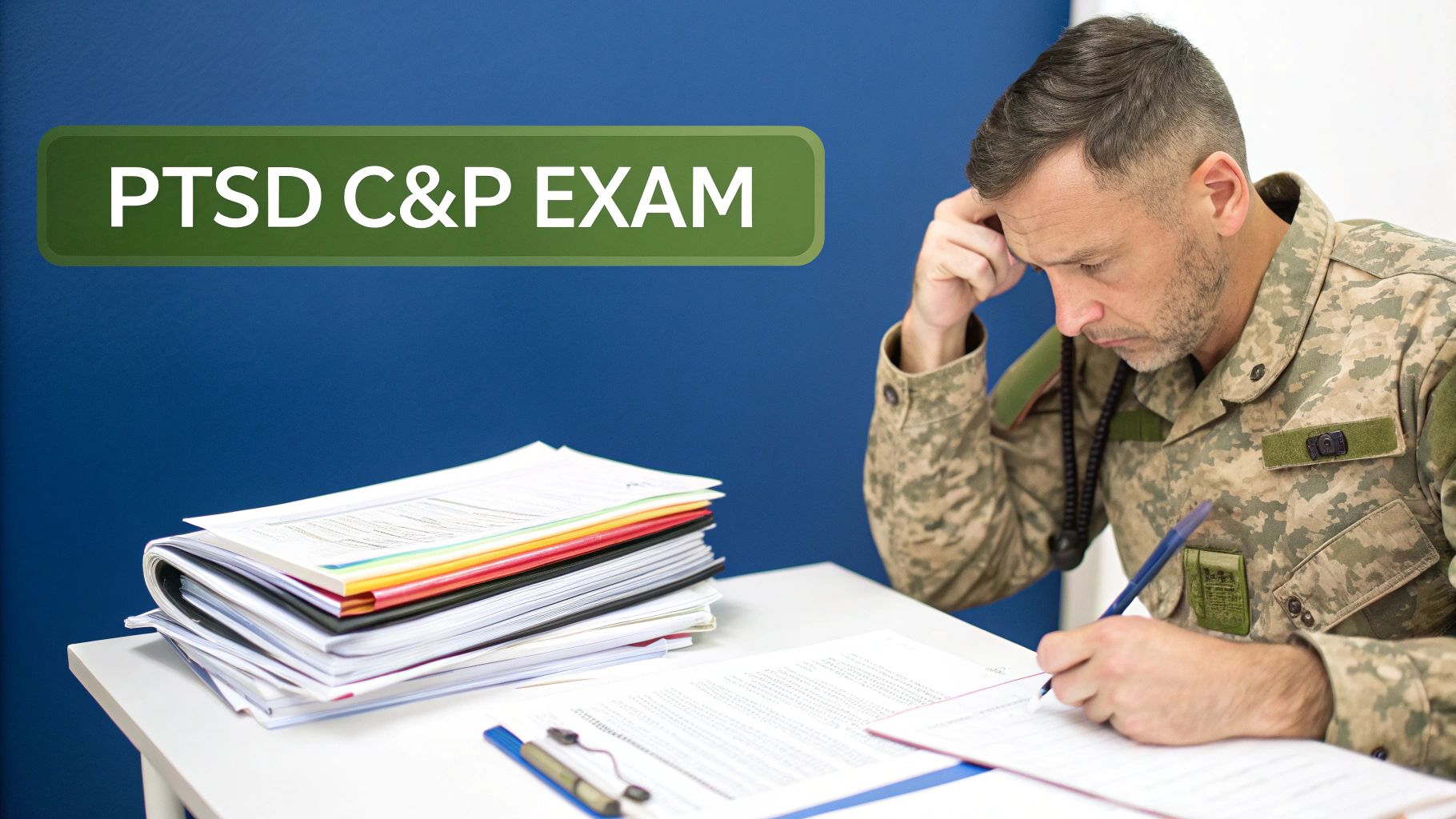
The PTSD Compensation and Pension (C&P) exam is a critical component of the VA disability claims process. This evaluation forms the basis for determining the extent of your PTSD and the corresponding disability rating. Understanding the process can reduce anxiety and help you approach the exam with greater confidence. This section details what you can anticipate, from the initial scheduling contact to the exam's conclusion.
What to Expect During the Exam
The C&P exam isn't simply a physical examination; it’s a comprehensive evaluation of your condition. It usually begins with a review of your medical and military history, highlighting why well-organized records are so important. The examiner will then conduct a clinical interview, exploring your PTSD symptoms, their frequency and severity, and how they affect your daily life. You may be asked about specific symptoms such as flashbacks, nightmares, anxiety levels, and avoidance behaviors.
The examiner may also utilize standardized psychological tests. These tests offer an objective assessment of your symptom severity, giving the examiner a structured understanding of your condition. Your interview responses, combined with test results, provide a more complete picture of your PTSD.
The Examiner’s Role
The examiner holds a crucial role in this process. They are tasked with gathering information, observing your behavior, and recording their findings in a Disability Benefits Questionnaire (DBQ). This DBQ is a critical document used by the VA rater to make a decision regarding your claim. Open and honest communication with the examiner is vital, providing detailed examples of how PTSD affects your work, relationships, and overall well-being.
It's essential to recognize the substantial mental health impact PTSD has on veterans. A significant aspect of PTSD Compensation and Pension (C&P) exams involves assessing and determining disability claims related to PTSD. By the end of 2009, approximately 1.1 million veterans of the Iraq and Afghanistan conflicts (OIF/OEF) had transitioned from active duty out of 1.7 million who served. Studies indicate that between 9.8% and 20% of these veterans met the criteria for PTSD. More detailed statistics can be found here: https://pmc.ncbi.nlm.nih.gov/articles/PMC3064070/
After the Exam
After the exam, the examiner submits the DBQ to the VA. A VA rater reviews the DBQ, along with all other evidence in your file, to make a determination on your claim. This process can be lengthy, so patience is essential. However, understanding the process and being adequately prepared can contribute to a smoother, and potentially more favorable, outcome. Remember, the purpose of the exam is to accurately assess how PTSD impacts your life, making clear and honest communication paramount.
Smart Preparation That Actually Makes a Difference
Forget generic checklists. This section focuses on proven preparation strategies that have helped veterans achieve positive outcomes in their PTSD C&P exams. We'll guide you through organizing your military and medical history to tell a comprehensive story, not just a list of symptoms.
Organizing Your History for Maximum Impact
The first step in preparing for your PTSD C&P exam is organizing your military and medical records. This isn’t simply gathering documents; it’s about creating a clear narrative. This narrative should connect your service, the traumatic event(s), and your current symptoms. Think of it like building a case, presenting a logical flow of information that clearly demonstrates the connection between your service and your PTSD.
One helpful strategy is to think of your history as a story with a beginning, middle, and end. Your service is the beginning, the traumatic event(s) are the middle, and your current symptoms are the end. By connecting these three elements, you can create a compelling narrative that shows how your PTSD developed.
-
Create a Timeline: Start by developing a timeline of your military service. Highlight significant events, deployments, and any traumatic experiences. This timeline provides essential context for your PTSD.
-
Link Symptoms to Service: Connect specific PTSD symptoms to events in your service. For example, if you experienced a traumatic event during deployment, note how that event led to specific symptoms like nightmares or flashbacks.
-
Gather Supporting Evidence: Collect any evidence that corroborates your claims. This could include buddy statements, medical records, and therapy notes. These supporting documents add weight to your narrative and help to validate your experiences.
Documenting Your Daily Struggles
Effectively documenting your daily struggles is crucial for demonstrating the severity of your PTSD. This involves more than just listing symptoms; it’s about painting a picture of how PTSD impacts your life on a daily basis. The examiner needs to understand the extent to which your symptoms affect your ability to function normally.
By providing specific examples and details about your daily struggles, you can help the examiner understand the full scope of your PTSD. This will allow them to make a more informed decision about your claim.
-
Keep a Detailed Journal: Maintain a daily journal documenting your PTSD symptoms, including their frequency, intensity, and duration. Note how these symptoms interfere with your work, relationships, and overall well-being.
-
Focus on Functionality: Describe how your symptoms affect your ability to perform daily tasks, such as sleeping, concentrating, and interacting with others. The more specific you are, the better the examiner can understand the impact of your PTSD.
-
Use Concrete Examples: Instead of saying "I have trouble sleeping," describe a specific instance of insomnia caused by nightmares or flashbacks. For example, "Last night, I woke up three times due to nightmares related to my deployment, resulting in only four hours of sleep."
Preparing Mentally and Emotionally
The PTSD C&P exam can be emotionally challenging. Preparing yourself mentally and emotionally is just as important as gathering documentation. Understanding PTSD is crucial and resources like Post Traumatic Stress Disorder (PTSD) can offer valuable information.
Taking care of your mental and emotional well-being before the exam is crucial for managing potential anxiety and stress. By preparing yourself emotionally, you can approach the exam with more confidence and clarity.
-
Practice Self-Care: Leading up to the exam, prioritize self-care activities like exercise, meditation, and spending time with loved ones. This can help reduce anxiety and improve your overall well-being.
-
Consider Professional Support: Talking to a therapist or counselor can provide emotional support and coping strategies for managing anxiety related to the exam.
-
Visualize Success: Visualize yourself calmly and confidently explaining your experiences to the examiner. This mental rehearsal can reduce anxiety and increase your confidence on exam day. Remember, the goal is to present your experiences clearly and authentically, allowing the examiner to understand the full impact of your PTSD.
What Really Happens During Your Evaluation

Let's break down the PTSD C&P exam step by step. Understanding the process can help you prepare and feel more confident going into the evaluation.
The Clinical Interview: Sharing Your Story
The exam typically starts with a clinical interview. The examiner will ask about your medical and military history, with a focus on the traumatic events and how they relate to your current symptoms. This is where a well-organized timeline and supporting documentation become extremely helpful.
Be ready to discuss specific symptoms, including their frequency, severity, and how they impact your daily life. Instead of saying "I have trouble sleeping," for instance, describe a specific example of insomnia brought on by nightmares. Providing this level of detail helps the examiner grasp the true impact of your PTSD.
Symptom Assessment: Standardized Measures
The examiner may also use standardized psychological tests, like the PTSD Checklist for DSM-5 (PCL-5) or the Clinician-Administered PTSD Scale for DSM-5 (CAPS-5). These tests provide a structured approach to assessing the severity of your symptoms, offering the examiner valuable data.
While these tests provide quantifiable data, the clinical interview allows you to personalize your experiences and provide important context. This blend of objective measurements and your subjective experience creates a more comprehensive picture of your condition.
Functional Capacity Evaluation: Impacts on Daily Life
In addition to symptom assessment, the exam includes a functional capacity evaluation. Here, you’ll explain how PTSD affects your ability to function in everyday situations. Consider how your symptoms impact your work, relationships, social activities, and even your capacity to handle basic tasks.
Be prepared to discuss difficulties with concentration, memory, emotional regulation, and social interaction. This part of the evaluation helps determine how PTSD affects your overall well-being and your ability to fully participate in life.
Addressing Common Anxieties: Staying Focused and Authentic
It’s completely understandable to feel anxious about the C&P exam. Many veterans do. Keep in mind that the examiner's goal is to understand your condition and its impact on you.
Honesty and openness are paramount. Don't try to over-explain or downplay your struggles. Focus on providing specific examples and concrete details that truly illustrate how PTSD affects you. This approach will help the examiner accurately assess your condition and prepare a comprehensive report for the VA rater. This report, along with your medical records and other supporting evidence, will determine your disability rating.
Navigating VHA vs. Contract Examiner Differences
Understanding the differences between a Veterans Health Administration (VHA) examiner and a contract examiner can help you better prepare for your PTSD C&P exam. This section explores the key distinctions between these two types of examiners, including their backgrounds, evaluation approaches, and documentation practices.
Understanding Examiner Backgrounds
VHA examiners are employed directly by the VA, offering a level of familiarity with the VA healthcare system and military culture. They often possess significant experience working with veterans. Contract examiners, conversely, are independent professionals contracted by the VA. Their experience with veterans and military culture can vary considerably.
Evaluation Approaches and Documentation
Both VHA and contract examiners adhere to VA guidelines. However, individual approaches to evaluations can differ. Some veterans report that VHA examiners have a deeper understanding of military life and its connection to PTSD. That said, many contract examiners also have extensive experience in veteran evaluations.

This chart illustrates the weighting of factors in a PTSD C&P exam. Symptom severity (40%) and daily life impact (35%) are weighted more heavily than trauma history (25%). This highlights the importance of clearly articulating how your symptoms affect your daily life, rather than solely focusing on the trauma itself. Research reveals variability in PTSD disability examinations.
To further illustrate the comparison between VHA and contract examiners, let's examine the following table:
VHA vs Contract Examiner Comparison
| Examiner Type | PTSD Diagnosis Rate | Average Symptoms Documented | Additional Symptoms Noted |
|---|---|---|---|
| VHA Examiner | 57% | 9.4 (out of 20) | Data not provided in source |
| Contract Examiner | 71% | 10.9 (out of 20) | Data not provided in source |
This table summarizes key findings from a study comparing diagnostic rates and symptom documentation between VHA and contract examiners. While the diagnosis rate is higher for contract examiners, the average number of symptoms documented is relatively similar. Further research is needed to understand the nuances of "additional symptoms noted." Learn more about the study and its findings here: https://cdn.mdedge.com/files/s3fs-public/issues/articles/0222fed_ptsd_web_0.pdf
Building Rapport and Ensuring Clear Communication
Regardless of the examiner type, clear communication is paramount. Be prepared to discuss your symptoms comprehensively, using specific examples to demonstrate how PTSD affects your daily life. Building rapport with the examiner can create a more comfortable environment for sharing your experiences. Active listening and thoughtful responses contribute to this process.
Adapting Your Preparation: A Consistent Approach
The most effective strategy is consistent and thorough preparation, irrespective of the examiner. Focus on organizing your medical history, meticulously documenting your symptom severity and their impact on your daily life, and preparing yourself mentally and emotionally for the evaluation. This consistent approach will equip you to effectively communicate your experiences, regardless of the examiner’s background or approach.
Decoding PTSD Ratings and Exam Outcomes
Understanding how your PTSD C&P exam translates into a VA disability rating can be confusing. This section breaks down the VA's rating schedule for mental health conditions, explaining the criteria for different percentage ratings and what each level signifies for your benefits.
Understanding the VA Rating Schedule
The VA uses a rating schedule to assess the severity of your PTSD and assign a corresponding disability rating. This rating, a percentage from 0% to 100%, determines your monthly compensation amount. The rating hinges on the social and occupational impairment caused by your PTSD. This means the impact your symptoms have on your ability to work, maintain relationships, and manage daily activities.
The criteria for each rating level are outlined in the VA's schedule for mental disorders. These criteria describe varying impairment levels, from mild symptoms with minimal impact to total occupational and social impairment.
For example, a 10% rating might be given for mild symptoms causing some difficulty in work or social settings. Conversely, a 70% rating indicates a serious impairment impacting multiple life areas.
Factors Influencing Rating Decisions
Several factors influence the VA's rating decision. The examiner's report from your C&P exam is crucial. This report details your symptoms, their severity, and their impact on your daily life.
Other evidence, such as medical records, therapy notes, and lay statements from family and friends, can bolster your claim. Remember, the rating decision isn't based solely on your diagnosis. The focus is on the functional impact of your PTSD. Clearly describing how your symptoms affect your daily life is vital for an accurate rating.
Award rates for PTSD claims vary, typically from 33% to 72% depending on the study. One analysis showed 42.5% of claims denied, and only 1.54% receiving the highest 100% rating. Find more detailed statistics here. This data highlights the complexities of the process.
Let's take a look at the table below for a clearer picture of PTSD claim outcome statistics:
PTSD Claim Outcome Statistics
Breakdown of PTSD claim approval rates and disability rating distributions
| Outcome | Percentage | Description |
|---|---|---|
| Denied | 42.5% | Claim not approved based on provided evidence |
| Approved (10%) | Example % | Awarded 10% disability rating based on mild symptom impact |
| Approved (30%) | Example % | Awarded 30% disability rating based on moderate symptom impact |
| … | … | … |
| Approved (70%) | Example % | Awarded 70% disability rating based on significant symptom impact |
| Approved (100%) | 1.54% | Awarded 100% disability rating based on total occupational and social impairment |
Note: The percentages in this table are for illustrative purposes and should be replaced with actual data.
This table demonstrates the distribution of disability ratings and the percentage of claims that are denied. It's important to remember that each case is unique and these statistics represent overall trends.
From Exam to Final Decision
After your C&P exam, the examiner submits their report to the VA. A VA rater reviews this report and all other evidence in your file. The rater determines your disability rating based on the complete picture of your condition and its effects. You will then receive a notification from the VA regarding their decision.
Appealing a Rating Decision
If you disagree with the VA’s rating decision, you have the right to appeal. This is crucial if you feel your rating underrepresents your PTSD's severity. Gathering additional evidence, such as a private medical opinion or more detailed lay statements, can strengthen your appeal. Understanding the appeals process is essential. Specific timelines and procedures exist for filing an appeal, and working with an advocate can be beneficial.
Balancing Treatment and Your Disability Claim

Many veterans worry that continuing PTSD treatment might negatively impact their disability claim. However, staying in treatment can actually strengthen your case. This section explains how treatment supports your claim and provides strategies for communicating effectively with your healthcare providers.
Why Consistent Treatment Matters
Engaging in consistent PTSD treatment demonstrates a commitment to recovery. This commitment can be a significant factor in the disability evaluation process. Consistent treatment creates a documented history of your symptoms, their severity, and how they affect your daily life. This documentation provides essential evidence for your claim. Therapy notes, medication records, and treatment plans, for instance, can all corroborate your self-reported symptoms.
Actively participating in treatment shows the VA you're taking proactive steps to manage your PTSD. This can positively influence the examiner’s assessment and lead to a more favorable outcome. This is especially important when demonstrating the functional limitations caused by your PTSD.
Veterans' beliefs about compensation claims and mental health treatment can affect their engagement with PTSD treatment. Studies show that veterans sometimes adjust their use of PTSD services around the time of their C&P exam. You can find more information on this topic here: Research on Veteran PTSD Treatment and Claims
Communicating with Healthcare Providers
Open communication with your healthcare providers regarding your PTSD C&P exam is vital. This ensures your treatment records accurately reflect your condition. It also helps guarantee your treatment plan aligns with your claim objectives.
-
Inform Your Therapist: Talk to your therapist about your upcoming C&P exam. They can provide crucial documentation to bolster your claim.
-
Maintain Detailed Records: Make sure your therapist keeps comprehensive records of your sessions, noting specific symptoms, their severity, and their impact on your ability to function.
-
Request Updates: Regularly check and request updates to your treatment records to confirm they accurately reflect your current condition.
Balancing Treatment Goals and Claim Objectives
Successfully managing the VA disability system while prioritizing your mental health requires balance. Focusing solely on the claim can distract from recovery. However, ignoring the necessary documentation for your claim can put its success at risk.
A key strategy is to consider treatment as an integral part of your overall wellness, not just a step in the claim process. By focusing on your recovery, you’re not only improving your mental health, but also strengthening your claim.
Post-Exam Treatment and Maintaining Momentum
No matter the outcome of your PTSD C&P exam, continuing treatment is crucial. Your mental health journey goes beyond the claims process. Maintain forward progress in your recovery by sticking to your treatment plan and actively participating in therapy. This ongoing commitment to your well-being is the most critical aspect of managing both your treatment and your claim.
Essential Takeaways for PTSD C&P Exam Success
This section offers practical advice to help veterans navigate the often complex PTSD C&P exam process. These insights are drawn from the real-world experiences of veterans who have successfully completed the exam.
Preparation Is Key: Organize and Document
Thorough preparation is crucial for a successful C&P exam. Organizing your information and documenting your experiences will significantly strengthen your claim.
-
Timeline Creation: Develop a comprehensive timeline of your military service. Include key events, deployments, and any traumatic incidents you experienced. This timeline offers valuable context for your PTSD.
-
Symptom Connection: Clearly connect your current PTSD symptoms to specific events during your service. Establishing this nexus is essential for demonstrating the link between your service and your condition.
-
Supporting Evidence: Compile supporting documentation such as buddy statements, medical records, and therapy notes. These materials corroborate your experiences and add weight to your claim.
-
Daily Journaling: Keep a daily journal documenting your PTSD symptoms. Note their frequency, intensity, duration, and how they impact your daily life. This provides a detailed record of your condition.
During the Exam: Communicate Clearly and Honestly
The exam itself is a critical opportunity to present your case. Open communication, specific examples, and a focus on functionality are essential.
-
Be Open: Communicate honestly and openly with the examiner. Clearly describe your struggles without over-exaggerating or understating them.
-
Provide Specifics: Offer concrete examples of how PTSD affects your work, relationships, and overall well-being. For instance, rather than stating "I have trouble sleeping," describe a specific episode of insomnia caused by nightmares.
-
Focus on Functionality: Explain how your symptoms impact your ability to perform daily tasks. The more detail you provide, the better the examiner can understand the effects of your PTSD.
-
Understand the Process: Familiarize yourself with the various components of the exam, including the clinical interview, symptom assessment, and functional capacity evaluation. Knowing what to expect can ease anxiety and help you prepare.
Post-Exam: Follow Up and Maintain Momentum
The process doesn't end with the exam. Following up, continuing treatment, and understanding your options for appeal are vital steps.
-
Review the DBQ: Carefully review the Disability Benefits Questionnaire (DBQ) completed by the examiner. Ensure it accurately reflects your condition and experiences.
-
Continue Treatment: Maintain consistent treatment for your PTSD, regardless of the exam outcome. This demonstrates your commitment to recovery and provides ongoing documentation of your condition. Exploring alternative treatment options, such as those discussed in this article about Can CBD Help Treat PTSD, can be a valuable part of your overall treatment strategy.
-
Consider Appeals: If you disagree with the rating decision, understand your appeal options. Gather any additional supporting evidence that may strengthen your case.
Remember Your Value: You Are Not Alone
The PTSD C&P exam process can be daunting, but remember you are not alone. Many veterans have successfully navigated this journey. Focus on presenting your experiences authentically and seek support from fellow veterans, family, or professional advocates. Your well-being is paramount, and your service deserves recognition. Ready to take control of your claim and ensure your voice is heard? Homefront Group is here to help. We understand the complexities of the VA system and are dedicated to empowering veterans like you. Visit Homefront Group today for a free consultation. We’re ready to stand with you.