

Navigating the Department of Veterans Affairs (VA) disability claims process can feel overwhelming, but understanding what conditions are most frequently approved can provide a strategic advantage. This guide breaks down the most common VA disability claims, offering a clear roadmap for veterans seeking the benefits they've earned. By examining the conditions that affect a significant number of former service members, you can better prepare your own claim and anticipate the evidence required for a successful outcome.
We will explore the top-ranked disabilities, from tinnitus and hearing loss to PTSD and debilitating musculoskeletal issues like back and knee pain. For each condition, you will find more than just a simple description. We will provide critical insights into how the VA evaluates these claims, the specific evidence needed to establish a service connection, and actionable tips to strengthen your submission. This information is designed to demystify the process, helping you build a more compelling case.
Whether you are filing for the first time or appealing a denied claim, knowing which disabilities are most prevalent and why can make a significant difference. This article serves as a practical resource, equipping you with the knowledge to effectively document your condition and connect it to your military service. Let's delve into the specifics of these common claims.
1. Tinnitus
Tinnitus stands as the single most common VA disability claim, affecting well over two million veterans. It is characterized by the perception of sound when no external noise is present, often described as a persistent ringing, buzzing, hissing, or clicking in one or both ears. For many veterans, this condition is a direct result of noise exposure during their military service, a constant and unwelcome reminder of their time in uniform.
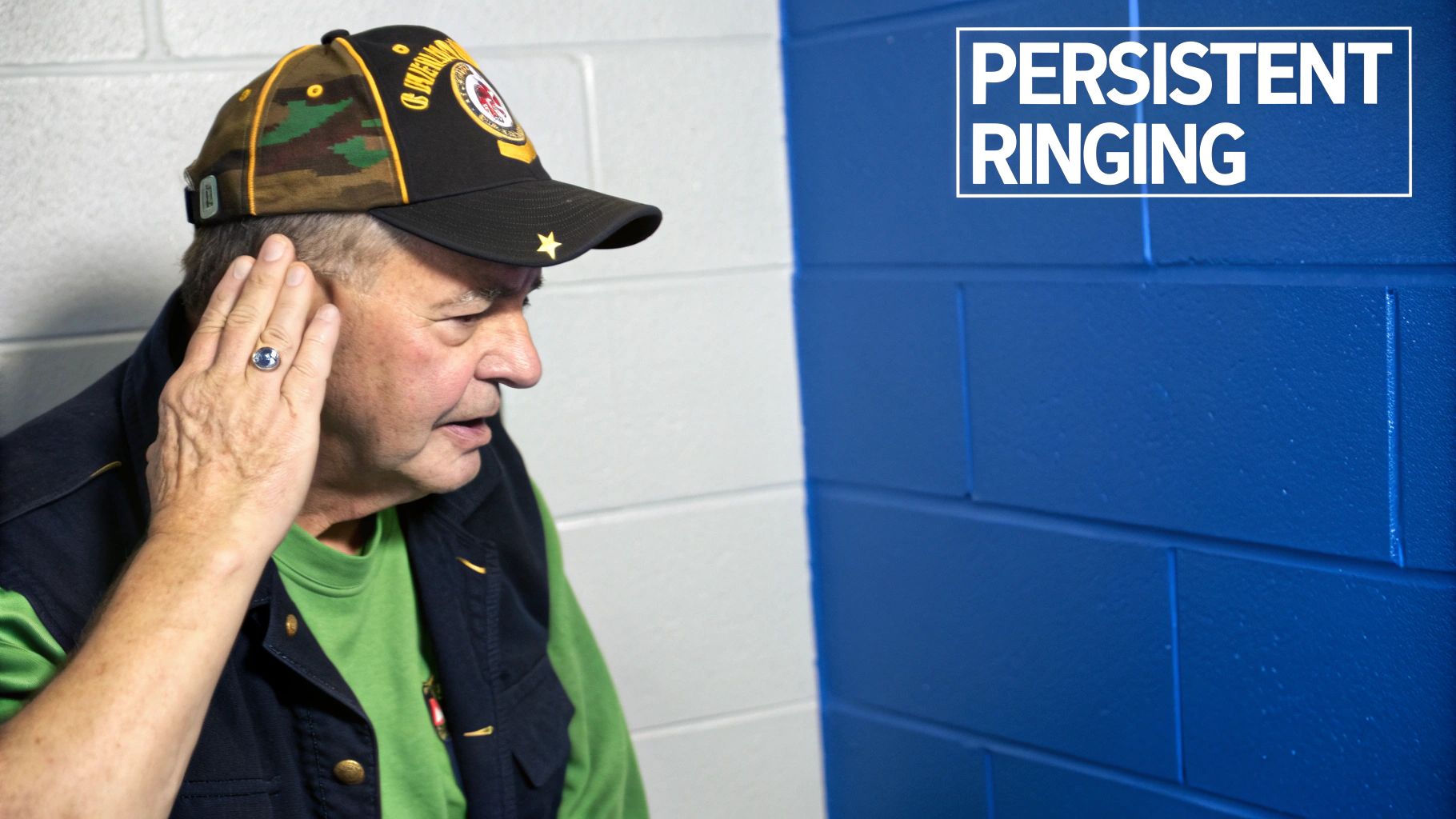
The prevalence of tinnitus among veterans isn't surprising given the nature of military operations. Exposure to loud, sudden noises from gunfire, explosions, aircraft engines, and heavy machinery is a common experience across all branches of service. This acoustic trauma can damage the delicate hair cells in the inner ear, leading to the phantom sounds of tinnitus. While the VA typically assigns a 10% disability rating for this condition, its impact on a veteran's quality of life can be significant, disrupting sleep, concentration, and emotional well-being.
Why It's a Top Claim
Tinnitus is so prevalent because noise exposure is almost unavoidable in a military environment. Whether you were an infantry soldier on the front lines, an aircraft mechanic on a flight line, or an artillery crew member, the risk was ever-present. The connection between military duties and the onset of tinnitus is often direct and easily established, making it a very common VA disability claim.
Key Insight: Tinnitus is a subjective condition, meaning there's no objective medical test to confirm its presence. Your credible, consistent testimony about your symptoms and their origin is the most critical piece of evidence for a successful claim.
Actionable Tips for Your Tinnitus Claim
To build a strong case for service connection, you must provide compelling evidence.
- Document Noise Exposure: Detail every instance of significant noise exposure in your service records or a personal statement. Be specific about the type of noise (e.g., M16 rifle fire, C-130 aircraft engines, IED explosions) and the duration of your exposure.
- Get an Audiological Exam: A diagnosis from an audiologist is crucial. Even if you don't have significant hearing loss, an audiologist can formally diagnose tinnitus and provide a medical opinion linking it to noise exposure.
- Gather Buddy Statements: Ask fellow service members who served with you to write "buddy letters." These statements can corroborate your accounts of noise exposure, adding powerful, firsthand testimony to your claim file. They can describe the noisy environments you shared, strengthening the link to your service.
2. Hearing Loss
Closely following tinnitus, hearing loss is another of the most common VA disability claims, with over 1.3 million veterans receiving benefits for this condition. It refers to a diminished ability to hear and can range from mild difficulty perceiving certain frequencies to profound deafness. For countless veterans, this impairment is a direct consequence of their service in environments filled with hazardous levels of noise.
This bar chart highlights key statistics related to VA disability claims for hearing loss.
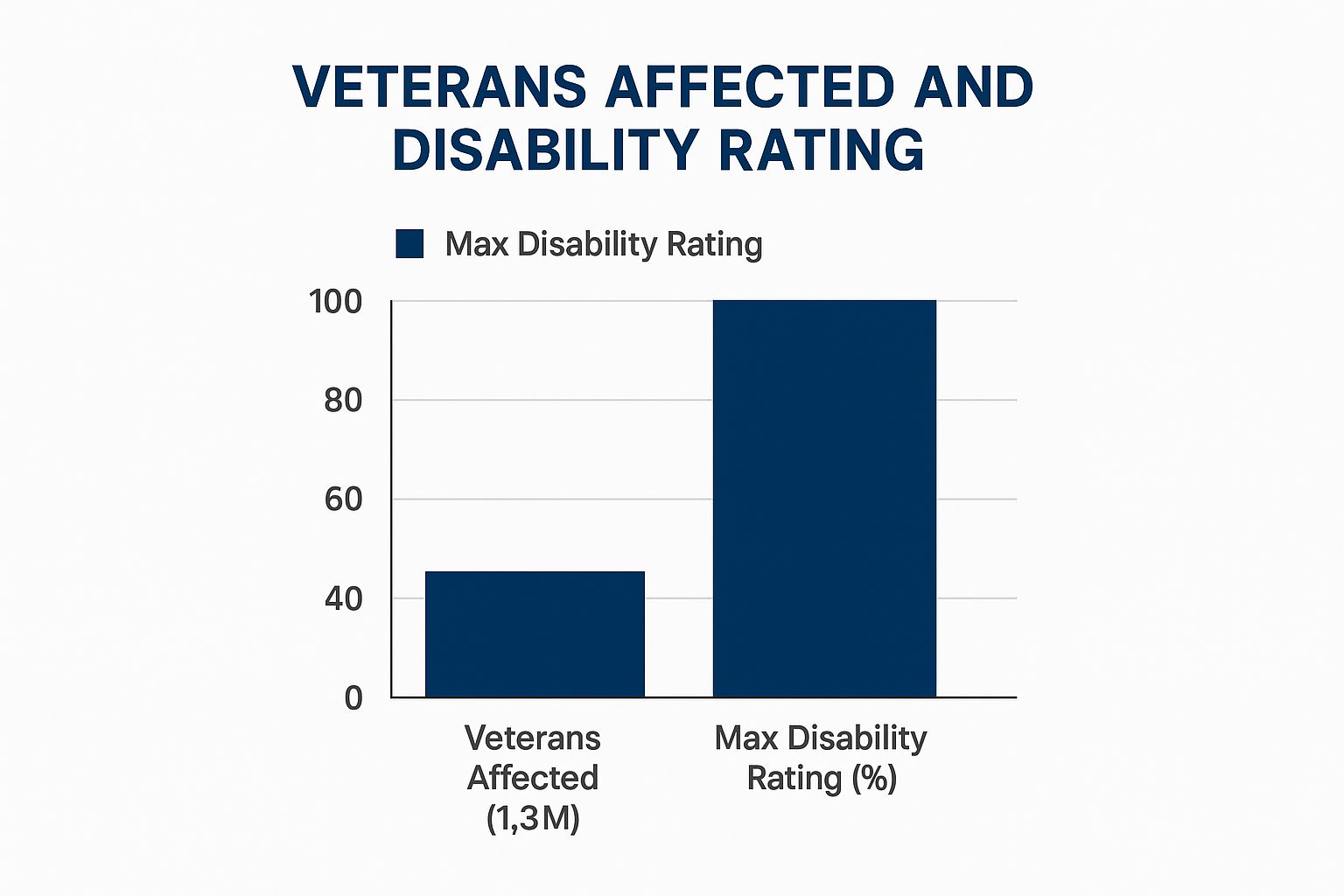
The visualization underscores both the widespread nature of the condition among the veteran population and the potential for a significant disability rating under specific criteria. The VA rates hearing loss based on a formula that evaluates pure tone thresholds and speech discrimination tests, making the claims process more complex than for tinnitus.
Why It's a Top Claim
Like tinnitus, the high prevalence of hearing loss is directly tied to the inherently noisy environments of military service. Navy personnel in engine rooms, combat veterans exposed to explosions, and Air Force ground crews are just a few examples of roles with routine, damaging noise exposure. This clear cause-and-effect relationship between military duties and auditory damage makes it a frequently filed and often successful claim.
Key Insight: Unlike tinnitus, hearing loss can be objectively measured through audiological testing. The VA uses a specific formula combining results from both a puretone audiogram and a word recognition test (speech discrimination) to determine your official disability rating.
Actionable Tips for Your Hearing Loss Claim
A successful claim for hearing loss requires precise medical evidence that meets the VA’s specific criteria.
- Obtain a Comprehensive Audiological Exam: Your claim must be supported by a current audiological evaluation. This exam should include both pure tone threshold testing and speech discrimination testing, as both scores are required for the VA's rating formula.
- Document Noise Exposure Events: In a personal statement, detail your specific job duties and the types of noise you were exposed to. For example, "worked as an aircraft mechanic for four years, exposed to F-16 jet engine noise for 8-10 hours daily without consistent hearing protection."
- File for Tinnitus Concurrently: Hearing loss and tinnitus often result from the same acoustic trauma. If you experience ringing or buzzing in your ears, you should file a separate claim for tinnitus, as it is a distinct condition that can be rated separately.
3. Post-Traumatic Stress Disorder (PTSD)
Post-Traumatic Stress Disorder (PTSD) is one of the most significant mental health conditions affecting veterans, with over 1.2 million receiving VA disability benefits for it. This condition can develop after experiencing or witnessing a traumatic event, known as a stressor, during military service. These events can range from direct combat and IED attacks to military sexual trauma (MST), serious accidents, or witnessing the death or severe injury of others.

The symptoms of PTSD can be debilitating, profoundly affecting a veteran's relationships, employment, and overall social functioning. The VA recognizes the severe impact of PTSD, with disability ratings ranging from 0% to 100% depending on the frequency, duration, and severity of symptoms like hypervigilance, flashbacks, severe anxiety, and social isolation. Proving a PTSD claim requires linking current symptoms to a specific in-service stressor.
Why It's a Top Claim
The very nature of military service, particularly in combat zones or high-stress occupations, exposes individuals to a high risk of trauma. From firefights in Iraq and Afghanistan to non-combat events like training accidents or MST, the potential for psychological injury is substantial. As awareness of mental health has grown, more veterans are seeking the help and recognition they deserve, making PTSD one of the most common VA disability claims filed.
Key Insight: For a PTSD claim, the credibility and detail of your stressor event are paramount. The VA needs to verify that the claimed traumatic event occurred. Providing specific details like dates, locations, and the units involved is critical for the VA to concede the stressor.
Actionable Tips for Your PTSD Claim
Building a successful PTSD claim requires thorough documentation and evidence.
- Document Your Stressor: Write a detailed personal statement about the traumatic event(s). Include what happened, where and when it occurred, and how it has impacted you since. Be as specific as possible to help the VA verify the event.
- Seek and Maintain Treatment: A formal diagnosis of PTSD from a qualified mental health professional (psychiatrist or psychologist) is essential. Consistent treatment records demonstrate the ongoing severity of your condition and are a crucial part of your claim.
- Gather Buddy Statements: Corroborating evidence from fellow service members who witnessed the event or can speak to the changes in your behavior before and after the trauma can be incredibly powerful. These statements provide a third-party perspective that strengthens your personal account.
- Consider Secondary Conditions: PTSD often leads to or aggravates other health issues, such as sleep apnea, GERD, or hypertension. You can file claims for these conditions as secondary to your service-connected PTSD, potentially increasing your overall disability rating.
4. Lumbar Strain (Lower Back Conditions)
Lower back conditions, particularly lumbar strain, are among the most common VA disability claims, with well over one million veterans service-connected for this debilitating issue. This category covers a range of musculoskeletal problems affecting the lower back, often stemming from the intense physical demands inherent in military service. The constant strain of carrying heavy rucksacks, wearing body armor, repetitive lifting, and high-impact physical training takes a cumulative toll on the spine.
From infantry soldiers on patrol to logistics personnel loading cargo, the risk of back injury is pervasive across all military occupational specialties. These injuries can be acute, like those from a vehicle accident or a fall during parachute training, or they can develop over years of wear and tear. A chronic lumbar strain can severely limit a veteran’s mobility, affect their ability to work, and diminish their overall quality of life. If you're dealing with persistent lower back issues, a common condition among veterans, further reading on understanding back pain might provide valuable insights into causes and management.
Why It's a Top Claim
The physical nature of military duty makes back problems almost an occupational hazard. The connection between service activities and a lower back condition is often clear and well-documented. Veterans frequently report specific incidents or the gradual onset of pain directly related to their duties, making it one of the most common VA disability claims. The VA recognizes this link and evaluates these conditions based on the loss of range of motion.
Key Insight: Back claims are not just about pain; they are evaluated based on measurable limitation of motion. Your VA Compensation and Pension (C&P) exam will involve a goniometer to measure your spine's flexion, extension, and rotation. How much you can (or cannot) bend is the primary factor in your disability rating.
Actionable Tips for Your Back Claim
A successful claim for a back condition requires clear medical evidence and a documented link to your service.
- Obtain a Specific Diagnosis: Get a comprehensive orthopedic evaluation to diagnose your exact condition, whether it's lumbar strain, degenerative disc disease, or another issue. An MRI or X-ray can provide objective evidence of damage to your spine.
- Document In-Service Events: In a personal statement, detail any specific injuries, falls, or accidents that occurred during service. Also describe the routine physical demands of your MOS, such as the weight of the gear you carried and how often you performed strenuous tasks.
- Keep a Pain and Limitation Journal: Consistently track your symptoms. Note how your back pain affects your ability to sit, stand, walk, lift, and sleep. This journal provides a detailed history of your functional limitations for the VA.
- Consider Secondary Conditions: Chronic back pain often leads to other issues. Radiculopathy (nerve pain radiating down your legs), depression, and anxiety are common secondary conditions that you can claim in connection to your primary back disability.
5. Knee Conditions
Knee conditions are a pervasive issue among the veteran community, with nearly one million former service members receiving VA disability benefits for knee-related ailments. These conditions encompass a broad spectrum of injuries and degenerative issues, from torn ligaments and meniscus damage to painful arthritis. The relentless physical demands of military life are a primary contributor to this high prevalence.
The very nature of military duty puts immense and repeated stress on the knee joints. Activities like long-distance marches with heavy gear, jumping from aircraft or vehicles, navigating rough terrain, and physically demanding training exercises all contribute to acute injuries and long-term wear and tear. These service-related stressors often accelerate the development of conditions like osteoarthritis, leaving veterans with chronic pain, instability, and significantly reduced mobility that can impact every aspect of daily life.
Why It's a Top Claim
Knee conditions rank as one of the most common VA disability claims because the connection between military service and joint damage is often clear and undeniable. Whether it was a specific in-service injury like a fall during training or the cumulative trauma from years of physically strenuous duties, the evidence frequently points back to a veteran’s time in uniform. The high-impact environment is a direct cause of these debilitating conditions.
Key Insight: A VA disability rating for a knee condition is not solely based on a diagnosis. It is heavily influenced by the functional impact on your range of motion (flexion and extension) and stability. Documenting how the condition limits your ability to walk, stand, bend, or climb is crucial.
Actionable Tips for Your Knee Condition Claim
A successful claim requires clear medical evidence linking your current knee problems to your military service.
- Document In-Service Events: Chronicle any specific incidents that injured your knee, such as training accidents, parachute jumps, or falls. Also, detail routine duties that put stress on your knees, like rucking or working on hard surfaces.
- Obtain a Current Orthopedic Evaluation: Seek a thorough examination from an orthopedist. This should include a diagnosis and modern imaging like an X-ray or MRI. A medical opinion stating your condition is "at least as likely as not" caused by your service is vital.
- Detail Functional Limitations: Keep a journal or write a detailed personal statement explaining how your knee condition affects you daily. Describe pain levels, instability, locking or popping sensations, and difficulties with activities like walking up stairs, kneeling, or standing for long periods.
- Consider a Bilateral Claim: If both knees are affected, be sure to file a claim for each. The VA may grant a bilateral factor, which results in a slightly higher combined disability rating if both knees are service-connected.
6. Shoulder Conditions
Shoulder conditions are a significant and pervasive issue for veterans, ranking high among musculoskeletal disabilities. These injuries often stem from the rigorous physical demands inherent in military life, including repetitive overhead activities, heavy lifting, combat trauma, and training accidents. A shoulder disability can severely restrict a veteran's range of motion, strength, and ability to perform daily and occupational tasks, making it one of the most common VA disability claims filed.
The shoulder's complex structure makes it vulnerable to a wide range of injuries. Service members frequently experience conditions like rotator cuff tears, shoulder impingement, dislocations, and degenerative arthritis. These can be caused by a single traumatic event, such as a fall during an obstacle course, or develop over time from the cumulative strain of carrying heavy rucksacks or performing specialized military occupational duties. The resulting pain and functional loss can have a profound, long-term impact on a veteran’s quality of life.
Why It's a Top Claim
The physical nature of military service is the primary driver behind the high volume of shoulder claims. From basic training onward, service members engage in activities that place immense stress on the shoulder joints. The direct link between these demanding duties and subsequent shoulder problems is often clear, establishing a strong basis for service connection. For this reason, shoulder injuries remain one of the most frequently compensated musculoskeletal conditions by the VA.
Key Insight: The VA rates shoulder conditions based on the limitation of motion. Accurate and repeated measurements of your active and passive range of motion, especially during a flare-up, are critical for receiving an appropriate disability rating.
Actionable Tips for Your Shoulder Claim
A well-supported claim is essential for proving service connection and securing the correct rating.
- Document Specific Incidents: In your personal statement, detail any specific in-service injuries to your shoulder, such as a fall, impact, or accident. Also, describe the routine duties that required heavy lifting or repetitive overhead movements.
- Obtain an Orthopedic Evaluation: Seek a thorough examination from an orthopedic specialist. This should include imaging like X-rays or an MRI to diagnose the specific condition, such as a rotator cuff tear or arthritis, and provide a medical opinion linking it to your service.
- Ensure Proper Range of Motion Testing: During your Compensation & Pension (C&P) exam, the examiner must measure your shoulder's range of motion with a goniometer. Make sure to report pain during movement, as painful motion can also be a factor in the disability rating, even if the range is not severely limited.
7. Migraines and Headaches
Migraines are a severe and debilitating neurological condition affecting hundreds of thousands of veterans, making them one of the most common VA disability claims. Far more than a simple headache, a migraine episode can cause intense, throbbing pain, nausea, vomiting, and extreme sensitivity to light and sound, rendering a veteran unable to work or function for hours or even days. These conditions can be linked to service directly through head injuries or stress, or develop as a secondary condition to other disabilities like PTSD or TBI.
The connection between military service and migraines is significant. Traumatic Brain Injury (TBI) is a leading cause, with post-traumatic headaches being a frequent and lasting symptom. The intense, chronic stress associated with combat, high-pressure assignments, or difficult deployments can also trigger or worsen migraine disorders. Additionally, a migraine claim can be secondary to conditions like cervical spine injuries (cervicogenic headaches), tinnitus, or mental health disorders, creating multiple pathways for service connection.
Why It's a Top Claim
The prevalence of TBI and high-stress environments in the military directly contributes to the high number of migraine claims. Veterans who experienced IED blasts, vehicle accidents, or other head trauma are at high risk. Furthermore, the VA rating schedule for migraines is based on the frequency and severity of attacks, with ratings up to 50% for very frequent, prostrating attacks that require prolonged rest. This potential for a substantial rating makes it a critical claim for veterans whose lives are severely impacted.
Key Insight: The VA rates migraines based on how "prostrating" they are, meaning how often they are so severe that you must lie down in a dark, quiet room. Your ability to document this frequency and severity is the single most important factor for achieving an accurate disability rating.
Actionable Tips for Your Migraine Claim
A successful migraine claim hinges on meticulous documentation and a clear medical link to your service.
- Maintain a Headache Log: This is non-negotiable. Keep a detailed diary tracking the date, duration, and severity of every headache. Note accompanying symptoms like nausea or light sensitivity and, most importantly, document how each attack was "prostrating" and its impact on your daily activities and work.
- Establish a Clear Nexus: Work with a neurologist or your primary care doctor to get a firm diagnosis and a medical opinion (nexus letter) connecting your migraines to a specific event in your service (like a TBI) or another service-connected condition (like PTSD).
- Document Environmental Exposures: If you were exposed to environmental hazards like burn pits, chemicals, or solvents, include this in your personal statement. Some exposures are known to cause neurological symptoms, including severe headaches.
Top 7 VA Disability Claims Comparison
| Condition | Implementation Complexity 🔄 | Resource Requirements ⚡ | Expected Outcomes 📊 | Ideal Use Cases 💡 | Key Advantages ⭐ |
|---|---|---|---|---|---|
| Tinnitus | Low – straightforward claim process | Moderate – audiological exams, service docs | Fixed 10% rating regardless of severity | Veterans with documented noise exposure and ringing symptoms | High approval rate; gateway to hearing claims |
| Hearing Loss | High – complex rating formula | High – comprehensive audiological testing | Variable rating (0-100%) based on tests | Long-term noise exposure causing hearing impairment | Potential for high ratings and increases |
| PTSD | Moderate to High – detailed eval needed | High – psychological assessments, documentation | Variable rating (0-100%) depending on symptom severity | Veterans exposed to traumatic events or combat trauma | Can achieve high ratings; access to mental health care |
| Lumbar Strain (Lower Back) | Moderate – requires medical evidence | Moderate – orthopedic evaluations | Variable rating (10-100%) based on impairment | Veterans with physical strain or injury from military duties | Clear rating criteria; potential secondary conditions |
| Knee Conditions | Moderate – objective testing needed | Moderate – orthopedic evaluation, imaging | Variable rating based on motion limitation | Veterans with high-impact injuries or degenerative knee issues | Strong link to military activity; bilateral ratings possible |
| Shoulder Conditions | Moderate – detailed motion tests | Moderate – orthopedic evaluation | Variable rating based on range of motion | Veterans with repetitive overhead or combat injuries | Well-established criteria; dominant arm consideration |
| Migraines and Headaches | Moderate – requires symptom diaries | Moderate – neurological evaluation | Rating 0-50% based on frequency and severity | Veterans with post-TBI headaches or stress-related migraines | Clear rating criteria; often secondary claims |
Securing Your Earned Benefits: A Veteran's Final March
Navigating the landscape of VA disability claims can feel like traversing a complex and demanding obstacle course. As we have explored, the most common VA disability claims filed by veterans, from the pervasive ringing of tinnitus to the debilitating pain of lumbar strain, share a common thread: they represent a significant, service-connected impact on a veteran's quality of life. Understanding the prevalence of these conditions, such as PTSD, hearing loss, and various musculoskeletal issues, is the first step toward validation and empowerment. It confirms that you are not alone in your struggle.
The key takeaway from this guide is not just knowing what conditions are common, but understanding how to build a successful claim for them. The path to securing the benefits you rightfully earned is paved with diligent preparation, strategic evidence gathering, and clear articulation of how your service-connected condition affects your daily existence. Whether it's obtaining a private medical opinion to solidify a nexus for migraines or meticulously documenting flare-ups for a knee condition, your active participation is the most powerful tool in your arsenal.
Your Action Plan for a Stronger Claim
To move forward effectively, consider these essential next steps. This is where knowledge transforms into action, bringing you closer to a successful outcome.
-
Consolidate Your Evidence: Begin by gathering every relevant document. This includes your service treatment records (STRs), private medical records, buddy letters from fellow service members who witnessed your injury or the onset of symptoms, and personal statements detailing your condition's impact. Create a digital and physical file to keep everything organized.
-
Seek a Definitive Diagnosis: If you haven't already, get a current and clear diagnosis for your condition from a qualified medical professional. A vague diagnosis or self-reported symptoms are not enough. A specialist's report, especially one that addresses the severity and functional impact, adds significant weight to your claim.
-
Establish a Clear Nexus: This is the critical link between your current disability and an event, injury, or illness during your military service. A well-written nexus letter from a medical expert can be the single most important piece of evidence in your file, particularly for conditions that developed or worsened after you left the service.
Remember, each of the most common VA disability claims has its own unique evidentiary requirements. Tinnitus may rely heavily on your personal testimony and MOS, while a lumbar strain claim will be significantly strengthened by recent MRIs and physical therapy records. Tailor your approach to the specific needs of your disability claim. Mastering this process is not just about receiving financial compensation; it's about acknowledging the sacrifices you made and securing the long-term healthcare and support you and your family deserve. This is your right, and pursuing it is a continuation of your service, this time, to yourself.
Navigating the complexities of the VA system alone can be overwhelming. If you're struggling to connect the dots for your service-connected disability or need expert guidance to build a successful claim, the team at Homefront Group is ready to stand with you. Visit Homefront Group to learn how their expertise can help you secure the benefits you've rightfully earned.