So, you need to draft a witness statement. Before you even think about putting pen to paper, it's crucial to understand just how much weight this document carries. This isn't just another form to fill out; it's a foundational piece of evidence that can genuinely influence the outcome of a legal case, whether it's a civil matter or a critical VA disability claim.
Think of your template as the architectural blueprint for a document that absolutely must be clear, honest, and legally sound.
Why Your Witness Statement Template Matters
A well-crafted statement delivers credible, firsthand testimony that an attorney, a judge, or a VA rater can actually rely on. Getting the structure right from the beginning helps you avoid common mistakes that could weaken your case later on. It’s all about building a solid foundation from the start.
Building the Foundation of Credibility
At its core, the job of a witness statement is to present the facts. That’s it. It has to be a straightforward, chronologically sound account of what the witness personally saw, heard, or did. Any hint of ambiguity, personal opinion, or guesswork can make the statement worthless. Worse, it could actively damage the very case it's meant to help.
A good template is your best defense against this. It acts as a guide, prompting the writer to:
- Stick to objective facts, not subjective feelings.
- Organize events logically, usually in the order they happened.
- Include specific, verifiable details like dates, times, and locations.
A strong witness statement transforms scattered memories into a persuasive, objective narrative. Its power lies in its unwavering commitment to factual accuracy and firsthand knowledge.
Consistency and Legal Standards
Witness statements are serious legal documents used around the world, and they follow certain standardized formats to be useful in court or official proceedings. Here in the United States, for example, a standard template will always have sections for the witness's details, the statement itself, and a dated signature, all formatted on US letter-size paper.
There's a reason for this structure. Consistency and completeness are key. In fact, roughly 30% of legal practitioners in civil cases say they use templates as their starting point for drafting statements. You can dig deeper into the specifics of these essential legal documents to see just how universal these practices are.
When you use a thoughtfully designed template, you're making sure your document meets these established expectations. This makes it far more likely to be accepted and taken seriously. It's not about appearances—it's about creating a document that can hold up under legal scrutiny and clearly communicate the truth.
Anatomy of a Legally Sound Witness Statement
A powerful witness statement isn't just a simple recounting of events. It's a formal, structured document where every single piece serves a distinct legal function. When you break it down, you see how each section builds on the last to create a solid foundation of credibility and clarity.
Think of it like building a house—if you skimp on the foundation, the whole structure is compromised. From the case details at the very top to the signature at the very bottom, every element is essential for creating a professional and compliant statement.
The Core Building Blocks of a Template
This structure isn't random; it's been refined over time to withstand legal scrutiny. A good template acts as a guide, ensuring no critical details are missed, which is a common pitfall when someone just starts writing on a blank page. Every effective statement I've ever seen begins with clear identification before diving into the facts.
This is where you set the stage. The top of the page needs to state exactly what case this is for and who the witness is. It's not just about keeping things organized; it immediately tells the reader the context and establishes the witness's role. A simple mistake here, like a typo in a case number, can cause frustrating and unnecessary delays.
To help you build a solid template, I've broken down the essential parts every witness statement needs. Think of this as your blueprint.
Anatomy of a Witness Statement Template
Here’s a look at the key sections that form a complete witness statement, along with why each one matters.
| Component | Purpose | Example Content/Key Details |
|---|---|---|
| Case Heading | Identifies the specific legal matter the statement pertains to. | In the Matter of [Case Name/Topic], Case Number: [Number], Court/Agency: [Name of Court or Agency] |
| Witness Identification | Clearly states who the witness is and provides contact information. | Full Legal Name, Address, Phone Number, Email Address. Example: "My name is John D. Smith." |
| Introduction of Witness | Establishes the witness's relationship to the case or parties involved. | "I am the spouse of Jane Doe," or "I was the shift supervisor for Mark Jones at ABC Company." |
| The Body (The Narrative) | The chronological, factual account of what the witness saw, heard, or experienced. | Numbered paragraphs for clarity, focusing only on firsthand knowledge. |
| Statement of Truth | A formal declaration that the contents of the statement are true to the best of the witness's knowledge. | "I declare under penalty of perjury that the foregoing is true and correct." |
| Signature Block | The final, binding action that validates the document. | Witness's Signature, Printed Name, and the Date of Signing. |
Getting these components right ensures your template is robust and ready for any situation.
Making Your Template Practical and User-Friendly
When you're designing a template, you have to think about the person who will be using it. Practicality is everything. A confusing or poorly laid out document will only frustrate the witness and could lead to incomplete or inaccurate information.
Once you have a solid draft, you might want to learn how to create a fillable witness statement form without Acrobat. This makes the entire process smoother for everyone, especially those who aren't tech-savvy.
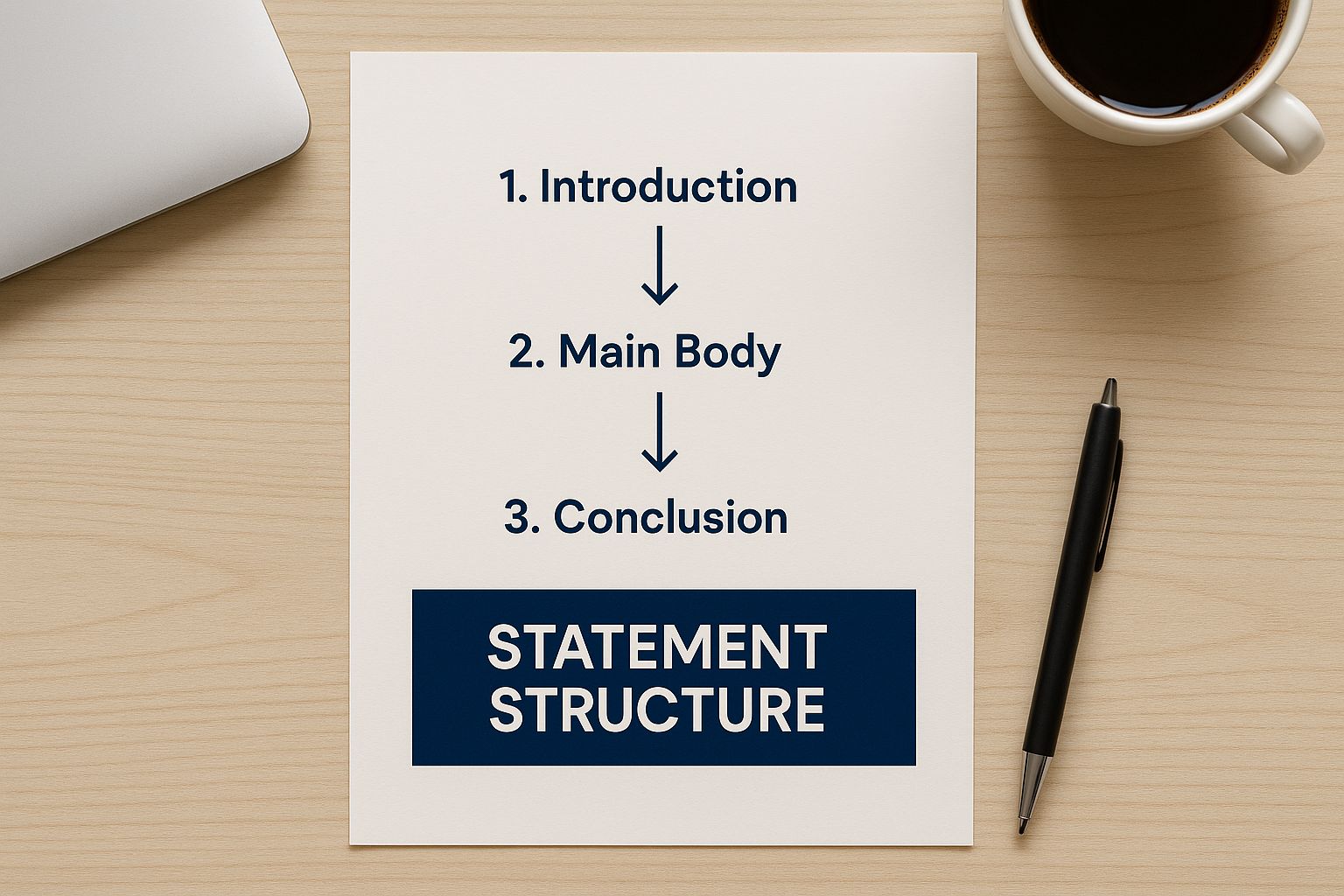
As you can see, a well-organized layout makes the document less intimidating and easier to follow, guiding the witness from one section to the next.
A properly structured template does more than just organize information; it guides the writer to provide a complete and legally compliant account, minimizing the risk of omission or error.
Ultimately, understanding these core components is the first real step toward creating a witness statement template that will hold up under review. By making sure each part is present and correctly formatted, you're building a framework that supports a clear, factual, and credible narrative. It’s this structural integrity that gives the final document its power.
Writing a Clear and Factual Narrative

The narrative is the very heart of your witness statement. This is where you lay out, step by step, exactly what happened. Your goal is to be objective, precise, and completely credible, transforming raw memory into a story that makes sense to a total stranger.
Think of yourself as a camera—you're just there to record what you saw and heard. This section is all about what you personally experienced, nothing more.
Stick to Firsthand Knowledge Only
If there's one golden rule in writing a witness statement, it's this: only include what you personally saw, heard, or did. This is what the legal world calls firsthand knowledge, and it's the foundation of any credible statement. Veer away from it, and you risk your statement being dismissed as speculation or hearsay.
What's hearsay? It’s when you repeat something someone else said. For example, writing, "My coworker told me the equipment was faulty," is hearsay. Instead, you need to state your direct observation: "I saw sparks coming from the machine every time it was turned on." Big difference.
A witness statement's power comes from its objectivity. You are a reporter of facts, not a commentator. Focus on describing events and actions, not assigning motives or interpreting emotions.
Legal standards are always tightening to reinforce this. Take the UK courts, for example. Recent procedural reforms now insist that statements come from the witness's own recollection—not from a lawyer’s draft. This change really drives home how critical it is for the narrative to be the witness's genuine account. You can read more about how these procedural reforms aim to improve statement quality.
Structure Your Story Chronologically
The most effective way to tell your story is to start at the beginning and move forward in time. A chronological account is simply easier for people to follow and understand. It builds a logical, moment-by-moment picture of the events.
Here are a few pointers from my own experience to keep your narrative clean and easy to read:
- Use numbered paragraphs. This is standard practice for a reason. It breaks your story into manageable pieces and makes it incredibly simple for a lawyer or judge to reference specific points later on.
- Be specific with details. Including dates, times, and exact locations adds immense credibility. "Sometime in the afternoon" feels flimsy, but "At approximately 2:15 PM on Tuesday, June 4th" is solid.
- Start paragraphs with a clear anchor. For instance, a paragraph beginning with, "Just after the first alarm sounded, I looked toward the main exit…" immediately grounds the reader in that specific moment.
Use Simple and Direct Language
This isn't the place for legal jargon, fancy words, or dramatic storytelling. Clarity is everything. Use straightforward, direct sentences to describe what happened.
Let's look at a common scenario, like a car accident, to see the difference.
- Weak Narrative: "The irresponsible driver of the red car seemed to be in a big hurry and was driving recklessly before he carelessly slammed into the other vehicle."
- Strong Narrative: "I saw a red sedan change lanes without signaling. Approximately three seconds later, I heard a loud crash and saw that the front of the red sedan had collided with the driver's side door of a blue SUV."
See how the second example just states the facts? It describes actions ("change lanes without signaling") and outcomes ("collided with the driver's side door") without throwing in personal opinions or assumptions. This factual approach is what gives a witness statement its legal muscle.
How to Write a Powerful VA Buddy Statement
When you’re writing a witness statement for a VA disability claim, it gets a special name: a buddy letter. Don't let the friendly term fool you; this is a seriously important document. Unlike a typical court statement, its purpose is incredibly specific. Your job is to draw a bright, unmissable line connecting a veteran’s current health problems directly to their time in the military.
A buddy letter breathes life into a claim. It fills in the human gaps that cold, official service records and medical charts just can't capture. This is where a spouse, a close friend, or another service member can step in and paint the "before and after" picture of a veteran’s health. That personal story often provides the credible, powerful support needed to win a claim.
What's the Real Goal of a Buddy Letter?
Forget what you know about legal statements for car accidents or civil disputes. A buddy letter isn't about placing blame or proving who was at fault. Its entire focus is on establishing what the VA calls a "service connection." The VA adjudicator reading the file needs to clearly see how an incident or the conditions of service resulted in the chronic issue the veteran is dealing with today.
To do that, your statement needs to hit on two critical points:
- What you saw during or right after their service: Get specific. Did you witness the fall during a training exercise? Did you hear them complain constantly about ringing in their ears after coming off the flight line?
- How they changed afterward: Describe the person you knew before the injury or event, and contrast that with the person they became. Talk about the shifts in their personality, their physical limitations, or how they started avoiding social situations.
This "before and after" story is, without a doubt, the most persuasive element you can contribute.
A well-crafted buddy letter is one of the most powerful tools a veteran has. It’s the bridge between a past event and a present struggle, offering the personal testimony that official paperwork almost always misses.
What Every Good Buddy Letter Should Include
When you sit down to write, organization makes all the difference. You want your statement to be a clear, concise, and factual account. Think of it less as a casual letter to a friend and more as a formal declaration of what you personally know to be true.
To give your statement the most weight, be sure to cover these key areas.
- Introduce Yourself and Your Connection: First things first. State your full name and explain how you know the veteran. This sets the foundation for your credibility. For example, "My name is Sarah Jenkins, and I am the spouse of veteran John Miller," is a perfect start. Or, "I served with Sergeant Miller in Alpha Company, 2nd Battalion, from 2008 to 2010 in Iraq."
- Describe the Specific Incident(s) You Witnessed: This is where you become a reporter. Detail the events you personally saw that you believe led to the veteran's condition. Be as precise as you can with dates, locations, and exactly what you observed. A great example: "On or around June 15, 2009, during a patrol near Kandahar, I personally witnessed then-Specialist Miller get violently thrown inside our MRAP when it was struck by an IED."
- Explain the Changes You Observed: This is absolutely crucial. Detail the person the veteran was before the incident and who they became after. For instance: "Before that day, John was always joking and the first to volunteer for tough jobs. Afterward, he became quiet and withdrawn. I know he rarely slept through the night and constantly complained about sharp, shooting pains in his lower back."
By sticking to these core elements, you’re giving the VA a credible narrative that makes sense. Your firsthand account helps complete a picture that official records alone simply can't. This is how you write a buddy letter that truly makes a difference for a veteran who has earned their benefits.
Getting the Final Details Right: Signing and Submission
Once you've poured everything into writing your statement, don't rush the final steps. This is where a strong statement can fall apart due to simple mistakes. Getting the signing and final review done correctly is just as critical as crafting the narrative itself.
The Last-Pass Review
Before you even think about putting pen to paper, do a thorough review. First, read the entire statement to yourself from beginning to end. Then, do it again, but this time, read it out loud.
You’d be surprised what you catch when you hear the words spoken. This simple step helps you spot awkward phrasing, typos, and sentences that just don't flow right. Double-check every single detail—every date, every name, every timeline. Accuracy is everything.
The "Statement of Truth": Your Binding Oath
Every official witness statement wraps up with a crucial component: the Statement of Truth. This isn't just a closing line; it's a formal declaration with serious legal weight.
When you sign this, you're swearing under penalty of perjury that the information you've provided is accurate to the best of your memory and belief. It's your word, legally bound.
Here’s what it typically looks like:
“I declare under penalty of perjury under the laws of [Your State] that the foregoing is true and correct.”
Signing your name below this sentence transforms your personal account into formal evidence. It tells the reader—whether it's a VA rater, an attorney, or a judge—that you stand by every word.
When you sign, use your full legal name, just as you wrote it at the very beginning of the document. Right underneath your signature, print your name so it's perfectly legible, and then write the date. That date is important because it locks in when your account was officially recorded.
Will You Need a Notary?
In some situations, a simple signature won't cut it. For more formal legal proceedings, like high-stakes court cases, you might be required to have your statement notarized. A notary public serves as an official, impartial witness who verifies your identity and confirms you signed the document of your own free will.
Don't guess on this. Always check the specific requirements for where you're sending the statement. A quick call to the court clerk or the agency can save you from having your statement rejected on a technicality.
Embracing Modern Tools for a Smoother Process
Thankfully, managing all this paperwork has gotten a lot easier. Since 2012, many standard forms, like the APWU Grievant or Witness Statement Form, have been available online, making them easier to fill out and keep updated.
The legal world is catching on, too. It’s projected that by 2025, over 65% of law firms will be using digital tools for their evidence documentation. It just makes sense—it cuts down on errors and saves a ton of time. If you're looking for an easier way, you can see how online platforms are streamlining document preparation. These services let you fill, edit, and securely sign your witness statement template online, ensuring it looks professional and gets submitted without a hitch.
Lingering Questions About Witness Statements
Even with a great template in hand, you’re bound to have questions as you start writing. It’s completely normal. Getting these details right can make a huge difference, so let's walk through some of the most common questions that come up.
What’s the Single Biggest Mistake People Make?
Hands down, the most common pitfall is injecting personal opinions or assumptions into the statement. A witness statement is powerful because it’s a record of facts—what you personally saw, heard, or did. The moment you start guessing someone's state of mind or reporting secondhand information, you undermine your own credibility.
For instance, don't write, "The driver seemed angry." That's an opinion. Instead, describe what you actually observed: "The driver's face was red, he was shouting, and he slammed his car door." See the difference? The first is a guess; the second paints a picture with objective facts, letting the reader form their own conclusion.
A statement filled with speculation isn't just weak—it can get your entire testimony thrown out. Stick to what you know for sure.
Can I Just Sign This Thing Digitally?
In many cases, yes, a digital signature will work just fine. Its legal standing really depends on who is receiving the document—whether it’s a specific court, a government agency like the VA, or another legal body. Most reputable e-signature services create a secure audit trail that adds to their validity.
But don't assume. Some formal proceedings still demand a classic "wet ink" signature, sometimes even requiring a notary to be present. The last thing you want is a rejection over a simple technicality. Always confirm the specific submission rules for your case before you sign.
How Long Does My Witness Statement Need to Be?
There's no magic word count. A good witness statement is exactly as long as it needs to be to tell the full, factual story—and not one word more. Brevity and clarity trump length every single time.
A tight, focused one-page statement that hits all the crucial points is infinitely more powerful than a rambling five-page narrative that wanders off-topic. The best way to get there is to outline your key points before you start writing. This keeps you on track and prevents you from adding fluff that only waters down your most important details.
Navigating legal paperwork, especially for something as important as a VA claim, can feel like a heavy burden. At Homefront Group, our team is made up of veterans and legal experts who get it. We're here to help you get the benefits you rightfully earned. Take our free 3-minute quiz to see what you qualify for, and we’ll help build a strategy that works for you. Learn more and get started with Homefront Group today.