
Understanding Your Veterans Benefits Eligibility

Qualifying for veterans benefits can feel overwhelming. This section helps clarify the core eligibility requirements, guiding you toward the benefits you deserve. Understanding these factors is the first step in accessing what you’ve earned.
Key Factors Influencing Eligibility
Several key factors play a crucial role in determining your eligibility for veterans benefits. Understanding these factors will make the process much clearer.
-
Service Period: The period during which you served is essential. Different conflicts and eras have specific qualifying dates. For example, the Vietnam Era is generally defined as August 5, 1964, to May 7, 1975. However, those who served in the Republic of Vietnam have an earlier start date.
-
Discharge Status: Your discharge status significantly impacts your eligibility. An honorable discharge is usually required for most benefits. However, some exceptions exist, and options are available to address other-than-honorable discharges.
-
Service Characterization: Your overall conduct and performance during service is also considered. This goes beyond your discharge status and examines your service record as a whole.
-
Disability Status: A service-connected disability can open up access to additional benefits, such as healthcare and compensation. The severity of your disability will determine the level of support you receive.
To help illustrate the different service periods and their requirements, take a look at the table below:
Understanding these interconnected factors is crucial for determining your eligibility. Here's a table summarizing key eligibility requirements:
Key Eligibility Requirements by Service Period
| Conflict/Era | Service Period | Minimum Service Requirement | Discharge Requirement |
|---|---|---|---|
| World War II | December 7, 1941, to December 31, 1946 | Varies by benefit | Other than dishonorable |
| Korean Conflict | June 27, 1950, to January 31, 1955 | Varies by benefit | Other than dishonorable |
| Vietnam Era | August 5, 1964, to May 7, 1975 (earlier start for those serving in the Republic of Vietnam) | Varies by benefit | Other than dishonorable |
This table provides a general overview. Specific requirements vary depending on the benefit sought.
In 2017, over 19.9 million veterans lived in the United States. As of 2021, nearly 3.9 million veterans received disability compensation. These statistics, from the Congressional Research Service report, underscore the significant number of veterans utilizing benefits and the wide range of services available through the Department of Veterans Affairs (VA).
Minimum Service Requirements
The length of your service also impacts eligibility. While requirements differ based on the specific benefit, a minimum service duration is often necessary. For instance, certain educational benefits under the Post-9/11 GI Bill have specific active duty service requirements. Therefore, carefully reviewing the requirements of each benefit is essential.
Clarifying Misconceptions About Eligibility
Many veterans mistakenly believe certain myths prevent them from applying. Some assume all wartime service automatically grants access to every benefit, which is incorrect. Others with other-than-honorable discharges believe they are entirely ineligible, though avenues often exist to address these issues. It’s important to seek accurate information and explore all possibilities. Don’t let misconceptions prevent you from accessing your deserved benefits.
Securing Your Disability Compensation Benefits

Applying for disability compensation is a vital step for veterans, but navigating the process can feel overwhelming. This section aims to clarify what a service-connected disability is and offers practical advice to strengthen your claim. By understanding how the VA evaluates these conditions, you can prepare the necessary evidence effectively from the beginning.
What Is a Service-Connected Disability?
A service-connected disability is defined as any injury or illness that was either incurred or aggravated during your military service. This connection must be demonstrably established to receive disability compensation. Conditions covered include physical injuries, mental health conditions, and illnesses that either began or worsened due to your time in service. Clearly linking your current condition to your military service is the foundation of a successful claim.
Types of Service-Connected Disabilities
The VA recognizes three primary categories of service-connected disabilities:
-
Direct Service Connection: This is the most direct link between your military service and your current disability. An example would be a combat injury leading to a permanent physical limitation.
-
Secondary Service Connection: A secondary condition arises as a consequence of a pre-existing service-connected disability. For example, if a service-connected leg injury leads to the development of arthritis in your knee, the arthritis may be considered a secondary condition.
-
Presumptive Service Connection: Some conditions are presumed to be service-connected if they manifest within a specific timeframe after service, especially for veterans exposed to certain hazards. This is often the case with certain cancers linked to Agent Orange exposure.
Understanding these distinctions is essential for effectively presenting your claim for veterans benefits. The specific type of connection will determine the evidence needed to support your claim.
Documentation Strategies for a Strong Claim
Thorough documentation is critical for a successful disability claim. Gathering comprehensive evidence can significantly influence your disability rating and the benefits you receive.
-
Medical Records: Detailed medical records that chronicle your condition, its treatment, and its progression are vital. Include records from both military and civilian healthcare providers.
-
Service Records: Your service records should document any incidents, injuries, or exposures related to your disability. These records help substantiate your claim and confirm its connection to your service.
-
Lay Statements: Statements from fellow service members, family, or friends who witnessed the onset or worsening of your condition during or after your service can be valuable evidence. These statements offer firsthand accounts of your experience.
-
Expert Opinions: For complex conditions or when establishing a secondary service connection, expert medical opinions can bolster your claim by providing professional analysis of your specific situation.
Meticulous preparation helps ensure a smoother claims process, potentially minimizing delays and maximizing your chances of receiving appropriate benefits. Understanding the veteran population seeking benefits provides context. Global veteran estimates are around 18.6 million in 2023, projected to decrease to 11.9 million by 2050. The VA in the U.S. has annually paid over $120 billion in disability compensation and nearly $10 billion in education benefits in recent years. This demonstrates the considerable resources allocated to veteran support. Access to this support depends on understanding the criteria. Learn more about veteran statistics. Thorough preparation is key to securing the benefits earned through your service.
To help you understand the potential benefits available, the following table outlines common VA disability compensation ratings and corresponding monthly compensation amounts, as well as potential additional and dependent benefits.
Common VA Disability Compensation Ratings and Benefits
| Disability Rating | Monthly Compensation | Additional Benefits Available | Dependent Benefits |
|---|---|---|---|
| 10% | $165.92 | May be eligible for certain healthcare benefits | Additional amounts for spouse, children, or dependent parents |
| 30% | $466.39 | May be eligible for additional healthcare benefits and vocational rehabilitation | Additional amounts for spouse, children, or dependent parents |
| 50% | $976.72 | Eligible for a wider range of healthcare benefits and potentially other services | Substantial additional amounts for spouse, children, or dependent parents |
| 70% | $1,501.22 | Comprehensive healthcare benefits and other support services | Significant additional amounts for spouse, children, or dependent parents |
| 100% | $3,621.95 | Full range of healthcare benefits and support services | Maximum additional amounts for spouse, children, or dependent parents |
Note: These figures are examples and are subject to change. Please consult the VA website or a VA representative for the most up-to-date information.
This table provides a general overview. Individual circumstances will vary, and consulting with a VA representative is always recommended for personalized guidance. Preparing thoroughly and understanding the various aspects of service-connected disability claims significantly improves your prospects of securing your earned benefits.
Accessing VA Healthcare You've Earned
Navigating VA healthcare can feel overwhelming. However, understanding the priority group system is crucial for accessing the benefits you deserve. This system determines your healthcare access and associated costs. This section explains this system and provides insights into how your service history influences your eligibility.
Understanding the VA Priority Group System
The VA assigns veterans to priority groups based on factors like service history, disability level, and income. This system ensures veterans with the greatest needs receive timely care. Veterans with service-connected disabilities rated 50% or higher are generally placed in higher priority groups. This often means lower out-of-pocket costs and faster access to appointments. The system prioritizes those with the most urgent needs.
How Your Service Impacts Your Priority Group
Several aspects of your service directly affect your priority group assignment. Combat service, exposure to hazardous materials, and service-connected disabilities all play a role. Your minimum duty requirements, including whether you served on active duty, in the Reserves, or National Guard, also influence your placement. Veterans who served in combat zones may qualify for specific healthcare programs.
Minimum Duty Requirements for Healthcare Eligibility
Understanding the minimum duty requirements is essential. Specific criteria exist for different service branches and types of service. Active duty service typically qualifies veterans for a wider range of benefits. Reservists and National Guard members also qualify for healthcare under certain conditions, often related to their service length and type.
Income Thresholds and VA Healthcare
Income limits exist for certain VA healthcare programs. These thresholds ensure resources are directed to veterans with the greatest financial need. Importantly, income limits don't apply to all VA healthcare programs. Many veterans qualify regardless of income, particularly those with service-connected disabilities. This ensures veterans with significant health challenges receive necessary care, regardless of their financial situation.
Essential Documentation for Your Application
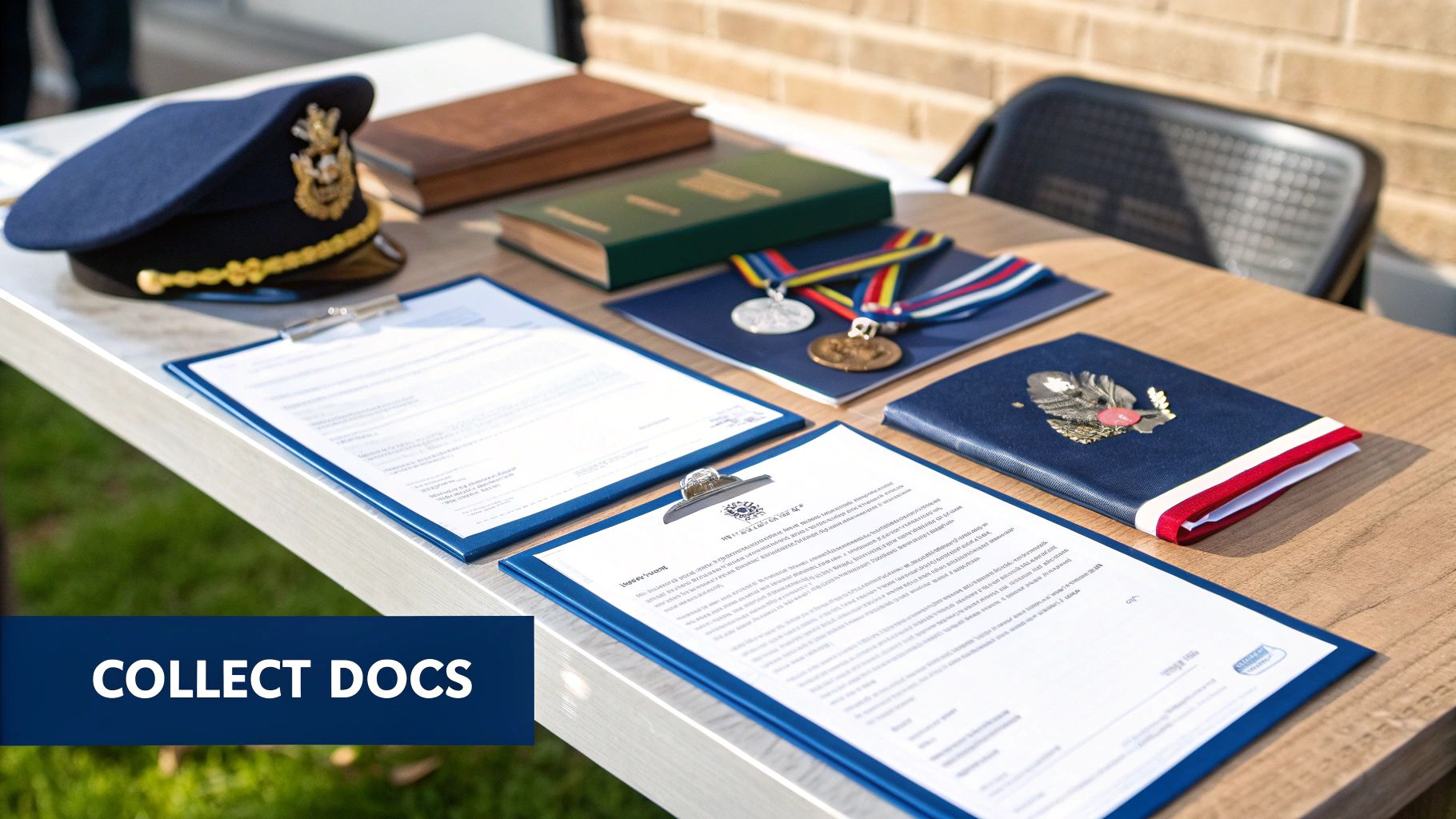
Proper documentation is essential for a smooth application process. Gathering necessary paperwork beforehand prevents delays. Essential documents typically include your DD-214 (discharge papers), medical records, and documentation related to service-connected disabilities or special circumstances. More information on applying is available on the VA website.
Navigating Eligibility Challenges
Some veterans face initial eligibility challenges. Don't give up! Resources are available to help. Veterans Service Officers provide invaluable assistance with applications, appeals, and gathering documentation. They act as advocates, helping you navigate the system. They can also help explore alternative eligibility and connect you with support services.
Maximizing Your Education Benefits Eligibility

Your military service has earned you valuable education benefits. Understanding how to qualify for these veterans benefits, and specifically which education programs you are eligible for, is crucial for maximizing your opportunities. This section compares the Post-9/11 GI Bill and the Montgomery GI Bill, highlighting their key differences and exploring other specialized programs.
Post-9/11 GI Bill vs. Montgomery GI Bill: Key Differences
The Post-9/11 GI Bill and the Montgomery GI Bill are the two primary education benefit programs available to veterans. Understanding their distinct features will help you choose the best option for your educational goals.
-
Funding: The Post-9/11 GI Bill typically covers a larger percentage of tuition and fees, potentially up to 100% for public institutions. The Montgomery GI Bill provides a fixed monthly payment.
-
Eligibility: Eligibility for the Post-9/11 GI Bill depends on the length of your aggregate service after September 10, 2001. The Montgomery GI Bill has separate eligibility criteria, often based on contributions made during your service.
-
Housing Allowance: The Post-9/11 GI Bill generally includes a monthly housing allowance, the amount of which is determined by the location of your school. The Montgomery GI Bill also offers a housing allowance, but it's generally a lower amount.
This table summarizes the key distinctions:
| Feature | Post-9/11 GI Bill | Montgomery GI Bill |
|---|---|---|
| Tuition & Fees | Up to 100% (public schools) | Set monthly payment |
| Housing Allowance | Based on school location | Generally lower |
| Eligibility | Aggregate service after 9/11 | Contribution during service |
Specialized Education Programs for Veterans
Beyond the Post-9/11 and Montgomery GI Bills, several specialized education programs cater to specific veteran needs, including vocational training and certifications. Veterans interested in skilled trades may want to explore programs available through the VA’s Veteran Readiness and Employment (VR&E) services. This program helps veterans with service-connected disabilities find suitable employment and training opportunities.
Transferability Options for Family Members
The Post-9/11 GI Bill offers the valuable option of transferring benefits to eligible family members, such as spouses or children. This allows veterans to share their hard-earned educational opportunities with their loved ones. Specific requirements and limitations apply, so it's essential to apply for the transfer through the VA website. More information about eligibility and the application process can be found on the VA's how-to-apply page.
Time Limitations and Deadlines
Be mindful of the time limits associated with using your education benefits. Both the Post-9/11 GI Bill and the Montgomery GI Bill have deadlines. The Post-9/11 GI Bill generally expires 15 years after leaving active duty, while the Montgomery GI Bill typically has a 10-year limit from your last date of active duty. Understanding these limitations is crucial for effective educational planning.
Maximizing Your Benefits: Practical Tips
To maximize your education benefits, consider these practical tips:
- Research: Thoroughly research different programs and compare their respective benefits to find the best fit.
- Plan: Develop a clear educational plan that aligns with your career goals and personal interests.
- Apply Early: Begin the application process early to avoid delays. Gather all necessary documentation, such as your Social Security number and bank account information for direct deposit, in advance.
- Connect: Seek guidance from Veterans Service Officers or your school’s certifying official. They can provide valuable support and assistance, and are typically found in the Registrar or Financial Aid office at your school.
By understanding the details of each program and planning accordingly, you can leverage your veterans benefits to achieve your educational aspirations.
Qualifying For Life-Changing Housing Benefits
VA housing benefits can significantly improve a veteran's financial well-being. However, understanding the qualification process is essential for accessing these benefits. This section clarifies the eligibility criteria for VA-backed home loans, focusing on service requirements and other factors determining your access to these valuable financial tools.
Service Requirements For VA Loan Guarantees
The VA doesn't lend money directly for home purchases. Instead, it guarantees a portion of the loan, enabling veterans to secure financing with better terms. To qualify for this guarantee, you must meet specific service requirements, which vary depending on your service history.
-
Active Duty Service: Veterans who served a minimum period on active duty during designated wartime periods generally qualify. These include World War II, the Korean War, the Vietnam War, and the Gulf War. The required service length varies, so verifying your eligibility based on your service dates is crucial.
-
Reserve and National Guard Service: Reserve and National Guard members can also qualify. However, the requirements often involve a longer service commitment than active duty. Generally, a minimum of six years of honorable service in the Selected Reserve or National Guard is required, along with a discharge other than dishonorable. Specific requirements also exist for active duty deployments during certain conflicts.
Understanding these distinctions between active duty, Reserve, and National Guard service is essential for determining your eligibility. Seemingly small details in your service record can significantly affect your qualification status.
Discharge Status And Your Eligibility
Your discharge status is crucial. An honorable discharge is typically required. However, veterans with general discharges may still qualify under certain circumstances. Review the VA's guidelines regarding discharge types or consult a Veterans Service Officer for clarification.
Obtaining Your Certificate Of Eligibility
A Certificate of Eligibility (COE) is a vital document proving you meet the service requirements for a VA loan. Obtaining your COE streamlines the loan application process. You can apply for a COE online through the VA's eBenefits portal or by mail.
Funding Fees And Exemptions
Most VA loans require a funding fee, which helps reduce the loan program's cost to taxpayers. Some veterans are exempt, including those with service-connected disabilities. Exemptions also exist for veterans receiving compensation for service-connected disabilities and surviving spouses of veterans who died in service or from a service-connected disability.
Eligibility For Surviving Spouses
Surviving spouses of qualifying veterans may also be eligible for VA home loan benefits. These benefits can assist with purchasing or refinancing a home. Specific eligibility criteria apply, usually related to the veteran's death and the surviving spouse's marital status.
Restoring Your Entitlement
If you previously used your VA loan benefit and sold the home, you might restore your entitlement. This allows you to use the VA loan guarantee again for another property. Understanding the restoration process is important for veterans considering future home purchases. More information can be found on the VA website.
Specialized Housing Grants For Disabled Veterans
Veterans with service-connected disabilities may be eligible for specialized housing grants. These grants can help adapt a home for accessibility needs or purchase a specially adapted home, significantly improving their quality of life.
Navigating VA housing benefits can be challenging, but understanding the requirements and gathering necessary documentation simplifies the process, helping you access the benefits you've earned.
Navigating Pension and Financial Support Eligibility
VA pension programs offer crucial financial aid to eligible veterans and their surviving families. Many veterans, however, don't take advantage of these benefits because of confusion surrounding eligibility requirements. This section clarifies these requirements, focusing on wartime service, income limitations, and net worth restrictions.
Wartime Service Requirements
A primary qualification for a VA pension is wartime service. This means serving a specific length of time on active duty during a recognized period of war. These periods include World War II (December 7, 1941, to December 31, 1946), the Korean Conflict (June 27, 1950, to January 31, 1955), and the Vietnam Era (August 5, 1964, to May 7, 1975). Even a single day served during these times could qualify you. The exact required service length depends on the specific pension type.
Understanding Income and Net Worth Limits
Beyond wartime service, VA pension eligibility depends on meeting specific income and net worth limits, which are adjusted every year. The VA defines countable income as all income from various sources, including Social Security and retirement, less certain allowable deductions. Net worth includes assets such as savings and investments, excluding your primary residence and vehicle. These calculations help ensure the pension program supports those with the greatest financial need.
Allowable Deductions From Countable Income
Certain medical expenses are deductible from your countable income. These can include costs for in-home care, assisted living, and medical treatments for a disability. Keeping accurate records of these expenses is vital for reducing your countable income and potentially maximizing your pension benefit.
Aid and Attendance and Housebound Benefits
Veterans needing help with daily activities, or those confined to their homes, may be eligible for additional pension benefits through the Aid and Attendance or Housebound programs. These benefits provide higher monthly payments to offset the costs of care. Specific eligibility criteria apply, related to the level of care required.
Eligibility for Surviving Spouses and Dependents
Surviving spouses and dependent children of deceased veterans might also qualify for VA pension benefits. These benefits provide financial assistance to families who have lost a loved one due to service-connected reasons, or who meet other defined criteria. The surviving spouse’s income and net worth, much like for veterans applying for pensions, are considered when determining eligibility.
Successfully applying for a VA pension requires careful attention to detail and a solid understanding of the different programs. Consulting a Veterans Service Officer can be incredibly helpful. They can assist with gathering the necessary documentation and explain how to qualify for veterans benefits that will give you the financial support you deserve.
Overcoming Benefits Eligibility Roadblocks
Qualifying for veterans benefits can sometimes feel like navigating a maze. Many veterans encounter obstacles, often leading to frustration and discouragement. However, understanding these challenges and knowing how to address them can significantly improve your chances of accessing the benefits you deserve. This section offers practical solutions to common roadblocks, empowering you to secure the support you’ve earned.
Addressing Less-Than-Honorable Discharges
A less-than-honorable discharge can impact eligibility for veterans benefits. However, it doesn't automatically disqualify you. There are avenues to explore for addressing this challenge.
-
Discharge Upgrades: A discharge upgrade is a formal request to review and potentially change your discharge status. This process involves gathering evidence that supports your case for reconsideration, such as letters of recommendation, medical records, and performance evaluations.
-
Character of Service Determinations: A character of service determination evaluates your overall conduct during your service, even with a less-than-honorable discharge. A positive determination can open doors to certain benefits, even without a discharge upgrade.
These options provide pathways to potentially restore your eligibility.
Reconstructing Missing Service Records
Lost or incomplete service records can create a significant obstacle. Fortunately, the VA accepts alternative forms of evidence to verify your service.
-
Buddy Statements: Buddy statements are sworn affidavits from fellow service members who can confirm your service dates, assignments, and experiences. These statements provide valuable firsthand accounts to support your claim.
-
Secondary Documentation: Other documents, such as pay stubs, photographs, or even personal journals, can also serve as supporting evidence. This secondary documentation, while not as comprehensive as official records, can help fill in the gaps when original records are unavailable.
This flexibility allows the VA to thoroughly review your situation.
Navigating Unique Service Period Challenges
Some veterans face specific challenges related to their service period. For example, peacetime veterans may be eligible for fewer benefits compared to wartime veterans. However, benefits are still available. Understanding the regulations specific to your service period is crucial. Consulting with a Veterans Service Officer (VSO) can provide clarity on your eligibility and guidance through the application process. Protecting your financial well-being also involves understanding how potential hardships might affect your pension; consider researching pension protection strategies.
Appealing Denied Claims
If your initial application is denied, don't give up. You have the right to appeal the decision. The appeals process typically involves submitting additional evidence and presenting your case to a higher authority within the VA. A VSO can be an invaluable resource during an appeal, offering guidance and support to strengthen your case.
Overcoming these roadblocks requires persistence and a proactive approach. Seeking assistance is essential. Organizations like the Homefront Group provide specialized support to veterans facing these complexities. They understand the challenges and are dedicated to helping you access the benefits you deserve.
Take the next step towards securing your future. Visit Homefront Group today for a free consultation.