

When you're trying to find the right personal injury lawyer, it's about more than just a quick Google search. You're looking for a true partner—someone who gets it, has specific experience with cases like yours, is upfront about their fees, and communicates in a way that gives you confidence. Their job is to wrestle with the legal system so you can focus on what really matters: getting better.
Your First Moves After an Injury
The aftermath of an injury is chaotic. You're dealing with pain, stress, and a whirlwind of uncertainty. Before you even start thinking about legal representation, what you do in these first few hours and days can make or break your potential claim.
Your absolute first priority? Get medical help. I don't care if you think you're "fine"—adrenaline is a powerful painkiller. Some serious injuries don't show symptoms for days. A thorough medical exam creates a direct, official link between the incident and your injuries, which is the cornerstone of any personal injury case.
Start Documenting Like Your Case Depends on It (Because It Does)
From this moment forward, become a meticulous record-keeper. Every little detail you can capture is potential evidence that can strengthen your case down the road.
- The Scene: Use your phone. Take pictures and videos of everything—the location, the damage to any vehicles or property, your visible injuries, and anything that might have contributed to the accident, like a wet floor or a broken step.
- Witnesses: Get the names and phone numbers of anyone who saw what happened. An independent account from a third party is incredibly powerful.
- Your Story: As soon as you can, write down or record a voice memo of everything you remember. Do it while the memory is fresh. Details fade fast, and you'll want to capture your immediate recollection of events.
This isn't just busywork. You're gathering the essential building blocks your lawyer will use to construct a powerful argument against the at-fault party and their insurance company.
The Early Settlement Trap
Don't be surprised if an insurance adjuster calls you quickly with a settlement offer. With bills starting to roll in, that check can look mighty appealing. But here’s a piece of advice from experience: accepting it is almost always a huge mistake.
These first offers are a tactic. They're calculated to be just enough to tempt you into closing your case for pennies on the dollar, long before you know the true extent of your injuries or the long-term costs.
A quick payout is a strategic move by insurers to limit their liability. Once you accept it, you forfeit your right to seek any further compensation for this injury, even if complications arise later.
Patience is your best weapon here. One of your first moves should be understanding and asserting your legal rights, which absolutely includes the right to take your time and speak with a professional before you sign anything.
The personal injury law field is massive—it was valued at $57 billion in 2023, with over 164,000 lawyers practicing in the U.S. alone. That's a lot of noise. Having an experienced guide is critical to cut through it and avoid missteps that could cost you dearly. You can find more data about the personal injury market and its growth on CasePeer's blog.
To simplify your search, it helps to know exactly what you're looking for. This table breaks down the core attributes of a great personal injury lawyer.
Key Lawyer Attributes at a Glance
| Attribute | Why It Matters | What to Look For |
|---|---|---|
| Specialized Experience | General practice lawyers don't have the niche knowledge required. | A track record of handling cases identical or very similar to yours. Ask for specific examples. |
| Contingency Fee Basis | You shouldn't pay legal fees unless you win your case. | A clear, written agreement stating they only get paid if you receive a settlement or verdict. |
| Trial Experience | Insurance companies are more likely to offer fair settlements to lawyers they know aren't afraid to go to court. | Ask them how many cases they've taken to trial versus settling. Confidence in the courtroom is key. |
| Clear Communication | You need to be kept in the loop and feel comfortable asking questions. | A lawyer who explains complex legal terms in plain English and sets clear expectations for communication. |
| Good Reputation | Past client reviews and peer ratings offer unbiased insight. | Look for testimonials, online reviews, and awards from legal organizations. |
Think of this table as your initial checklist. If a potential lawyer doesn't tick these boxes, it’s a good sign you should keep looking.
Gauging a Lawyer's Real-World Experience

You’ll see it on billboards and websites everywhere: “25 years of experience.” But what does that number actually tell you? If a lawyer spent the last quarter-century handling real estate closings, they’re not the right person to call after a serious car wreck.
When you start looking for an attorney, you have to dig deeper than a general "years in practice" claim. You need to find someone with a proven track record of handling claims just like yours. A lawyer who lives and breathes car accident cases knows the ins and outs of traffic laws and accident reconstruction. An attorney focused on medical malpractice knows precisely how to dissect complicated medical records and go toe-to-toe with a hospital’s powerful legal team.
That specialized knowledge is your biggest asset. It means they've seen the defense tactics you're about to face and have already built winning counter-strategies.
Look for Specific Case Results, Not Vague Promises
Any lawyer can say they’ve “handled” cases similar to yours. The real question is, have they won them? During your initial consultation, don't be afraid to ask for concrete examples.
You're looking for a history of substantial verdicts and settlements in situations that echo your own. There’s a world of difference between a lawyer who secured a $1.2 million verdict for a traumatic brain injury (TBI) after a fall and one who mostly settles minor fender-benders for $10,000.
As you review their past results, ask yourself these questions:
- Case Type: Are their examples directly related to your situation, like commercial truck accidents, slip and falls, or toxic exposure?
- Injury Similarity: Have they successfully fought for clients with injuries comparable to yours, whether it's spinal cord damage, PTSD, or severe burns?
- Outcome Value: Do their settlement and verdict amounts show they can secure serious compensation for serious injuries?
This kind of focused vetting gives you a real-world preview of what they can do. It’s like choosing between a general practitioner and a cardiac surgeon for open-heart surgery. For your case, you absolutely need a specialist.
It's no surprise that more people are seeking specialized legal help. The claims process has become incredibly complex. For example, some studies on road traffic accident claims show that the percentage of people hiring lawyers more than doubled over a decade, jumping from around 10% to over 20% of claimants. This isn't just about injury severity; it's a growing recognition that you need an expert to navigate the system effectively.
Uncover Their Trial Record and History with Insurers
The vast majority of personal injury cases settle out of court, but a lawyer's willingness and ability to go to trial is your most powerful negotiating chip. Insurance companies keep very close tabs on which attorneys are known for taking the first lowball offer and which ones aren't afraid to fight it out in front of a jury.
An attorney with a solid trial record almost always gets better settlement offers. Why? Because the insurance company wants to avoid the risk, expense, and uncertainty of a courtroom battle.
An insurer's respect for your lawyer is directly proportional to their fear of that lawyer's trial record. A lawyer who always settles signals weakness; one who is always trial-ready negotiates from a position of strength.
During your meeting, ask direct questions to get a sense of their courtroom confidence:
- "How many cases like mine have you actually taken to trial?"
- "What was the outcome of your most recent trial?"
- "Which insurance companies have you gone up against for this type of case?"
Finding out they have experience battling—and beating—the specific insurance company handling your claim is a huge advantage. Every insurer has its own internal playbook of delay-and-deny tactics. A lawyer who already knows that playbook is several steps ahead from day one. A critical part of this evaluation is seeing if they have effective strategies for negotiating with insurance companies to get the best possible outcome.
Decoding Fee Agreements and Firm Resources
Let's talk about money. When you're hurt, the last thing you should worry about is how to afford a good lawyer. Getting clear on how an attorney gets paid—and what that means for your final check—is one of the most important parts of this entire process.
Thankfully, most personal injury lawyers work on what's called a contingency fee basis. I'm a huge fan of this model for my clients because it levels the playing field. It means you pay zero dollars upfront. The lawyer's fee is contingent on winning your case. If they don't get you any money, you don't owe them a dime for their time. Simple as that.
Understanding the Contingency Fee Breakdown
So, what's the catch? The standard fee is usually between 33% and 40% of the total money recovered. The exact percentage can shift based on how far the case goes. For instance, a lawyer might take a smaller cut if the case settles quickly, before a lawsuit even gets filed. But if it drags on into a full-blown trial, that percentage will likely go up to cover the extra work.
You absolutely have to read the fee agreement. Don't skim it. This is a binding contract, and it lays out every detail of your financial arrangement.
A lawyer who is happy to walk you through their fee agreement, line by line, is a good sign. If they seem cagey, rush you, or gloss over the details, that's a massive red flag. Trust your gut.
As you review the paperwork, you need to spot the difference between attorney fees and case costs. They are not the same thing.
- Attorney Fees: This is the percentage the lawyer earns for their work and expertise.
- Case Costs: These are the upfront expenses the firm pays to build your case. Think of things like court filing fees, paying for medical records, deposition transcripts, and the big one: expert witness fees.
This is where you need to pay close attention. Ask this critical question: Are case costs taken out of the settlement before or after the lawyer’s percentage is calculated? It might sound like a small detail, but it can change your final take-home amount by thousands of dollars.
Here’s a quick look at how different fee structures are often set up.
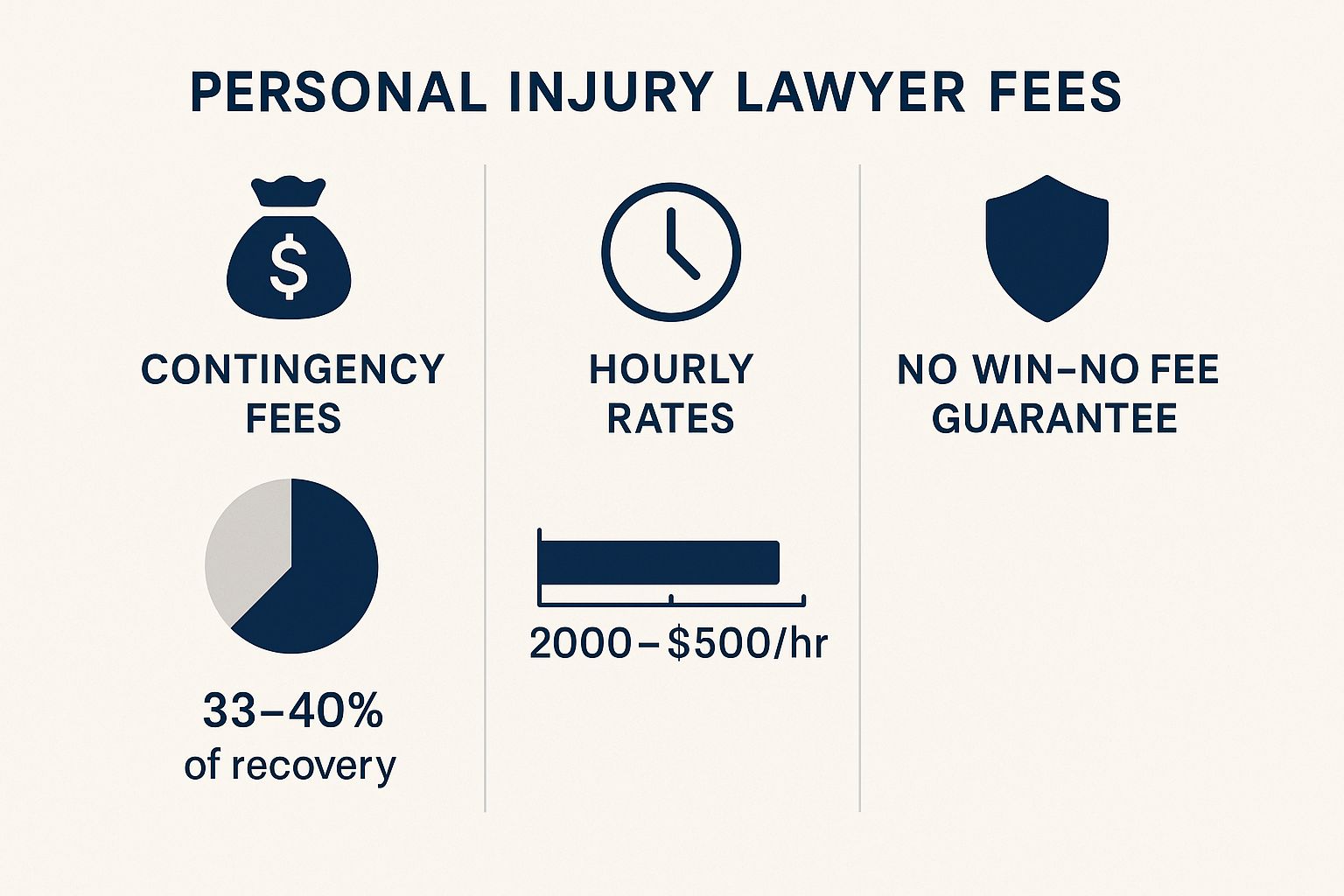
As you can see, the contingency model is the go-to for injury cases because it directly ties your lawyer's success to your own, without you having to pay out-of-pocket.
To help you navigate this, I've put together a table outlining the common contingency fee setups and the crucial questions you should be asking during your consultation.
Contingency Fee Structures Compared
| Fee Component | Standard Range | Questions to Ask |
|---|---|---|
| Standard Percentage | 33.3% | Is this percentage fixed, or does it change if the case goes to trial? |
| Escalating Percentage | 33.3% pre-suit, 40% after filing | At what specific point does the fee increase? (e.g., filing a lawsuit, trial date) |
| Case Costs Deduction | Varies | Are costs deducted from the gross settlement before or after the attorney fee is calculated? |
| Expert Witness Fees | $5,000 – $100,000+ | Is there a cap on expert fees? Who approves the hiring of an expensive expert? |
| Miscellaneous Costs | Varies | Can I get a list of common costs? (e.g., postage, copying, travel) |
Understanding these components empowers you to have a productive conversation and ensures there are no surprises when your case finally resolves.
Why a Firm’s Financial Resources Matter
Here’s something most people don’t think about: a law firm's bank account. It matters. A lot. Going up against a major insurance company is an expensive fight. They have deep pockets and armies of lawyers ready to drag things out to wear you down.
A financially strong law firm can go toe-to-toe with them. They have the resources to:
- Hire the Best Experts: We're talking about top-tier accident reconstructionists, surgeons, and economists whose testimony can make or break a case. These experts are not cheap.
- Fund the Fight: A well-funded firm won't get bullied into taking a lowball settlement just because they're running out of money. They can afford the depositions, the endless paperwork, and the trial prep without cutting corners.
I always tell people to think of it like this: you're heading into a boxing match. Do you want a partner who has the stamina to go all 12 rounds, or one who's out of breath by round two? Choosing a firm with real financial muscle means your case gets the full investment it deserves.
How Do They Treat Their Clients? A Look at Communication and Service

Let's be blunt: a brilliant legal mind is useless if they never return your calls. The attorney-client relationship can last for months, sometimes years. You need to find someone whose communication style gives you confidence, not just anxiety. This goes beyond getting case updates; it's about feeling heard, respected, and supported through a tough time.
Your initial consultation is the first real test of this relationship. Pay close attention to how they interact with you from the moment you walk in. Do they truly listen to your story, or are they just waiting for their turn to talk? A great lawyer makes you feel like your case is the only one that matters in that moment.
Beyond just listening, can they explain complex legal ideas in plain English? You’re going to hear a lot of jargon like “subrogation” or “tortfeasor,” and it can be overwhelming. A good attorney will patiently break it down for you without being condescending, making sure you’re right there with them every step of the way.
Are They Responsive and Accessible?
When you’re in the middle of a personal injury claim, silence from your lawyer’s office is deafening. It breeds stress. You absolutely have to clarify how the firm handles day-to-day communication before you sign anything.
During that first meeting, don't be shy. Ask direct questions about how they work:
- Who is my go-to person? Will you primarily speak with the lawyer you hired, or will a paralegal or case manager be your main point of contact? Either system can work well, but you need to know who to call and what to expect.
- What's your response time? Ask them what their policy is for returning calls and emails. A 24-48 business hour window is a reasonable, professional standard.
- How often will I hear from you? Will they provide regular updates, even if it's just to say, "no news yet, but we're still on it"? A proactive check-in every few weeks can make a world of difference for your peace of mind.
These aren't nitpicky questions. You're setting the ground rules for a crucial professional relationship. Getting this clear from the start prevents a lot of frustration down the road.
The best lawyers understand their job isn’t just managing a case file—it’s guiding a human being through one of the most difficult chapters of their life. Their client service has to reflect that.
How Technology Plays a Role in Client Service
Today’s best law firms use technology to make your life easier. This isn't just a gimmick; it’s a clear sign of a firm that values your time and believes in transparency. Many forward-thinking firms now offer secure online client portals. These allow you to log in 24/7 to review case documents, check the latest status updates, or send a secure message to your legal team without playing phone tag.
This use of technology has really changed the game. The data shows that law firms using modern tools for client management have a serious edge. In fact, firms that offer features like online scheduling and automated case updates generate 51% more client leads and see 52% greater revenue. For you, the client, this means a lawyer using these tools is more likely to be organized, efficient, and communicative—qualities that are just as important as their courtroom record. You can find more great insights on this topic on Clio's blog about legal tech trends.
Ultimately, choosing your lawyer means looking at the whole package. You need an expert with the legal firepower to win, but you also deserve someone with the communication skills and client-first systems to make you feel like a valued partner on this journey.
Making Your Final Choice with Confidence

You’ve done the hard work. After vetting lawyers and sitting through consultations, you’ve probably narrowed the field down to two or three strong candidates. This is where your diligent research meets your gut instinct. The final call is about putting all the pieces together to select a true partner for the fight ahead.
Think of it as your final mission briefing before you commit. You need to weigh every critical factor—their specific case experience, your personal rapport, the fee structure, and the firm’s resources—to make a decision that lets you focus on your recovery with complete peace of mind.
Synthesizing Your Research
It's easy to get bogged down in the details at this stage. The best way I’ve found to cut through the noise is to create a simple comparison chart. Seriously, just grab a piece of paper or open a spreadsheet and make a column for each of your top contenders.
Now, score each lawyer on the key criteria. No need for a complex system; a simple 1-to-5 scale works perfectly.
- Relevant Experience: How many cases like yours have they actually handled? A 5 means they're a specialist in this exact area; a 1 means it’s just one of many things they do.
- Rapport & Communication: Did you feel heard and respected? A 5 means you felt a solid connection and they explained complex things clearly. A 1 means you felt dismissed or left more confused than when you started.
- Fee Agreement Clarity: Was the fee structure transparent and fair? A 5 means you understand every single detail. A 1 means you have nagging questions or spotted potential red flags.
- Firm Resources: Does the firm have the financial muscle to go the distance? A 5 means they can clearly fund a major fight. A 1 means you’re worried they might get outgunned by a big insurance company.
This simple exercise gives you a clear, visual snapshot of each lawyer's strengths and weaknesses. It helps you move past a vague "feeling" and toward a decision backed by evidence.
The Final Checklist Before You Sign
Before you put pen to paper on that representation agreement, run through this final checklist. This is your last chance to iron out any doubts and ensure you're starting this professional relationship on solid ground. Don’t skip this.
1. Reread the Representation Agreement:
Don't just skim it. Read. Every. Word. Pay close attention to the fine print on the contingency fee percentage, how case costs are handled, and the terms for ending the agreement (by either you or the firm). If anything is unclear, have them explain it again until it makes sense.
2. Clarify Your Main Point of Contact:
Find out who will really be handling the day-to-day progress on your case. Will you be talking to the lawyer you’ve been meeting with, or will a paralegal be your main contact? Establishing the communication chain of command now prevents a world of frustration later.
3. Ask About Their Current Caseload:
This is a perfectly fair question. You need to be sure your lawyer has the bandwidth to give your case the attention it deserves. An incredible attorney who is stretched too thin might not be the right choice for you.
Trust is the absolute foundation of the attorney-client relationship. This final check isn't about being difficult—it's about being diligent. A good lawyer will respect your thoroughness because it shows you're a serious partner in your own case.
Once you’ve gone through these final steps and reviewed your notes, the right choice usually becomes crystal clear. It's almost always the lawyer who scores well on paper and with whom you feel a genuine sense of trust.
Remember, you aren't just hiring a legal technician; you're choosing an advocate who will stand with you, fight for you, and give you the space to focus on your health and your family. Make your choice with confidence, knowing you did the work to find the right partner.
Common Questions When Hiring a Personal Injury Lawyer
It's only natural to have a ton of questions when you're looking for a lawyer, especially after a serious injury. This part of the process is confusing, and getting straight answers is crucial. Let's walk through some of the most common things people ask, so you can feel confident in your choice.
So, What's This Going to Cost Me?
Let’s get right to the biggest worry on everyone's mind: the cost. I get it. The last thing you need when you're hurt and out of work is another bill.
The good news is that nearly every personal injury lawyer I know works on what’s called a contingency fee basis. In plain English, this means you don't pay a single dime out of your own pocket to get started. Their fee is a percentage of the money they recover for you, whether that's from a settlement or a jury award.
You can expect that percentage to be somewhere between 33% and 40%. The best part? If they don't win your case, you owe them nothing for their time. This setup is great because it means your lawyer is just as invested in getting a great result as you are.
Now, one thing to be crystal clear on is case costs. These are separate from the lawyer's fee and cover things like court filing fees or hiring an expert witness. Always, and I mean always, get a written agreement that breaks down exactly how fees and costs are handled before you sign anything.
A good attorney will have no problem sitting down and explaining every line of their fee agreement. If they're vague or rush you through it, that’s a massive red flag. Thank them for their time and walk away.
Knowing how the money works is the first step toward finding a lawyer who will fight for you without adding to your financial stress.
What Do I Need to Bring for Our First Meeting?
Think of your first consultation as the first step in building your case. The more information you can give the lawyer upfront, the faster they can give you a real, honest assessment of your situation. You want to walk in prepared.
Your job is to pull together everything and anything related to the incident. Put it all in a folder and bring it with you.
- The Official Story: Any police reports or official incident reports are a must.
- Your Medical Journey: Bring all medical records, bills, and even the discharge papers from your doctor visits or hospital stays.
- The Visuals: Photos or videos from the scene are pure gold. Also include pictures of your injuries as they heal and any damage to your car or property.
- Insurance Paperwork: Any and all letters, emails, or denial notices from any insurance company involved.
- Who Saw It Happen? A simple list of names and phone numbers for any witnesses.
It's also a great idea to jot down a quick timeline of what happened, from your perspective, while the details are still fresh. Coming organized like this shows you’re serious and helps the lawyer start strategizing from the moment you sit down.
What if I'm Not Happy With My Lawyer? Can I Switch?
Absolutely. You are always in control. You have the right to change lawyers if you feel you're not getting the attention or results you deserve. You're never truly "stuck" with an attorney who isn't communicating or fighting for you.
But, it's not quite as simple as just firing them and hiring someone new. Your first lawyer will almost certainly place a lien on your case. This is a legal claim they file to get paid for the work they've already put in and the costs they've fronted. That lien gets paid out of any future settlement you receive.
My advice? First, try to talk to your current lawyer about your concerns. A frank conversation can sometimes clear things up. If that doesn't work, your new lawyer can handle the transition, deal with the lien from the first attorney, and make sure your case keeps moving forward without a hitch.
How Long is This Whole Process Going to Take?
This is the million-dollar question, and unfortunately, there's no easy answer. Every single case has its own timeline. I’ve seen some cases wrap up in a few months and others take years.
A straightforward car accident with clear fault and minor injuries might settle relatively quickly. But if you’re dealing with catastrophic injuries, multiple defendants, or an insurance company that refuses to be reasonable, you could be in it for the long haul, especially if a trial becomes necessary.
Several things can affect the timeline:
- How severe your injuries are and how long your medical treatment lasts.
- How complex the accident was and what kind of investigation is needed.
- Whether the insurance company is willing to negotiate in good faith.
- The backlog and schedule of the local court system.
An experienced lawyer can’t give you a guaranteed end date, but they can look at the facts of your case and give you a realistic, no-nonsense estimate based on their past experience. They won't promise a quick payday; they'll give you the truth.
At Homefront Group, we know that an injury can throw your entire world off its axis, especially for veterans and first responders. Our firm was founded by veterans specifically to serve this community, and we lead with the respect and dedication you’ve earned. We’re here to fight for the justice and financial security you deserve. Take our 3-minute quiz today to see what benefits you may qualify for and let us start building a strategy for your future.