
Understanding Workers' Comp Case Duration Reality

Predicting the timeline of a workers' compensation case is a complex undertaking. Numerous factors contribute to the duration, resulting in some cases resolving swiftly while others extend over longer periods. One of the most significant factors is the nature of the claim itself.
A medical-only claim, which covers only medical expenses, typically resolves much faster than an indemnity claim. Indemnity claims include wage replacement benefits, often involving more intricate considerations. These include calculating lost wages and assessing potential future earning capacity. Understanding your claim type is a crucial first step.
The severity of the injury also plays a major role. Minor injuries requiring minimal treatment generally resolve quicker than serious injuries. Serious injuries might necessitate surgery, rehabilitation, and ongoing care. However, even minor injuries can become complex if pre-existing conditions are a factor.
For instance, a back strain might heal quickly in an individual with no prior back problems. However, the same injury could take considerably longer if the individual has a pre-existing condition like degenerative disc disease. This difference in recovery time directly impacts the overall case duration. The duration of workers' compensation cases has historically varied significantly. Between 1988 and 1996, the average length of disability in the United States decreased dramatically by 60.9%. More detailed statistics can be found here: Read the full research here
State-Specific Regulations & Case Duration
The state where the claim is filed has a considerable impact on processing time. Each state has its own workers' compensation laws, regulations, and administrative procedures. This results in substantial variations in timelines. Some states boast streamlined systems for efficient processing, while others have more complex procedures that can lead to delays.
This can be compared to navigating different road systems. Some are like well-maintained highways allowing for rapid travel, while others resemble winding, bumpy roads riddled with potential delays.
Other Factors Influencing Timelines
Several other factors beyond claim type, injury severity, and state regulations affect the overall timeline. These include:
- Disputes: Disagreements between the injured worker and the employer or insurance company regarding the cause, severity, or eligibility of the injury can significantly prolong the process.
- Maximum Medical Improvement (MMI): Reaching MMI is a critical milestone. This is the point at which a medical professional determines the injured worker has recovered as much as medically possible. The time required to reach MMI significantly influences the overall case duration.
- Settlement Negotiations: The complexity of negotiations between the injured worker and the insurance company plays a role in the final settlement timeline. Straightforward cases might settle quickly. Complex cases involving significant ongoing medical needs or permanent disability could require protracted negotiations.
Understanding these various factors provides a more realistic expectation of the potential duration of a workers' compensation case. It underscores the importance of collaborating closely with medical professionals and legal counsel throughout the entire process.
Timeline Breakdown For Different Workers' Comp Cases
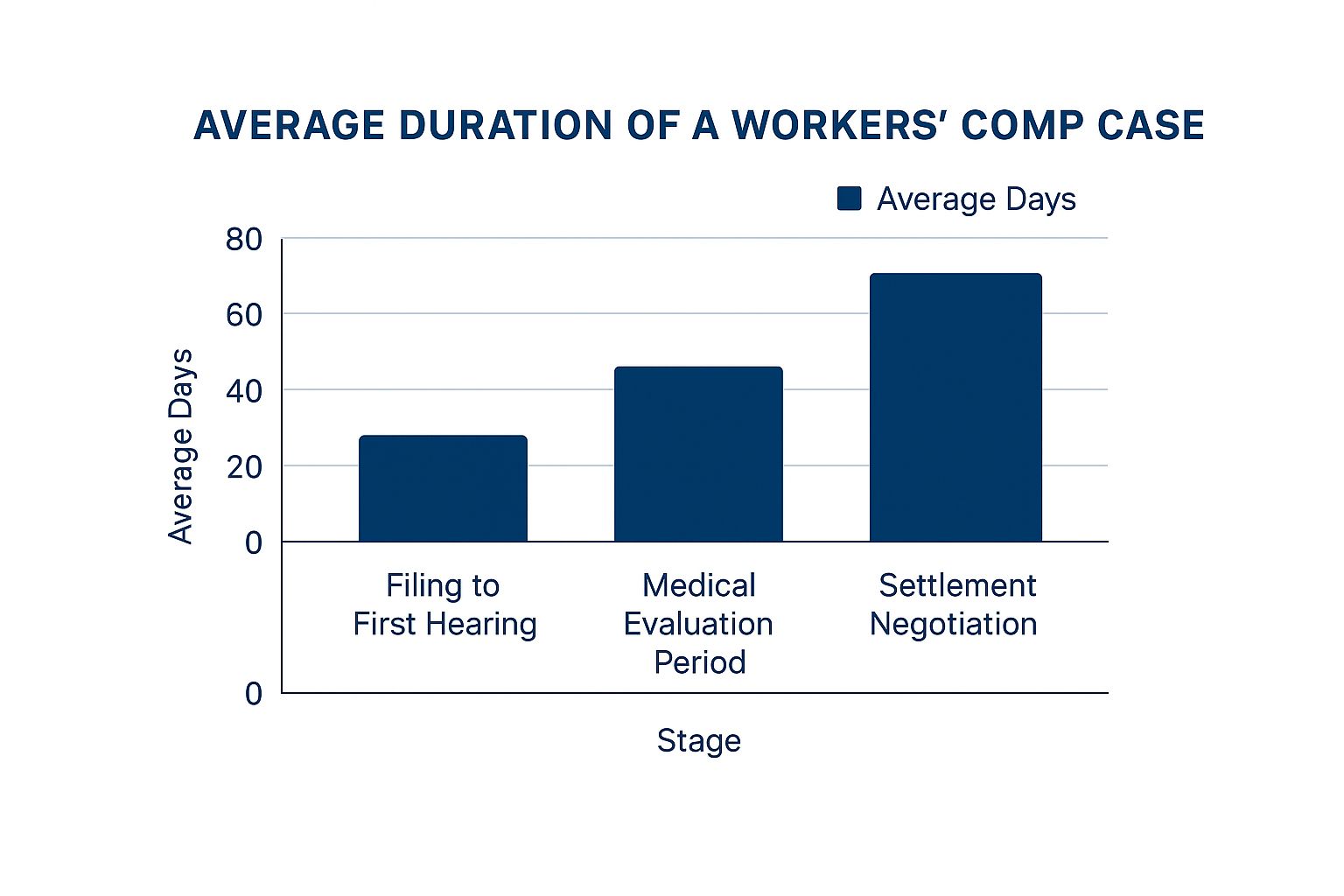
The infographic above illustrates the typical duration of key stages in a workers' compensation case. From the initial filing to the first hearing, you can expect around 30 days. The medical evaluation period usually takes approximately 60 days, and the settlement negotiation phase can last about 90 days. As the infographic shows, even straightforward cases can take several months to resolve. Keep in mind that these are average timelines, and individual cases can vary.
Medical-Only Claims Vs. Lost-Time Claims
How long your workers' compensation case will take largely depends on the nature of your claim. Medical-only claims, which cover only medical expenses, typically have a shorter resolution time. Often, these claims can be resolved within a few months if there are no disputes regarding the injury's connection to work or the required treatment. For example, a minor injury requiring minimal medical attention could be resolved relatively quickly.
However, lost-time claims, which involve lost wages, often take significantly longer. These claims necessitate a more thorough investigation and evaluation because they involve calculating lost wages, assessing potential future earning capacity, and addressing ongoing medical needs. Consequently, these claims can take several months, sometimes even years to fully resolve.
Pre-Existing Conditions And Case Complexity
Pre-existing conditions can significantly impact the duration of a workers' compensation case. An injury that might otherwise be straightforward can become more complex if a pre-existing condition is involved. For instance, a back injury could heal much faster in an individual without prior back problems, but the same injury could take considerably longer if the person has a pre-existing condition like degenerative disc disease.
This extended recovery time directly affects the overall case duration. Accurately documenting and evaluating the role of pre-existing conditions is critical for determining a realistic timeline.
To better understand how different case types influence resolution time, consider the following table:
Workers Compensation Case Duration by Type
This table compares typical resolution times for various workers' compensation case types:
| Case Type | Average Duration | Settlement Rate | Common Delays |
|---|---|---|---|
| Medical-Only (Minor) | 2-4 months | 90% | Delays in medical records, disputes over treatment |
| Medical-Only (Significant) | 4-6 months | 75% | Disagreements on necessary treatment, independent medical examination scheduling |
| Lost Time (Short Term) | 6-12 months | 60% | Lost wage calculations, disputes about disability extent |
| Lost Time (Long Term) | 12+ months | 40% | Future earning capacity assessments, ongoing medical needs disputes |
This table highlights that simpler cases like minor, medical-only claims tend to resolve quicker and have higher settlement rates. Conversely, complex cases involving lost time and potential long-term disability often extend beyond 12 months and have lower settlement rates due to increased disputes and required evaluations.
Expedited Procedures And Potential Bottlenecks
While most workers' compensation cases follow a standard procedure, some circumstances may allow for expedited processing. Some jurisdictions have specific programs designed for swiftly resolving straightforward, undisputed medical-only claims. These programs can often process these claims within a few weeks.
However, various factors can create bottlenecks that delay even simple cases. Common obstacles include delays in obtaining medical records, disagreements regarding treatment plans, and scheduling difficulties for independent medical examinations (IMEs). Being aware of these potential delays can help you manage your expectations and address any issues proactively.
How Your State Impacts Case Processing Speed

When considering the duration of a workers' compensation case, location plays a crucial role. Just as legal systems vary between countries, each U.S. state has its own distinct workers' compensation laws and processes. This means your state of residence can significantly impact your case timeline.
Some states prioritize quick claim resolution, implementing efficient systems designed to minimize delays. Others, however, have more complex procedures that can unintentionally extend the process.
This variation isn't about bias, but rather reflects differing administrative structures, methods of dispute resolution, and state-specific regulations. These differences directly influence the time it takes to receive benefits.
Some states have adopted digital systems for more streamlined processing. This digitization reduces paperwork and facilitates faster communication. Other states may still rely on traditional paper-based systems, potentially leading to slower processing times.
Administrative Structures and Staffing
The administrative bodies overseeing workers' compensation cases also influence processing speed. Some states have dedicated agencies with sufficient staff to handle claims effectively.
However, other agencies might face backlogs due to limited resources or a high volume of cases. This can add significant time to the overall process.
Imagine a restaurant with a small kitchen and limited staff trying to serve a large dinner rush. Delays are inevitable. Similarly, understaffed workers' compensation agencies can struggle to keep up with demand, impacting case timelines.
Dispute Resolution and Court Backlogs
Disputes frequently cause delays in workers' compensation cases. When disagreements arise regarding the cause of an injury, its severity, or eligibility for benefits, resolution can be lengthy. Local court backlogs can further compound these delays.
If a case requires a hearing or an appeal, it could be delayed for months or even years. In major insurance markets, settling workers' compensation cases, especially indemnity claims, can take many years.
Data from California, for example, shows it takes approximately 11 years to settle 95% of indemnity claims, with 56% of medical payments made more than three years after the injury. Find more detailed statistics here
Understanding Your State's System
Navigating these variations requires a clear understanding of your state's specific system. Knowing your state's unique requirements, typical processing times, and common causes of delays will help you prepare for a realistic timeline.
This knowledge empowers you to identify potential roadblocks early and take proactive steps to address them. This proactive approach helps prevent unnecessary delays and manage expectations, minimizing frustration.
Global Perspectives On Workers' Comp Duration
Looking beyond the U.S. reveals a diverse range of approaches to workers' compensation, resulting in significantly different timelines for claim resolution. This exploration examines how other countries handle workplace injuries, offering valuable insights into potentially more efficient and effective systems. We'll consider the influence of integrated healthcare systems, early return-to-work programs, and administrative reforms on case duration worldwide.
International Healthcare Systems and Workers' Comp
Some countries with integrated healthcare systems, unlike the U.S., manage workplace injuries within their broader public health framework. This approach often shifts the focus from adversarial claims processes common in the U.S. to a model emphasizing coordinated medical care and rehabilitation. By interconnecting healthcare and workers' compensation, these integrated systems can streamline treatment and potentially reduce recovery times. This minimizes administrative hurdles and prioritizes timely medical intervention.
Early Return-to-Work Programs
Recognizing the benefits of continued engagement, many countries emphasize early return-to-work programs for injured employees. These programs utilize strategies like modified duties, gradual work reintegration, and vocational rehabilitation to reduce lost time and improve overall recovery outcomes. By incentivizing both employers and employees to prioritize a safe and timely return to work, these initiatives can significantly impact claim duration.
Technology and Policy Reform
Several jurisdictions have successfully minimized administrative delays by implementing technology and policy reforms. Online claim filing, digital communication platforms, and automated processes expedite case management. These streamlined systems reduce paperwork, improve transparency, and facilitate quicker communication among all stakeholders. Additionally, policy changes that simplify claim procedures or provide clearer guidelines for medical evaluations can contribute to faster resolutions.
Cultural and Legal Factors
Cultural and societal attitudes towards disability, legal definitions of compensable injuries, and the complexity of legal processes can influence claim duration. For example, countries with stronger social safety nets might see shorter claim durations because workers face less financial pressure to return to work quickly. An Australian study involving 95,976 workers' compensation claims demonstrated the impact of jurisdictional variations. Workers in Victoria, South Australia, and Comcare experienced longer absences compared to those in New South Wales, while Tasmania and Queensland saw shorter durations. Explore this topic further
Understanding these global perspectives provides valuable lessons for enhancing workers' compensation systems and potentially reducing claim timelines, leading to fairer and more efficient outcomes for everyone involved. This knowledge can also empower individuals navigating a claim, helping them understand the process and advocate for their needs more effectively.
What Actually Speeds Up Or Delays Your Case

Understanding the various factors influencing the duration of workers' compensation cases is essential for veterans and first responders. While some claims are processed swiftly, others can unfortunately drag on. This section explores the key elements that can either expedite or prolong your case, giving you greater control over the process.
The Power of Prompt and Accurate Reporting
Timely and accurate reporting is one of the most critical factors affecting your case's timeline. Prompt reporting, ideally within 24-48 hours of the incident, is paramount. This creates a clear record and quickly sets the wheels in motion. Providing precise details, including the date, time, location, and specifics of the injury, is crucial for a streamlined process.
For instance, if you sustained a back injury lifting heavy equipment, specific details strengthen your claim. Noting the equipment's weight, the specific movement causing the injury, and the presence of any witnesses are all helpful. A thorough initial report paves the way for efficient processing.
Medical Documentation: The Cornerstone of Your Claim
Comprehensive and consistent medical documentation is fundamental to your case. Detailed records of all medical treatments, diagnoses, and prognoses are essential. These records not only validate your claim but also illustrate the scope and impact of your injuries.
Furthermore, ensuring your healthcare providers explicitly link your injuries to the workplace incident is vital. This clear connection reinforces your case and helps avoid potential delays.
Legal Representation: Navigating the Complexities
While legal representation can be beneficial, particularly in complex or contested cases, it can sometimes add time to simpler claims. For straightforward situations, direct communication with the insurance company may be quicker.
However, for cases involving permanent disability, disputes about causation, or pushback from your employer or the insurer, having legal counsel is highly recommended. A seasoned workers' compensation attorney can guide you through the legal intricacies and safeguard your rights. Homefront Group specializes in supporting veterans and first responders with their workers' compensation claims, offering expert navigation through this process. Learn more about workers' compensation support.
Administrative Bottlenecks and Disputes
Administrative holdups, such as processing backlogs at the state level or delayed responses from insurance providers, are common causes of extended timelines. Disputes regarding the nature of the injury, the necessity of specific treatments, or the assigned disability rating can also substantially prolong the process. These disputes often necessitate further investigation, independent medical examinations, and potentially legal hearings, all contributing to the overall timeline.
Employer Cooperation and Insurance Company Practices
The level of cooperation from your employer and the insurance company's practices also influence the case duration. A supportive employer who promptly submits required paperwork and collaborates with the investigation can expedite matters. Conversely, an uncooperative employer or an insurance company known for delaying tactics can significantly prolong proceedings.
To better illustrate the factors impacting case timelines, let's examine the following table:
Key Factors Affecting Workers' Comp Case Duration
| Factor | Impact on Timeline | Your Control Level | Mitigation Strategy |
|---|---|---|---|
| Prompt Reporting | Speeds up the process | High | Report the injury immediately and provide accurate details |
| Detailed Medical Records | Supports a stronger claim | High | Ensure thorough documentation and a clear link to the work incident |
| Legal Representation | Can help or hinder depending on complexity | Moderate | Seek legal advice if needed, especially in complex cases |
| Administrative Delays | Extends the timeline | Low | Follow up regularly with the relevant agencies |
| Disputes | Significantly prolongs the case | Moderate | Work with your attorney to address disputes effectively |
| Employer Cooperation | Influences processing speed | Low | Maintain open communication with your employer |
| Insurance Company Practices | Can create delays | Low | Choose a reputable insurance provider if possible |
As the table shows, several elements can impact the length of a worker's compensation case. While some are within your control, others, unfortunately, are not. By understanding these factors and adopting appropriate strategies, you can proactively manage your case and potentially reduce delays.
By understanding these factors, you can proactively manage your workers’ compensation case and minimize potential delays, leading to a smoother and more efficient resolution. Veterans and first responders seeking specialized assistance can contact Homefront Group for support tailored to their unique needs.
Navigating Each Phase Of Your Workers' Comp Journey
Understanding the phases of a workers' compensation case can help you anticipate potential challenges and stay informed throughout the process. This guide covers each stage, from the initial injury report to the final settlement, highlighting realistic timeframes and expected actions from everyone involved.
Initial Claim Filing and Acceptance
The first step is formally reporting your injury to your employer. This should be done as quickly as possible, ideally within 24-48 hours of the incident. Prompt reporting initiates the process and creates a clear record of the event. Your employer then files a formal claim with their insurance carrier. The insurer will then investigate the claim, gathering information about the incident and your medical condition. This investigation can take anywhere from a few weeks to several months, depending on the complexity of the claim. Finally, the insurer decides whether to accept or deny the claim. This initial phase is the foundation of the entire process, so accuracy and thoroughness are essential.
Medical Treatment Authorization
Once your claim is accepted, the focus shifts to your medical treatment. Securing authorization for necessary medical care becomes the next critical step. Depending on your state's regulations and the specifics of your injury, you may be required to see a physician approved by the insurance company. This process ensures that the treatment aligns with the accepted scope of the injury and follows established guidelines. Obtaining the necessary authorizations can sometimes involve administrative delays, so proactive communication with both the insurer and your medical providers is vital. This helps prevent setbacks in receiving timely and appropriate care.
Disability Evaluation and Benefits
If your injury prevents you from working immediately, you will likely undergo a disability evaluation. This evaluation assesses the severity of your injury and how it impacts your ability to perform your job. It determines your eligibility for lost wage benefits, often called indemnity benefits, and establishes the level of your disability. This phase often involves assessments from medical professionals and sometimes vocational experts. They help determine your functional limitations and the possibility of returning to work, either in your original role or a modified position. The timeframe for this phase varies depending on the nature and severity of the injury. A simple fracture, for example, will have a more predictable recovery timeline than a complex neurological issue.
Settlement Negotiations and Resolution
When you reach Maximum Medical Improvement (MMI), meaning your condition has stabilized as much as possible, settlement negotiations begin. This is when you and the insurance company work towards a resolution that compensates you for medical expenses, lost wages, and any permanent impairment. Negotiations can be straightforward in undisputed cases. More complex cases, especially those with disputes about the extent of the disability or ongoing medical care needs, may involve attorneys. If negotiations fail, a hearing before a workers' compensation judge or an appeal through the state’s administrative system may be necessary, potentially adding to the timeline. Keep in mind, in some states, it can take 11 years to settle 95% of indemnity claims. This final phase is where legal guidance from organizations like Homefront Group can be particularly beneficial. They provide expert support to help veterans and first responders navigate these complex negotiations to ensure they receive the benefits they deserve.
Key Takeaways
This section offers practical insights to help you effectively manage the timeline of your workers' compensation case. These takeaways are based on real-world experience and proven strategies. We'll cover checklists for each phase, benchmarks for measuring progress, and red flags that indicate when you might need professional help.
Proactive Steps for a Smoother Process
Taking control of your workers' compensation case requires proactive steps from the beginning. These actions can significantly influence the timeline and the overall outcome.
-
Report Promptly: Report your injury to your employer within 24-48 hours. This prompt reporting establishes a clear record and starts the process efficiently.
-
Detailed Documentation: Maintain thorough records of all medical treatments, diagnoses, and communications. Detailed documentation strengthens your claim and helps avoid delays.
-
Understand Your State's System: Each state has its own specific rules governing workers' compensation. Familiarize yourself with your state’s specific procedures and timelines to set realistic expectations.
Recognizing Potential Delays and Roadblocks
Even with proactive measures, some factors can delay your case. Recognizing these potential roadblocks is essential for navigating the process successfully.
-
Disputes and Disagreements: Disputes about the cause, severity, or eligibility of your injury can substantially lengthen the timeline. Be prepared for possible disagreements with the insurance company about medical evaluations, treatment plans, or the extent of your disability.
-
Administrative Bottlenecks: Backlogs at the state level, slow responses from the insurance company, or scheduling difficulties for Independent Medical Examinations (IMEs) can all contribute to delays.
-
Complex Cases: Cases involving pre-existing conditions, permanent disability, or disagreements about future earning potential often require extensive investigation and evaluation, which can prolong the timeline.
Strategies for Effective Case Management
You can take several steps to manage your case effectively, minimizing delays and ensuring a smoother process.
-
Open Communication: Maintain open communication with your employer, the insurance company, and your medical providers. This helps prevent misunderstandings and keeps everyone informed. Be proactive in asking for updates and following up on any outstanding issues.
-
Seek Legal Counsel: If your case becomes complicated, involves disputes, or significant disagreements, seeking legal representation is important. A qualified workers' compensation attorney can protect your rights and guide you through the legal complexities.
-
Track Your Progress: Stay informed about the status of your case. Create a timeline with important dates and deadlines, and keep records of all communication and documentation. This organized approach will help you monitor progress and identify any deviations from the anticipated timeline.
When to Seek Professional Help
Certain situations warrant seeking professional assistance to navigate the complexities of a workers' compensation claim.
-
Denied Claim: If your claim is denied, you should seek immediate legal advice to understand your options for appealing the decision.
-
Disputes Over Benefits: Disagreements about medical treatment, disability rating, or the compensation amount require expert legal guidance.
-
Complex Injuries: Cases involving severe or permanent injuries benefit from experienced legal representation to ensure you receive all the benefits you're entitled to.
By understanding these key takeaways and using effective strategies, you can manage the timeline of your workers' compensation case more efficiently. Remember, being informed is crucial in this process, and seeking professional help when necessary is vital for a successful outcome.
Are you a veteran or first responder needing help with a workers' compensation claim? Homefront Group offers specialized legal support designed for your specific needs. Contact us today for a free consultation and learn how we can help you navigate this challenging process and secure the benefits you deserve.