

Understanding VA Claims: Building Your Foundation For Success
Filing a VA claim is a significant step for veterans seeking the benefits they’ve earned. The journey can feel complex, but understanding the basics empowers veterans to navigate the process more effectively. This section simplifies the VA claims process and provides the knowledge you need to build a strong foundation for a successful claim.
What Exactly Is A VA Claim?
A VA claim is a formal request to the Department of Veterans Affairs for benefits and services earned through military service. These benefits can include disability compensation for service-related injuries or illnesses, pension benefits for wartime veterans with limited income, educational benefits, home loan guarantees, and more. Choosing the correct claim type is crucial for a successful outcome.
Different Types of VA Claims
The VA offers several types of claims to meet a variety of needs. Understanding these differences will help you choose the best option for your situation. Some common claim types are:
- Disability Compensation: For conditions connected to your military service.
- Pension: Need-based benefit for wartime veterans with limited income and disabilities not related to service.
- Healthcare: Access to VA medical services.
- Education: Funding for college, vocational training, or other educational programs.
The VA processes a substantial volume of claims annually. In 2024, the Veterans Benefits Administration (VBA) processed over 2.5 million disability compensation and pension claims, an all-time record. You can find more detailed statistics at https://www.benefits.va.gov/reports/detailed_claims_data.asp. This high volume underscores the importance of a well-prepared claim for efficient processing.
How The VA Evaluates Your Claim
After submission, the VA conducts a comprehensive review of your claim. They examine your service records, medical history, and supporting documentation to determine if your condition is related to your military service and how severely it impacts your life. Understanding this evaluation process is key to presenting a strong case.
Keys To A Successful Claim
Several factors contribute to a successful VA claim. While each claim is unique, these elements are generally essential:
- Clear and Concise Documentation: Medical records, service records, and other supporting evidence are crucial to link your condition to your military service.
- Accurate and Detailed Descriptions: Clearly describing your symptoms, limitations, and how your condition affects your daily activities helps the VA understand the impact of service-connected disabilities.
- Thorough Preparation: Understanding the requirements for your specific claim and gathering all necessary documents beforehand can prevent delays and increase your likelihood of success.
Understanding the VA claims process is fundamental for veterans. By understanding the types of claims, the VA's evaluation process, and the keys to a successful claim, you can approach the process with confidence and increase your chances of receiving the benefits you deserve. This foundational knowledge prepares you for the next critical step: gathering compelling evidence.
Gathering Evidence That Builds an Unshakeable Case
A successful claim with the Department of Veterans Affairs (VA) depends heavily on the strength of the evidence presented. Simply knowing you're entitled to benefits isn't sufficient; you must convincingly prove it. This section explains the documentation strategy that distinguishes approved claims from those stuck in the appeals process. You'll learn how to assemble compelling evidence, organize it methodically, and present a clear, chronological account of your service-connected condition.
Obtaining Key Documentation: Military and Medical Records
Your military personnel files are a treasure trove of information, often containing essential details about your service history, environmental exposures, and any injuries or illnesses you experienced while serving. Requesting these files is a vital first step. Likewise, medical records from both VA healthcare providers and private healthcare providers are indispensable. These records document the diagnosis, treatment, and progression of your condition, demonstrating a direct connection between your current health and your military service. For example, records detailing a specific injury you sustained during a deployment, combined with documentation of consistent treatment afterward, build a solid base for your claim.
Coordinating With Healthcare Providers
Clear communication with your healthcare providers is paramount. Make sure they understand VA claim requirements and can furnish documentation that specifically links your condition to your time in service. This may entail asking for specific wording in your medical reports or requesting detailed reports outlining the daily impact of your disability. If you're dealing with the challenges of VA claims and want to learn more about the implications of marriage on your benefits, exploring resources such as the IRS Innocent Spouse Relief program might offer some helpful insights.
Organizing Your Evidence for Maximum Impact
Simply gathering evidence is only part of the process; organizing it effectively is equally important. Present your information in chronological order, establishing a clear timeline from the initial incident during your service to your current condition. This helps the VA grasp the development of your disability and how it relates to your military experience. Consider your claim as a narrative, where the evidence serves as the supporting documentation.
Insider Tips From Successful Veterans
Veterans who have successfully navigated the VA claims process often highlight the importance of these key strategies:
- Persistence: Locating hard-to-find records can take time, but don't be discouraged.
- Specificity: Vague descriptions can undermine your claim. Be precise when detailing your symptoms and limitations.
- Professional Assistance: Consider seeking guidance from a Veterans Service Officer (VSO) or an attorney specializing in VA claims.
To illustrate the types of evidence that can strengthen your claim, we've provided the table below. It outlines several key document types and explains their importance in the claims process.
Essential Evidence Types for VA Claims
| Evidence Type | Purpose | Where to Obtain | Average Time to Receive |
|---|---|---|---|
| Service Medical Records | Documents injuries or illnesses sustained during service | Military personnel files | Varies depending on archive availability |
| VA Medical Records | Demonstrates ongoing treatment and diagnosis | VA healthcare facilities | Typically within a few weeks |
| Private Medical Records | Provides supporting evidence from civilian doctors | Private healthcare providers | Can vary depending on the provider |
| Buddy Statements | Provides firsthand accounts of events or conditions | Fellow service members | Depends on individual responsiveness |
As this table illustrates, various types of evidence can support your claim. Gathering and organizing these documents is crucial for a successful outcome.
Examples of Evidence That Wins Claims
While each claim is unique, some forms of evidence consistently hold considerable weight:
- Service Medical Records: Documentation of injuries or illnesses you experienced while in service.
- VA Medical Records: Records from VA healthcare providers detailing ongoing treatment and diagnoses.
- Private Medical Records: Supporting evidence from civilian healthcare providers that confirms VA findings.
- Buddy Statements: Statements from fellow service members who either witnessed your injury or can attest to its impact on your abilities.
By employing these strategies, you can construct a compelling case that significantly increases your prospects of a successful VA claim. Remember, thorough documentation is your strongest asset in this process.
The Step-by-Step Filing Process Made Simple
Now that you've gathered your evidence, it's time to file your VA claim. This section will walk you through the process, explaining each step in a clear and straightforward manner. From setting up your VA.gov account to clicking the submit button, we’ll be there with you at every decision point. We'll cover the various filing methods, how to sidestep common technical issues, and what you can expect after submission.
Choosing Your Filing Method
There are several ways to file a VA claim:
- Online through VA.gov: This is often the fastest method and allows you to easily track your claim's status.
- By Mail: The traditional method involves printing and completing physical forms.
- With a Veterans Service Organization (VSO): VSOs provide free support and can help you navigate the whole process.
- Through an Accredited Attorney: An attorney specializing in VA claims can offer professional legal advice and representation.
Each method has advantages and disadvantages. Filing online offers convenience and speed, but requires some technical skill. Working with a VSO offers personalized guidance, but may take longer. The best method for you depends on your specific needs and preferences. For many veterans, filing online via VA.gov offers the quickest route.
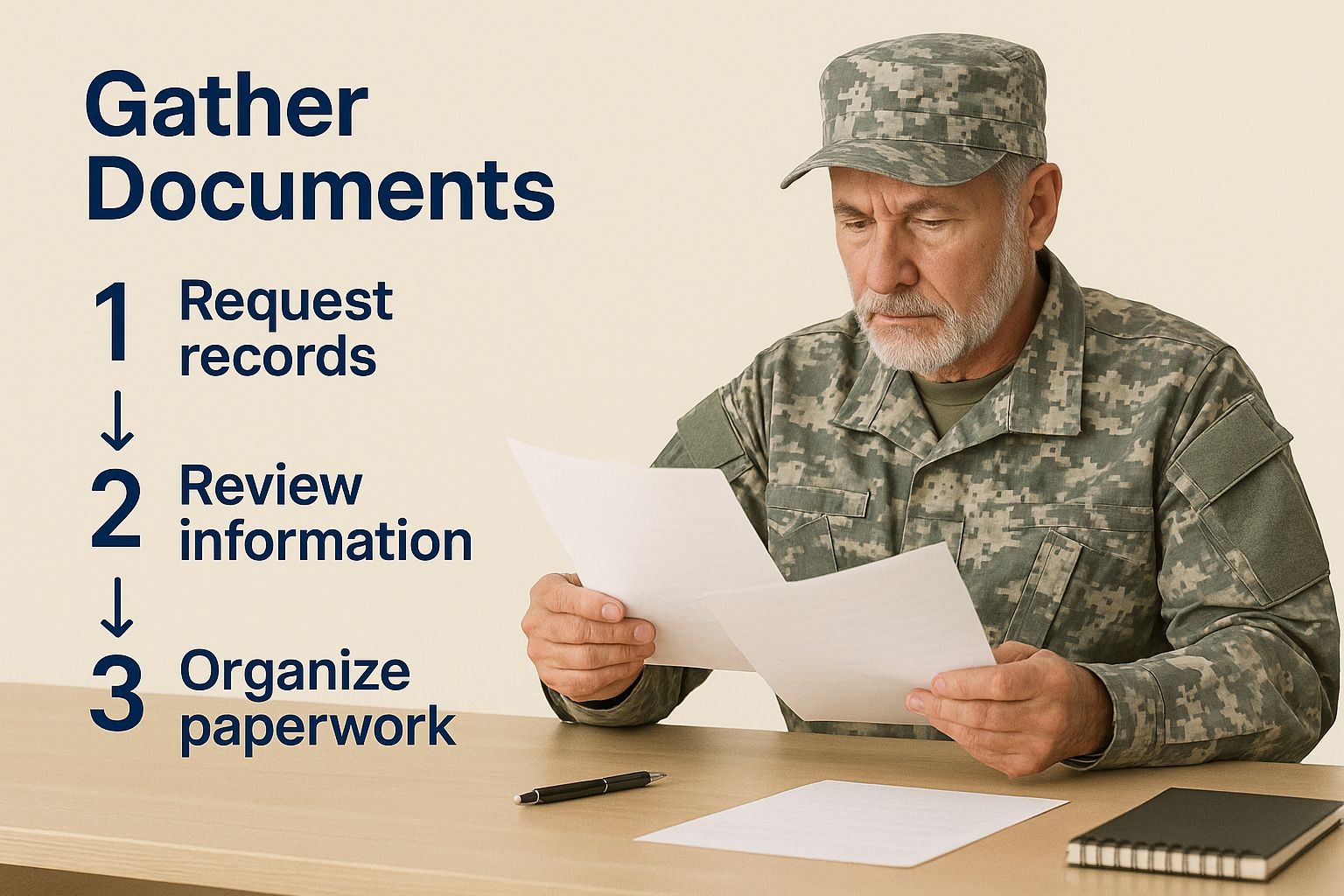
The infographic above illustrates the first step: gathering your important documents. This emphasizes how crucial it is to be organized before starting your online application. Having all your documents readily available will simplify the online submission process and reduce frustration.
Filing Your Claim Online: A Step-by-Step Guide
Here's how to file online:
- Create or Sign In to Your VA.gov Account: This secure portal allows access to many VA services.
- Complete VA Form 21-526EZ (Application for Disability Compensation and Related Compensation Benefits): This form collects essential information about your service and any disabilities.
- Upload Supporting Documentation: This includes your medical records, service records, and any other relevant documents.
- Review and Submit: Carefully review everything before submitting your claim.
This efficient process allows for quick processing and instant access to claim tracking.
Avoiding Technical Glitches and Delays
Technical difficulties can sometimes disrupt the online filing process. Here's how to avoid common problems:
- Ensure a Stable Internet Connection: A reliable connection helps prevent interruptions while uploading documents.
- Use a Supported Browser: Outdated browsers may experience compatibility issues with the VA.gov website.
- Save Your Progress Regularly: This protects you from losing information if you encounter unexpected errors.
Taking these proactive steps can help ensure a smooth and efficient filing experience.
What Happens After You Submit?
After submission, you'll receive a confirmation. The VA will then begin processing your claim, review your information, and request additional evidence as needed. This marks the beginning of the waiting period, and knowing what comes next is vital for managing your expectations. Regularly check your VA.gov account for updates and respond promptly to any VA requests. You can find additional resources and support for veterans at Homefront Group. With careful preparation and a solid understanding of the process, you’ll be well-positioned for a successful claim.
Understanding Processing Times and Managing Expectations

After submitting your VA claim, waiting for a decision can be a challenging experience. Understanding the factors that influence processing times can help you manage expectations and reduce anxiety during this period. This involves understanding the VA's prioritization system, knowing when follow-up is helpful, and interpreting status updates in your online account.
Factors Influencing Processing Time
Several factors can influence how long your claim takes. The complexity of your claim plays a significant role. Claims involving multiple disabilities or requiring extensive medical evidence naturally require more processing time than simpler claims.
The availability of your medical records is another key factor. If the VA needs to request records from multiple providers, this can cause delays. Providing organized and readily accessible records can help expedite the process.
Realistic Timelines for Different Claim Types
While individual claim processing times vary, understanding general timelines can provide a helpful benchmark. Simple claims might be processed within a few months, while more complex claims involving multiple conditions or the need for additional medical opinions, could take considerably longer. The VA aims to process all claims as efficiently as possible.
The VA claim process sometimes requires proactive follow-up. To streamline your communications, consider strategies for cold email automation. However, remember that excessive inquiries can sometimes hinder rather than help the process.
VA's Claims Processing Efficiency
The VA continually works to improve its claims processing efficiency. In Fiscal Year 2025, the VA processed over one million disability claims, achieving this milestone nearly two weeks faster than the previous fiscal year. This demonstrates the VA’s commitment to efficiently processing a high volume of claims. More detailed statistics can be found here: VA Processes One Million Disability Claims Faster Than Ever Before.
Staying Engaged Without Overdoing It
Staying informed about your claim's progress is essential. Checking your online account periodically for updates is recommended. However, remember that contacting the VA excessively with inquiries can sometimes slow the process down.
Interpreting Status Updates
Understanding the different status updates on your VA.gov account can provide insights into your claim’s progress. These updates typically reflect the stage of the process your claim is currently in, such as “Gathering of Evidence,” “Review in Progress,” or “Preparation for Decision.” Familiarizing yourself with these statuses offers a clearer understanding of the overall process. Preparing for the waiting period, understanding the complexities involved, and managing expectations effectively will help make the process less stressful.
Maximizing Your Disability Rating and Monthly Compensation
Understanding how the VA assigns disability ratings is crucial. It directly impacts your monthly compensation, potentially affecting your financial well-being significantly. This section breaks down the rating schedule, explains how multiple conditions influence your overall rating, and provides strategies for effectively communicating your limitations during examinations.
Decoding the VA Disability Rating Schedule
The VA uses a rating schedule ranging from 0% to 100% in increments of 10. Each percentage corresponds to a specific disability level and a corresponding monthly payment. These ratings aren't solely about the severity of your medical condition; they reflect how much your condition affects your ability to perform daily activities. For example, a 10% rating for tinnitus might indicate occasional ringing in the ears, while a 50% rating could suggest persistent and disruptive ringing.
Combining Multiple Conditions for Your Overall Rating
If you have multiple service-connected disabilities, the VA doesn't simply add the individual ratings. They use a combined ratings table, which considers each condition's impact on your overall functional ability. This approach ensures the combined rating accurately reflects the total impact of your disabilities. A 30% rating for a knee injury and a 20% rating for hearing loss don't automatically equal a 50% combined rating. The combined rating depends on how these conditions interact and affect your overall functioning.
Mastering the C&P Exam: Showcasing Your Limitations
The Compensation and Pension (C&P) exam is a critical step in the claims process. It's your chance to demonstrate the full extent of your disabilities to a VA examiner. Preparing for this exam is vital. Clearly and accurately describe your symptoms, how they affect your daily life, and the challenges you face on your worst days. This ensures accurate documentation of your impairment.
To understand how different disability ratings translate into actual monthly compensation amounts, let's look at the current rates.
The following table provides a breakdown of monthly compensation amounts for veterans with different disability ratings and dependent configurations.
VA Disability Compensation Rates by Rating Percentage:
| Disability Rating | Veteran Only | With Spouse | With Spouse & 1 Child | With Spouse & 2 Children |
|---|---|---|---|---|
| 10% | $165.92 | $182.21 | $196.54 | $210.86 |
| 20% | $327.99 | $347.77 | $367.56 | $387.35 |
| 30% | $496.41 | $523.56 | $550.72 | $577.88 |
| 40% | $671.21 | $707.60 | $743.99 | $786.07 |
| 50% | $905.04 | $953.29 | $1,001.54 | $1,055.51 |
| 60% | $1,114.53 | $1,176.62 | $1,244.43 | $1,318.06 |
| 70% | $1,353.50 | $1,426.98 | $1,506.48 | $1,592.19 |
| 80% | $1,568.32 | $1,656.80 | $1,751.48 | $1,852.68 |
| 90% | $1,750.03 | $1,852.09 | $1,960.56 | $2,075.73 |
| 100% | $2,046.40 | $2,166.31 | $2,298.07 | $2,441.55 |
These rates are subject to change based on annual cost-of-living adjustments (COLA). You can find more detailed information on the 2025 VA Disability Rates.
Appealing for Higher Compensation: Rectifying Rating Mistakes
If you disagree with your rating decision, you have the right to appeal. Common reasons for appeals include inadequate C&P exams, missing evidence, or misapplication of the rating schedule. Understanding the appeals process and potentially working with a Veterans Service Officer (VSO) can improve your chances of a successful appeal.
Maximizing your disability rating requires a thorough understanding of the VA’s evaluation process. By effectively communicating your limitations and preparing for your C&P exam, you can work towards receiving the appropriate compensation.
Avoiding Common Mistakes That Kill Claims
Filing a VA claim can be complex. Even minor errors can cause delays or denials. This section highlights common mistakes veterans make and offers guidance to avoid them, increasing your chances of a successful claim.
Overlooking Critical Evidence
Insufficient medical evidence is a frequent mistake. This evidence is crucial, linking your condition to your service. Imagine claiming knee pain without records documenting the initial service-related injury. This missing link weakens your case. Gather all medical records, including those from private providers, for a complete picture.
Incomplete or Inaccurate Forms
Incomplete or inaccurate forms are another pitfall. The VA uses this information to process your claim. Small errors, like an incorrect service number or misspelled name, create delays. Double-check everything before submitting.
Failing to Clearly Describe Your Disability's Impact
Clearly describing your disability's impact on daily life is essential. The VA needs to understand the severity and how it affects your work and daily tasks. Vague descriptions lead to lower disability ratings and reduced compensation. Instead of "my back hurts," describe specific limitations, like difficulty sitting or lifting.
Poor Communication With the VA
Clear, respectful communication with the VA is vital. Regular follow-up is important, but excessive contact can hinder the process. Respond promptly to VA requests for information. Think of the VA as your partner. Effective communication ensures a smoother process.
Neglecting to Seek Assistance
Navigating the claims process alone can be overwhelming. Veterans Service Organizations (VSOs), like Homefront Group, offer free assistance and can guide you through each step. They can help gather evidence, complete forms, and prepare for your C&P exam. Think of them as experienced guides on a complex trail.
By avoiding these mistakes and seeking help, you can strengthen your claim and increase your chances of receiving deserved benefits. Your diligence and attention to detail are crucial throughout this process.
What Happens After Filing: Your Next Steps To Success
Submitting your VA claim is a major accomplishment, but it’s only the first step. This section outlines what to expect after filing and how to position yourself for the best possible outcome. We’ll explore responding effectively to VA requests, seeking assistance from Veteran Service Organizations, and preparing for potential appeals.
Responding To VA Requests For Information
After filing a VA claim, you may receive requests for additional information or documentation. Responding promptly and thoroughly is crucial. These requests often involve clarifying details about your service, medical history, or disability. Think of it like building a solid case—each piece of requested information strengthens the foundation of your claim.
Provide clear, concise responses and organize supporting documents logically to expedite the review process. For example, if the VA requests additional medical records, promptly gather them from your healthcare provider and submit them chronologically.
Seeking Support From Veterans Service Organizations
Navigating the VA system can be complex. Veterans Service Organizations (VSOs) provide invaluable assistance during this process, offering support, guidance, and advocacy. These organizations have extensive experience working with veterans and understand the nuances of the claims process.
VSOs can help you organize paperwork, prepare for exams, and understand your rights. This additional support can be especially helpful if your claim involves complex medical conditions or legal issues. Many VSOs offer their services free of charge.
Preparing For Potential Appeals
While an initial approval is the goal, understanding the appeals process is essential. Being prepared in advance can save you time and stress should an appeal become necessary. This includes understanding the different levels of appeal, the required documentation, and deadlines for filing.
Consider consulting with a VSO or an attorney specializing in VA claims to understand your options and develop a robust appeal strategy. Having a plan in place can make a significant difference in the outcome.
Maintaining Your Claim And Updating Information
While your claim is pending, stay proactive. Keep your contact information updated with the VA, ensuring you receive important notifications. Additionally, promptly report any changes in your medical condition or circumstances.
Think of your pending claim as a dynamic file—keeping it current ensures the VA has the most accurate information for their decision. This proactive approach can help prevent delays and ensure a smoother process.
This journey may involve waiting, but by understanding the next steps, responding effectively to requests, and seeking support when necessary, you empower yourself for success, regardless of the initial outcome. For personalized guidance through the often intricate post-filing phase, consider connecting with the experts at Homefront Group. They offer valuable resources and support to veterans navigating this crucial stage of the claims process.