

Let's be honest for a second. When you hear the words "estate planning," what comes to mind? For a lot of folks, it conjures up images of dusty legal offices, confusing jargon, and something only the super-rich need to worry about. I'm here to tell you that's one of the biggest myths out there.
Think of estate planning less like a stack of intimidating legal papers and more like a personal instruction manual for your life and legacy. It's your way of ensuring your wishes are followed, no matter what happens.
Why You Need an Instruction Manual for Your Life

If you don't create this instruction manual, someone else will—the state. Without your guidance, the government steps in with its own rigid set of rules to decide who gets your assets and who makes critical healthcare decisions on your behalf. Those decisions probably won't line up with what you actually wanted.
That’s why getting a handle on the basics of estate planning isn't just for the wealthy. It's a fundamental responsibility for anyone who wants to protect their family and their hard-earned assets.
It's About Protecting What You've Built
At its heart, estate planning is really about two things: control and care. It's the process of putting a clear plan in place for how your property will be handled after you’re gone, or if you ever become unable to manage things yourself.
And when we talk about your "estate," we're not just talking about sprawling mansions or a massive stock portfolio. Your estate is simply everything you own.
- Your house or any other real estate
- The money in your checking and savings accounts
- Your car, truck, personal collections, and other belongings
- Life insurance policies and retirement accounts like a 401(k) or IRA
A good plan makes sure that everything you've worked for goes to the people or causes you care about most. It also helps your family avoid unnecessary legal fees, taxes, and headaches, all while giving someone you trust the authority to step in and help if you need it.
More Common Than You Might Think
Despite how crucial it is, a surprising number of people haven't taken this step. As of 2025, it's estimated that only about 33% of Americans have a will or a trust in place. That means nearly two-thirds of adults are leaving these critical decisions up to chance, potentially leaving their families to navigate a confusing and stressful legal mess.
What finally gets people moving? Often, it's a major life event. In fact, 43% of people say a serious health diagnosis was the wake-up call that prompted them to finally get their affairs in order.
Estate planning is a fundamental act of care for the people you love. It removes guesswork and prevents potential conflict during an already difficult time, providing clarity and peace of mind for your family.
Leaving things undone can create painful and expensive problems down the road. For a great checklist to get started, this essential end-of-life planning guide offers practical tips on everything from wills to healthcare directives, helping you take control of your legacy.
Creating Your Will: The Cornerstone of Your Plan

When we talk about estate planning, the first thing that usually comes to mind is a will. And for good reason. Your Last Will and Testament is the foundational document of any solid plan. Forget the stuffy legal jargon for a moment and think of it as your personal instruction manual for what happens after you’re gone. It’s the most direct way to make your final wishes known.
Without that instruction manual, the state gets to decide for you. This is called dying "intestate," and it means a court uses a rigid, one-size-fits-all legal formula to divide your assets. Your property could end up with a distant relative you haven't seen in years instead of the close friend or charity you truly wanted to support.
What Your Will Actually Does
A will is much more than just a list of who gets your stuff. It performs several critical jobs that protect your assets and, more importantly, the people you love. A well-thought-out will brings clarity during a difficult time and can prevent painful disputes among your family.
At its core, a will accomplishes three main things:
- It names your executor. This is the person or institution you trust to be in charge of carrying out your instructions. Think of them as the project manager for your estate. They’ll handle paying final bills, gathering assets, and making sure everything gets to the right people.
- It names your beneficiaries. This is where you get specific about who receives your property. You can name people, charities, or other organizations, leaving absolutely no doubt about your intentions.
- It designates a guardian. If you have minor children, this is arguably the most critical part of your will. You get to choose who would raise your kids if you couldn't—a profoundly personal decision that should never be left to a court to decide.
A will is your legally recognized voice after you're gone. It ensures that your decisions about your property and, most importantly, your family's care are respected and followed, preventing potential conflict and confusion.
From Your Signature to the Courtroom: The Life of a Will
Once you've created and signed your will (making sure to follow your state's specific laws about witnesses), it's a private document that waits until it's needed. After you pass away, the executor you named takes the will to the court to kick off a process called probate.
Probate is simply the official legal process where a judge confirms your will is valid. This step gives your executor the green light to follow your instructions. While probate can sometimes be a lengthy and public affair, having a clear will makes it infinitely smoother than having no plan at all. Getting these basics down is the first step toward building a plan that gives you real peace of mind.
Understanding Trusts and How They Differ From Wills
While a will is a fundamental part of any estate plan, a trust offers a different level of control and privacy over your assets. Think of it this way: a will is a set of instructions for what happens after you're gone. A trust, on the other hand, is like a private contract you create to manage your assets both while you're alive and after you pass away.
Imagine a secure box where you place your valuable assets. You write the rules for how that box is managed and what happens to its contents. You then hand the key to someone you trust implicitly—this person is called the trustee. They are legally bound to follow your rules to the letter.
A key difference is that a will only kicks in after you die. A trust can be active the moment you create it. This is a huge advantage. If you ever become unable to manage your own affairs, your chosen trustee can step in immediately to pay bills and handle your finances without needing a court order. That seamless transition can be a massive relief for your family during a stressful time.
The Two Main Types of Trusts
Trusts aren't one-size-fits-all. They generally come in two flavors: revocable and irrevocable. Figuring out which one fits your life and your goals is one of the most important decisions you'll make in this process.
-
Revocable Trust: Often called a "living trust," this is the flexible option. You maintain complete control. You can change it, add or remove assets, switch beneficiaries, or even cancel the whole thing whenever you want. It's a fantastic tool for managing your property during your lifetime and, crucially, for keeping your estate out of probate court.
-
Irrevocable Trust: This one is more permanent. Once you put assets into an irrevocable trust, you can't easily take them back or change the terms. Why would anyone do this? Because it offers powerful protections. By formally moving assets out of your name, you can shield them from potential creditors and, in some cases, reduce future estate taxes.
This simple diagram shows the basic fork in the road.
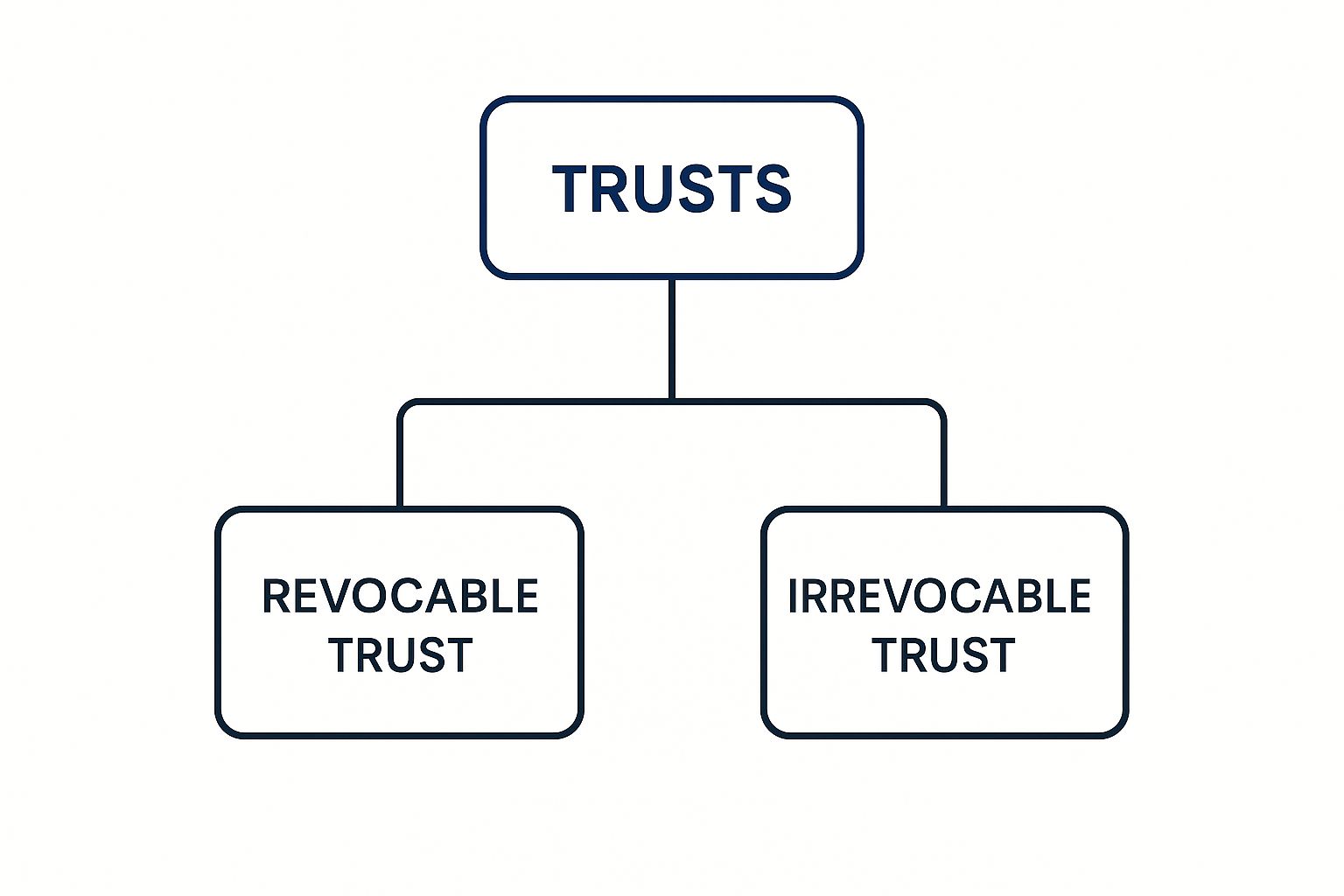
When you're looking at creating a trust, this is the first big question you'll need to answer with your advisor: Do I need the ongoing flexibility of a revocable trust, or the asset protection that an irrevocable trust provides?
To help clarify the practical differences between a standard will and a living trust, this table breaks down their key features.
Will vs. Trust: A Quick Comparison
| Feature | Last Will and Testament | Revocable Living Trust |
|---|---|---|
| When it's Active | Only upon your death. | Immediately upon creation. |
| Probate | Yes, assets must go through probate court. | No, assets bypass probate. |
| Privacy | Becomes a public court record. | Remains a private document. |
| Incapacity | Does not help manage assets if you are alive but incapacitated. | Your trustee can manage assets for you if you become incapacitated. |
| Control | You have no more control after you pass away. | You can set long-term rules for how assets are managed and distributed. |
| Cost & Complexity | Generally simpler and less expensive to create upfront. | More complex and costly to set up and fund initially. |
While a trust requires more effort to set up, the long-term benefits of avoiding probate and maintaining control often make it a worthwhile investment for many families.
Why Choose a Trust Over a Will?
If you take away just one thing about trusts, let it be this: they avoid probate. A will has to be validated by a court in a public process known as probate. This can drag on for months, or even years, racking up legal fees and putting all of your family's financial details on the public record for anyone to see.
Because a trust is a private agreement, the assets inside it are not subject to the probate process. Your trustee can distribute them to your loved ones quickly, privately, and according to your exact wishes.
By placing assets in a trust, you create a private instruction manual for your legacy. This allows for a swift and confidential transfer of assets, shielding your family from the delays, costs, and public scrutiny of probate court.
This level of privacy and control is a game-changer. You can set detailed conditions for inheritances. For example, you can ensure money is set aside specifically for a grandchild's education, or you could arrange for a beneficiary to receive their inheritance in stages at ages 25, 30, and 35. It's about protecting not just your assets, but the people you love.
Appointing Your Advocates for Health and Finances
A solid estate plan isn't just about what happens after you’re gone—it’s also about protecting yourself while you're still here. This is where we talk about choosing trusted people to act on your behalf if an illness or accident leaves you unable to make critical decisions for yourself.
It’s a tough thing to think about, but without these legal documents in place, your family could be forced into a stressful and costly court process just to get the authority to pay your bills or talk to your doctors. Planning ahead lets you hand-pick your advocates now, which brings a tremendous sense of relief for both you and them.
Your Advocate for Financial Matters
A Durable Power of Attorney for Finances is a legal document where you give a trusted person—known as your "agent"—the power to manage your financial life if you can't. This person can step in immediately to handle things when you become incapacitated.
Think of it like giving a trusted friend the keys to your financial world, but with the understanding they only use them when you absolutely need them to. Their responsibilities could include:
- Paying your mortgage and utility bills from your accounts.
- Filing your tax returns.
- Making decisions about your investments or real estate.
- Using your VA benefits to pay for your care.
If you don't have this document, your family may have to go to court to have a conservator appointed. That's a slow, public, and expensive ordeal you can easily help them avoid.
Designating a power of attorney isn't about giving up control. It’s about making sure someone you trust completely has the legal standing to protect your financial well-being when you need it most.
Your Advocate for Healthcare Decisions
Just as crucial is naming someone to make medical decisions for you. This is typically handled through two key documents: a Healthcare Power of Attorney (sometimes called a healthcare proxy) and a Living Will.
They're a team, but they have different jobs. A living will is your personal instruction manual for end-of-life care, spelling out your wishes on things like life support. A healthcare power of attorney, on the other hand, names a person to make all other medical decisions if you're unable to—from approving treatments and talking with your medical team to accessing your health records.
Picture a sudden emergency. Without these documents, doctors might have to provide treatments you never would have wanted. Or worse, your family might argue over the right path forward, creating incredible pain during an already difficult time. By appointing a healthcare advocate, you ensure the one person who truly knows your wishes has the final say.
Managing Your Digital Legacy in the Modern Age
When we think of an estate, we usually picture a house, a car, or old family heirlooms. But in today’s world, a huge part of our lives—and our legacy—exists online. This is your digital estate, and it's everything from your email and social media accounts to the photos and videos you've stored in the cloud.
These digital assets aren't just sentimental. They can hold real financial value, too. Think about cryptocurrency wallets, PayPal balances, online business accounts, or even a stash of airline miles. If you don't have a plan for them, your family could be permanently locked out, losing precious memories and potentially valuable assets forever.
What Happens to Your Online Life?
To make sure your online world is handled properly, you need to leave a clear roadmap for your executor. This means taking the time to create a detailed inventory of your digital life. It’s the only way your trusted representative will know what exists and what you want done with it.
A good digital inventory should list out:
- All your accounts: Don't forget anything—social media, email, online banking, streaming services, and shopping sites.
- Usernames: Write down the specific username or email address you use for each one.
- Instructions for access: This is crucial. You should never put your actual passwords in your will. Instead, point your executor toward a secure password manager or a protected document where they can find what they need.
- Your final wishes: Be specific. Do you want your Facebook profile turned into a memorial page? Should your online business be passed to a specific heir? Do you want all your cloud photos downloaded and shared with your kids?
Once you’ve created these plans, keeping them safe is just as important as creating them in the first place. For a deep dive into protecting these sensitive files, check out a comprehensive document security playbook.
The Growing Importance of Digital Planning
Ignoring your digital assets is a huge blind spot in modern estate planning. We’re in the middle of a massive generational wealth transfer—an estimated $84 trillion is expected to change hands by 2045, and a growing chunk of that will be digital. Yet, even though 80% of high-net-worth individuals own digital assets, most of those assets are completely left out of their estate plans. You can learn more about these evolving trends in estate planning on drlami.com.
Protecting your digital legacy is about more than just money. It’s about ensuring your story, memories, and online presence are handled with the same care and intention as your physical possessions.
Taking these steps now saves your family from a world of confusion and stress down the road. Leaving clear, secure instructions for your digital world is one of the most thoughtful things you can do, ensuring your entire legacy is preserved exactly as you intended.
Common Estate Planning Mistakes You Need to Avoid
Even the most carefully crafted estate plan can fall apart because of a few common, yet critical, mistakes. Knowing what these pitfalls are is the first step toward building a plan that actually does what you want it to do. These aren't just abstract legal points; they are the kinds of errors that create real-world headaches for the people you love.
One of the biggest blunders I see is forgetting to update beneficiary designations. It's a classic mistake. People often think their will is the final word on everything, but that's just not true.
Accounts like your 401(k), IRA, and life insurance policies pass directly to the person you named as the beneficiary, completely sidestepping your will. If you named your ex-spouse on a life insurance policy years ago and never updated it, they get the payout—no matter what your new will says.
An Empty Trust Is a Useless Trust
Another huge problem is creating a trust but failing to actually fund it. Think of a trust like a treasure chest you’ve built to protect your valuables. If you build the chest but never put anything inside, it’s just an empty box. For a trust to do its job, you have to formally transfer your assets—like the deed to your house or your investment accounts—into the trust’s name. An unfunded trust offers zero protection, and your assets will almost certainly end up in probate court.
Appointing the wrong person as your executor or trustee can also be a recipe for disaster. This isn't just an honorary title; it's a demanding job. You need someone who is not only trustworthy but also organized and capable of handling complex financial and legal duties, all while grieving. Choosing someone based on emotion alone, without thinking about their real-world skills, can cause major delays and family fights.
The whole point of estate planning is to create clarity and peace of mind. Simple oversights can bring back the very chaos and conflict you were trying to avoid, leaving your family to pick up the pieces when they're already hurting.
These planning gaps are far more common than you might think. Recent data shows that only 34% of men and 29% of women have a will. In fact, a staggering 58% of women have no estate documents at all, compared to 50% of men. You can dig deeper into these estate planning trends in the U.S. at PR Newswire. Sidestepping these basic errors is the key to making sure your plan stands strong when it's needed most.
Your Estate Planning Questions Answered
Once you start digging into estate planning, it’s easy to feel like you’ve opened a can of worms. Suddenly, a dozen practical questions pop into your head about cost, complexity, and even when you should get started. Let's walk through some of the most common ones to clear things up and help you move forward.
How Much Does a Basic Estate Plan Cost?
This is a big one, and the honest answer is: it depends. The price for creating an estate plan can swing quite a bit.
You might see simple, do-it-yourself online will kits for as little as $100. On the other end of the spectrum, if you work with an experienced attorney to set up a more complex plan with a trust, you could be looking at anywhere from $1,500 to several thousand dollars. Your location and how complicated your finances are will play a big role in the final cost.
While that initial number can feel steep, think of it this way: it’s a fraction of the potential court costs and legal headaches your family might have to deal with if you don't have a solid plan. It's really a one-time investment in their future stability and your own peace of mind.
Can I Do It Myself or Do I Need an Attorney?
For someone with a very straightforward situation—maybe you're single, have no kids, and just a savings account—a DIY service could potentially get the job done. However, for most of us, bringing in a professional is the smartest move.
You should strongly consider hiring an attorney if you:
- Own a home or any other real estate.
- Have minor children and need to name a guardian.
- Own a business.
- Are part of a blended family.
- Have built up significant assets that need protection.
An attorney doesn't just fill out forms. They offer advice tailored to you, make sure your documents are legally sound in your state, and help you think through tricky family situations to avoid arguments down the road.
If your life involves assets or family members in different countries, your plan needs another layer of expertise. Securing your global wealth is a specialized field. Getting familiar with cross-border financial planning is a crucial step to ensure your entire estate, no matter where it is, is fully protected.
How Often Should I Update My Estate Plan?
Think of your estate plan as a living document, not something you carve in stone and forget about. A good rule of thumb is to pull it out and review it every 3-5 years.
More importantly, you should update it immediately after any major life change. These are the big moments that can completely change your original intentions. Be sure to review your plan after a marriage, divorce, the birth or adoption of a child, a major shift in your financial situation, or if a beneficiary or executor passes away. Moving to a different state is another huge one, as estate laws vary widely and can impact your plan's validity.
Working through the legal side of estate planning can feel like a heavy lift, but you don’t have to go it alone. The team at Homefront Group is here to give veterans the specialized legal guidance you deserve. Take our 3-minute quiz today to see how we can help you build a plan that protects your legacy and provides for your loved ones. Get started with Homefront Group.