

Understanding Your Agent Orange In Korea Claim Reality

Let's be straight: proving Agent Orange exposure in Korea isn't easy. It's a different ballgame compared to Vietnam. For Vietnam vets, there's a list of presumptive conditions. This means the VA often connects health problems to Agent Orange simply based on service time and location. Korean War vets don't have that luxury.
This creates a tougher challenge. You need stronger evidence directly linking your health issues to Agent Orange exposure during your time in Korea.
Don't lose heart, though. Many Korean War veterans have successfully won their claims. But going in with a realistic understanding is key. It lets you plan your claim strategically right from the beginning. Knowing how the VA sees things helps you gather the right evidence up front, making your claim stronger and avoiding delays.
Time Periods and Locations
One of the first things to understand is the specific time periods and locations the VA recognizes for Agent Orange exposure in Korea. The acknowledged period of herbicide use along the Korean DMZ is between April 1, 1968, and August 31, 1971. Service near the DMZ during these dates significantly strengthens your claim.
But even if your service falls outside this window, don't give up. You still have options, especially if your unit records show you handling, transporting, or regularly being around potentially contaminated equipment.
Historical Context of Agent Orange
It's important to acknowledge the history surrounding Agent Orange. We know it was widely used in Vietnam, but information about its use in Korea is scarce. We know the U.S. military used herbicides in several places during the Cold War. In Vietnam alone, they sprayed nearly 19 million gallons of herbicides from 1962-1971, with at least 11 million gallons being Agent Orange. While Vietnam gets most of the attention, similar tactics might have been used elsewhere, even though the details for Korea are less clear. Learn more about herbicide use. This history underscores why it's so important to explore every possible avenue to support your claim.
Connecting Your Condition to Exposure
Finally, remember, a successful claim isn't just about proving you were in Korea. You also have to clearly show the link between your current health problems and possible Agent Orange exposure. This means gathering detailed medical records and, in some cases, getting expert opinions that connect your specific conditions to herbicide exposure. This takes careful preparation and knowing what the VA requires.
To better understand the difference in claim requirements, take a look at the comparison table below. It highlights key differences and similarities between claiming Agent Orange exposure for service in Korea versus Vietnam.
Korean War vs. Vietnam War Agent Orange Claims Comparison
| Aspect | Korean War Claims | Vietnam War Claims | Evidence Required |
|---|---|---|---|
| Presumptive Conditions | No | Yes | Medical diagnosis of a presumptive condition |
| Service Location | Near the DMZ | Specific locations in Vietnam or its inland waterways, or on a ship operating in those waters | Service records showing location and dates of service |
| Service Dates | April 1, 1968 – August 31, 1971 | Various periods depending on location and service | Service records showing dates of service |
| Exposure Proof | Required – Direct evidence linking service to herbicide exposure | Generally presumed based on service location and dates | Unit records, eyewitness testimony, medical documentation linking condition to Agent Orange |
This table clarifies the higher burden of proof required for Korean War veterans compared to their Vietnam War counterparts. While presumptive conditions streamline the process for Vietnam veterans, Korean War veterans need to meticulously document their service location, dates, and any evidence of potential exposure. In the following sections, we’ll dive deeper into the specifics of gathering evidence and navigating the VA claims process, providing you with the tools you need to build the strongest possible case.
Digging Up Your Military Records Like A Pro
Your military records are the bedrock of any Agent Orange in Korea claim. But getting the right documents? It can feel like an archaeological dig, trust me. I've talked with tons of veterans who successfully navigated this process, and they all agree: meticulous record gathering is key.
Which Forms Matter Most?
Your first stop is the National Personnel Records Center (NPRC). Think of it as the library of your military life. The real treasures here are your DD Form 214 (Certificate of Release or Discharge from Active Duty), morning reports, and any unit rosters or assignment orders. These documents are crucial for establishing your service dates and locations – especially important for Agent Orange claims related to Korea.
What About the 1973 Fire?
I know, the infamous 1973 NPRC fire is a big worry for many veterans. A lot of records were destroyed, but don't panic and assume yours are gone. The NPRC has done amazing work reconstructing many files, and there are often other ways to find the information you need. For example, unit histories can sometimes pinpoint location information even if individual records are incomplete. You might be surprised – even personal photographs or letters that mention locations and dates can be valuable pieces of the puzzle.
Uncovering Hidden Clues
Don't just focus on the obvious duty stations. Think about temporary duty assignments (TDY), training exercises, or even short stays at other bases. I remember talking to one veteran who got his claim approved based on a two-week training period near the DMZ – something he had almost completely forgotten about! These seemingly small details about dates and locations can make all the difference.
Organizing Your Evidence
Picture this: a VA reviewer staring at a mountain of disorganized paperwork. Not ideal, right? Organize your records chronologically, and create a clear index or table of contents. This helps the reviewer quickly understand your service history and see how it connects to your claim. A well-organized file shows you're serious and makes their job much easier (which is always a good thing). Remember, clarity is your best friend throughout this process.
Building Your Medical Evidence Like It Matters
This is where things get real. Proving the link between your current health problems and your time in Korea can often make or break your Agent Orange claim. So, let's dive into how to work with your doctors to make that connection crystal clear, even if it seems a bit fuzzy at first.
Speaking the VA’s Language
The VA works in "medical." This means your doctor needs to describe your conditions using the precise terms the VA understands. For example, if you're dealing with numbness in your hands and feet, make absolutely sure your medical records use the term “peripheral neuropathy” and mention the possibility of it being caused by toxic exposure. Don't just assume they'll put two and two together – you need to be your own best advocate.
Timing Is Everything
When you got your diagnoses matters. Records closer to your service dates are generally stronger evidence. But let's be realistic, many Agent Orange-related conditions don't show up for years, sometimes even decades. If you were stationed near the Korean DMZ anytime between 1968 and 1971, any diagnosis after your service becomes a critical piece of the puzzle.
It's important to understand the bigger picture with Agent Orange. Its use, along with other herbicides, has tragically affected the health of Vietnam veterans, with an estimated 300,000 veterans having died from related illnesses. This really drives home how dangerous these chemicals can be. While we don't have specific numbers for Agent Orange use in Korea, the hard lessons learned in Vietnam highlight why it's so important to keep a close eye on chemical use in military operations. Discover more insights into the impact of Agent Orange. Even though your service was in Korea, this information strengthens your claim.
Building a Compelling Medical Case
I recently talked to a veteran who successfully linked his heart condition to his service in Korea. The key? His doctor included a statement in his medical file directly referencing the potential exposure to herbicides during his military service. That one addition made all the difference. He also gave the VA a comprehensive timeline of his health issues since leaving the service, showing a clear pattern connected to potential Agent Orange effects.
Avoiding Claim Killers
A big mistake many veterans make is relying only on what they themselves are experiencing. While your symptoms are absolutely real and valid, the VA requires solid medical documentation. Another trap is assuming your doctor knows exactly what the VA wants. Be proactive. Provide them with information on Agent Orange and its potential health consequences. A well-informed doctor is a huge asset to your claim. By working closely with your medical team, you dramatically increase your chances of success. Building a strong medical case takes persistence, clear communication, and knowing precisely what the VA needs to see.
Navigating VA Claims Without Losing Your Sanity
Filing that initial claim for Agent Orange exposure in Korea can feel like stepping into a maze. Believe me, I get it. But getting it right the first time can save you so much time and frustration down the road. Let’s break down the VA Form 21-526EZ and how to make it work for you.
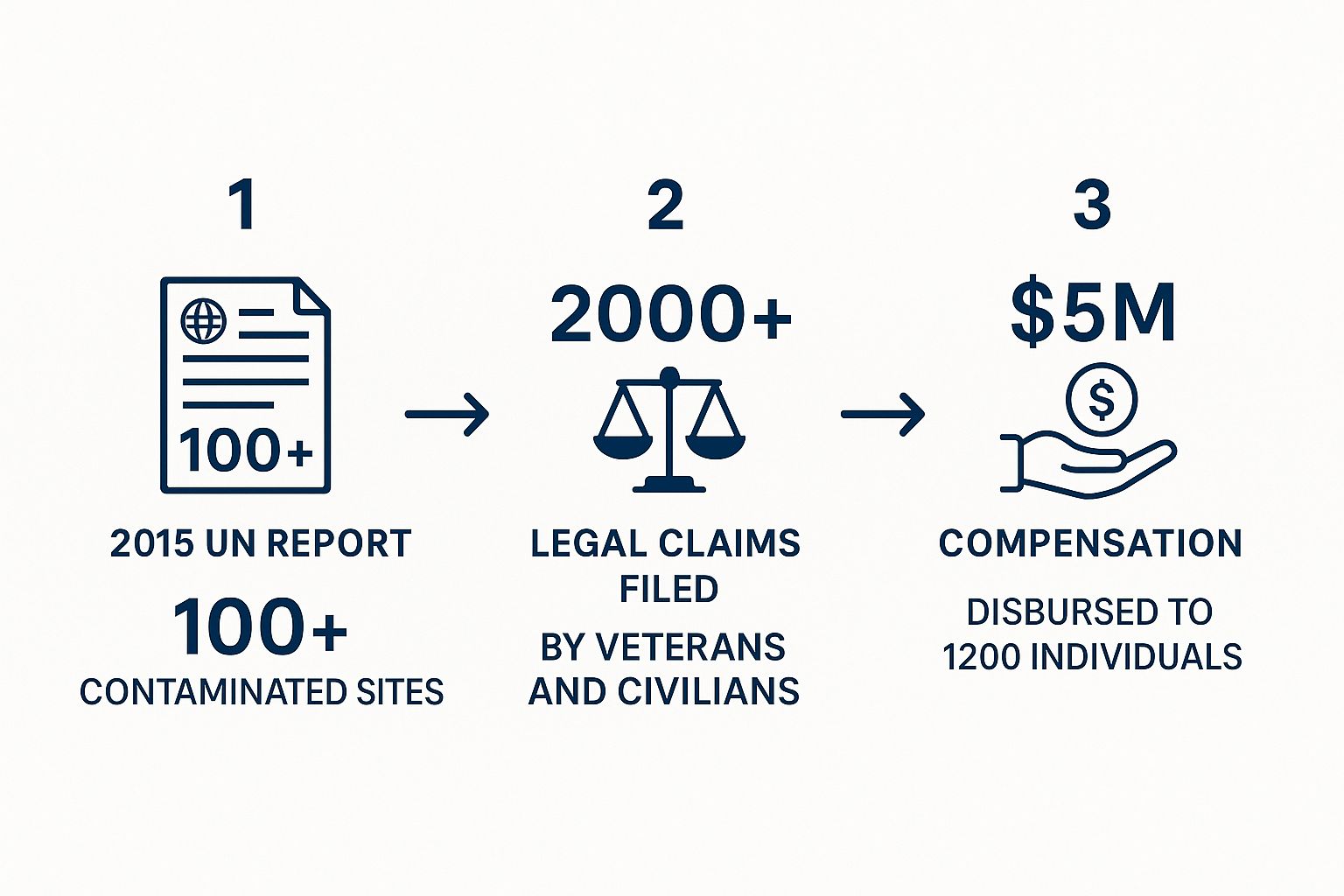
This infographic really hits home how important the UN report identifying contaminated sites was. It’s like a domino effect: report, claims, compensation. Official recognition is everything in these cases.
Supporting Documents: Initial vs. Appeal
Here’s a tip I’ve learned the hard way: knowing what to submit when can be a game-changer. Think of it like a card game. You want to play your strongest hand first, but you also want to hold back some aces for later.
- Initial Claim: Your DD Form 214, medical records, and a powerful personal statement are your starting lineup.
- Potential Appeals: This is where you bring in the heavy hitters: buddy statements, expert opinions, and any other evidence you've gathered. Don't lay all your cards on the table at once.
Crafting a Compelling Narrative
Your personal statement isn't just a form; it's your voice. Imagine you're sitting down with someone, telling them your story. Where were you stationed in Korea? What do you remember about possible exposure? How has your health been affected?
Be specific. Dates, locations, even seemingly small details can paint a clearer picture for the reviewer. Trust me, a compelling narrative makes all the difference.
The Power of Organization
The VA deals with mountains of paperwork. A disorganized claim is like a needle in a haystack – easy to get lost. A well-organized file, on the other hand? That's like a beacon, shining bright for the reviewer.
Think chronological order, dividers, a clear cover letter summarizing everything. It’s like creating a roadmap for your claim. This small effort can significantly impact how quickly your claim moves through the system.
To help you visualize the process and understand the typical timelines, take a look at this table:
VA Claim Timeline and Milestones
| Phase | Typical Duration | What Happens | Your Action Items |
|---|---|---|---|
| Initial Claim Submission | 1-3 Months | VA receives and reviews your claim, requests additional information if needed | Gather and submit all required documents. |
| Evidence Gathering | 3-6 Months | VA collects evidence related to your service and medical conditions | Respond promptly to VA requests for information. |
| Claim Decision | 3-6 Months | VA makes a decision on your claim | Review the decision letter carefully. |
| Appeal (if necessary) | Varies | You submit an appeal if you disagree with the VA's decision. | Consult with a VSO or attorney for guidance. |
This table provides a general overview; individual timelines can vary. Keep in mind, these are just estimates, and your specific claim might take more or less time. But it’s a good starting point to understand the phases involved and what you can expect. Staying organized and proactive throughout the process will always work in your favor.
Finding Your Claim Warriors and Support Network
Let's be honest, filing a VA claim for Agent Orange exposure in Korea can feel like a monumental undertaking. It's a long, often confusing process, but you absolutely don't have to go through it alone. In fact, building a solid support network is just as important as digging up your old military records. Think of it like assembling your own personal "Claim Squad."
Veterans Service Organizations (VSOs): Your Frontline Allies
VSOs are your boots-on-the-ground support system. They offer free help with claims, appeals, and cutting through all the VA red tape. But here’s the thing: not all VSOs are equal. Some have way more experience with Agent Orange claims related to Korea than others. My advice? Do your homework. Find the VSOs with a proven track record in these specific types of claims. Ask them directly about their experience with Korean service-related claims before you sign up. Trust me, this can save you a ton of time and frustration down the road.
Attorneys: Knowing When to Call in the Big Guns
Sometimes, you need to bring in the heavy artillery. Attorneys can be a real game-changer, especially if you’re dealing with a denied claim or a complicated appeal. They’re experts in the law and know how to present your case effectively. Keep in mind, most attorneys work on contingency, meaning they take a percentage of your back pay if you win. It's essential to ask about their fees, their experience with Agent Orange in Korea claims, and their success rate. A good attorney is an investment in your future, so choose wisely.
The Power of Veteran Connections: Tap Into the Shared Experience
Here's an inside tip: connect with other veterans. They’ve been there, done that. They get the struggles, the frustrations, and those little victories along the way. Online communities, like Facebook groups specifically for Agent Orange in Korea, are invaluable resources. You’ll find people sharing their experiences, offering advice that actually worked for them, and providing the kind of emotional support that can keep you going when you feel like giving up. Remember, taking care of your mental health during this process is vital. Check out resources like dad mental health for tips on managing stress and staying positive.
Local Support Groups: The Strength of Face-to-Face Connection
Don’t underestimate the power of real-life connections. Local veterans' groups often have members who’ve successfully navigated Agent Orange claims. They can offer personalized guidance, practical tips, and a supportive community. These groups aren’t just about information; they’re about encouragement and that sense of camaraderie that can make all the difference when you’re feeling overwhelmed.
Evaluating Professional Help: Choosing Your Best Path Forward
Deciding between a VSO and an attorney is a personal decision. Think about how complex your claim is, how comfortable you are with paperwork, and your financial situation. If your initial claim is pretty straightforward, a VSO might be a great starting point. But if your claim was denied and you’re facing a complicated appeal, an attorney’s expertise might be crucial.
Building a strong support network is like putting together a winning team. Each member brings valuable skills and experience to the table, helping you navigate the challenges and stay focused on your goal. Remember, you're not in this fight alone.
Turning Denials Into Wins With Smart Appeals
A denial letter stings. Believe me, I know. But it’s not the end of the road, especially with Agent Orange claims related to service in Korea. Often, it just means the real fight is beginning. Let me share some insights on how to turn that “no” into a “yes” with a strategic appeal.
Deconstructing the Denial: Your Detective Work Begins
Don’t just skim the denial letter. Pore over it. The VA is required to tell you why they denied your claim. Were they missing records proving your service near the DMZ? Did they question the link between your health problems and Agent Orange? Figuring out the exact reasons is the first step to building a winning appeal.
Addressing the VA’s Concerns: Filling the Gaps
Once you know why they said no, you can target those specific issues. If they questioned your location, dig deep. Morning reports, unit rosters, even buddy statements can confirm your service. If they doubted the connection to your health issues, work with your doctor to strengthen the medical evidence. Make sure your medical records clearly state the potential link between your condition and herbicide exposure.
Real-World Examples: Turning the Tables
I've seen veterans turn things around with this kind of focused work. One veteran was initially denied because the VA couldn't confirm his DMZ service. He dug up a unit history—something he'd completely forgotten about—placing him right where he needed to be. He won his appeal. Another veteran’s doctor hadn't explicitly linked his heart condition to Agent Orange. He got that crucial statement added to his records, and his appeal was successful.
Finding Your Appeal Allies: Don’t Go It Alone
Appeals are tough. Connecting with other veterans going through similar situations can be a lifeline. Consider joining anxiety support groups online. This can also be the time to seek professional help. A Veterans Service Organization (VSO) or an attorney specializing in Agent Orange claims can be invaluable. They understand the complexities of the VA and can guide you.
Maintaining Momentum: The Long Game
VA appeals can take time. It’s easy to lose heart. But staying organized, being persistent, and focusing on the VA’s specific concerns will dramatically improve your chances. Celebrate small wins. Remember your “why”—your health, your family, the recognition you deserve. Don't give up. Winning an appeal takes grit, but it can be done.
Your Long-Term Strategy For Claim Success
So, you've filed your Agent Orange exposure claim related to your service in Korea. What happens next? Honestly, this isn't a quick process. It's more like a marathon than a sprint. Sticking with it and staying informed are absolutely essential. That means keeping up with changes in VA policy and any new research that might affect your claim.
This screenshot from the VA website shows the different ways you can file a disability claim—online, by mail, in person, or with help. See? The VA provides a number of ways to file, making the process more accessible and supportive for veterans.
Staying on Top of Your Claim Without the Stress
It’s important to track your claim, but don’t let it take over your life. Check in regularly, but try to avoid calling every single day. The VA website has online tools to check your claim status. Trust me, using these tools can save you time and a lot of stress.
Organized Records: Your Long-Term Ally
Keep everything organized. Seriously. A good system is like a well-oiled machine. Figure out what works best for you, whether it’s digital copies, physical folders, or some combination. The important thing is to have your documents readily accessible. This is especially crucial for appeals, where you'll probably need to submit more evidence.
Building Relationships With Healthcare Providers
Your healthcare providers are vital allies in this. Find doctors who understand service-connected conditions and the potential effects of Agent Orange. Talk to them openly. Make absolutely sure your medical records clearly show the possible connection between your health problems and your service in Korea.
Celebrating the Small Victories and Remembering Your “Why”
This process can be tough. So, celebrate the small wins – a successful records request, a supportive doctor’s appointment, a well-organized file. These little victories will help keep you motivated. And remember your "why"—your health, your family, the recognition you deserve.
Persistence is key when it comes to Agent Orange claims related to service in Korea. The folks at Homefront Group get it. They have years of experience helping veterans get the benefits they've earned. Homefront Group can provide the support and expertise you need throughout the entire process. Reach out to them for a free consultation.